Chips & Policy · 4 min read
USTR Cites Korea's Memory Dominance in Overcapacity Case, Exempts Chips From Tariffs
USTR found Korea sustains structural overcapacity, citing two firms holding over 70% of global DRAM and a $518 billion Gwangju cluster, yet exempts semiconductors from the proposed 15% tariff.
Key takeaways
- Two Korean companies hold over 70% of global DRAM and 51% of NAND flash, per USTR's Nov. 25 determination.
- Proposed tariff is up to 15% on all Korean goods, rising to 25% if consultations fail; semiconductor articles under Section 232 are exempt.
- The Gwangju-Jeolla cluster carries roughly 800 trillion won (over $518 billion) in corporate commitments, plus 30 trillion won of government support over 15 years.
- Korea's K-Semiconductor Belt Strategy targets doubling chip exports from $100 billion in 2020 to $200 billion by 2030.
- Comments are due Jan. 5, 2027; Section 301 Committee hearings open Jan. 25, 2027, with no final action before then.
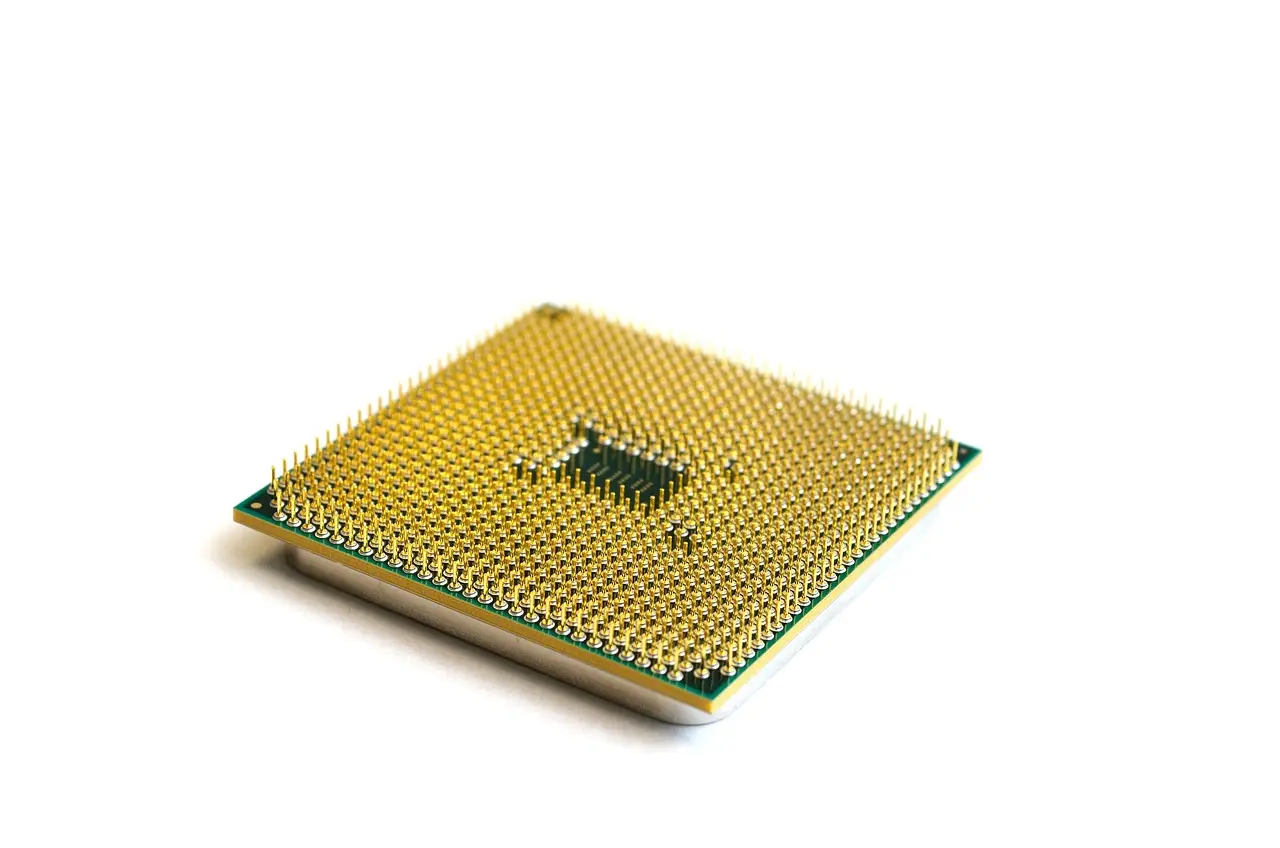
The Office of the US Trade Representative has proposed tariffs of up to 15% on all Korean goods while exempting semiconductors entirely from the new action. The irony is structural. The US case that Korea sustains excess manufacturing capacity rests in large part on the Korean chip industry, and chips are the one category the proposed remedy leaves out.
In a notice of determination released on Nov. 25, USTR found that Korea's acts, policies and practices creating structural excess capacity are unreasonable and burden US commerce. The finding was one of 14 affirmative determinations USTR issued the same day against economies including China and the EU. Semiconductors, alongside automotive and chemicals, appear as key sectors of Korean state intervention.
What does USTR say about Korean chips?
The notice states that Korea "exhibits overconcentration of production in memory semiconductors, with just two Korean companies holding over 70% of the global dynamic random-access memory (DRAM) market and 51% of the NAND flash market." The notice itself declines to name them. Seoul Economic Daily identified the two as Samsung Electronics and SK hynix.
USTR points to the K-Semiconductor Belt Strategy, under which Korea aims to "consolidate [its] position as the world's No. 1 memory semiconductor" and to double chip exports from $100 billion in 2020 to $200 billion by 2030. The agency says Seoul has committed to spend at least $530 billion over two decades, streamlining permitting, expanding power and water infrastructure and providing financing.
The fuller investigation report adds a regional dimension. In July 2026, Korea unveiled a semiconductor cluster in the Gwangju and Jeolla region backed by roughly 800 trillion won, more than $518 billion, in corporate commitments. The government will allocate 30 trillion won, about $21.5 billion, over 15 years to underwrite the value chain from chip design to advanced packaging. President Lee Jae Myung, the report says, treats semiconductors as a tool for developing Korea's less-developed regions and is "pressuring" companies such as SK hynix to keep expanding capacity at home.
USTR also frames concentration as a supply risk. "Given Korea's dominance in the global memory market, supply chain disruptions impacting Korea could significantly harm U.S. industry and the U.S. economy," the notice says. A dominance that qualifies as a national-security vulnerability, in other words, doubles as evidence of unfair overcapacity.
Which goods are exempt?
The main proposal is a tariff of up to 15%, net of most-favored-nation rates and existing Section 301 duties. If consultations and commitments prove unsatisfactory, the alternative rises to 25%. Goods already under Section 232 action are exempt:
- Steel, aluminum and copper articles
- Passenger vehicles and light trucks and their parts, plus medium- and heavy-duty vehicles
- Wood products and patented pharmaceuticals
- "Semiconductor articles," with the annex listing integrated circuits including processors and memories (HTS 8542.31 and 8542.32) and machines for making semiconductor devices, wafers and ICs (HTS 8486)
The exemption therefore covers chips broadly, beyond memory. Seoul Economic Daily framed it as a memory carve-out, reporting that DRAM, NAND and HBM, along with chipmaking and wafer fabrication equipment, were exempt because they already face Section 232 action. The US imposed 25% tariffs on some advanced semiconductors in January.
How has Seoul responded?
Korea's Ministry of Trade, Industry and Resources disputed the evidence on Nov. 26, arguing that industrial policy follows market demand and company investment decisions. "Our position is that this cannot be viewed as structural oversupply led by the state," a ministry official said. The ministry will not make major changes to policy and will seek to hold the 15% ceiling agreed in last year's bilateral trade deal.
Industry Minister Kim Jung-kwan said Washington had reaffirmed before the announcement that it would honor the tariff agreement when setting the final rate. "If we can ultimately maintain the 15 percent rate, I think that would be more than a good result," he said. The Korea Times separately reported that Korean goods already face a 12.5% forced-labor tariff from July, so the new action could add at most 2.5 percentage points and keep the combined rate within the ceiling.
In comments to USTR, Korea argued that bilateral trade is dominated by high-value goods such as semiconductors, autos and batteries, and that its surplus reflects deeper supply-chain integration with the US. Jang Sang-sik of the Korea International Trade Association suggested Seoul argue the surplus reflects strong US demand for AI chips. Sangmyung University professor Lee Jong-hwan advised pressing ahead with planned domestic chip investment.
What happens next?
USTR will accept written comments and requests to appear until Jan. 5, 2027, under docket USTR-2026-0734. Its Section 301 Committee opens public hearings at the US International Trade Commission in Washington on Jan. 25, 2027. No final action comes before then. Korean chip stocks rallied on Friday as the Kospi closed up 4.34% at 4,915.68, though the rally credited hopes for a larger market stabilization fund rather than the tariff text. With chips exempt and the effective ceiling likely intact, the commercial question now is whether Samsung and SK hynix keep expanding Gwangju on schedule while Washington decides how hard to push.
mlq.ai (Source)
More from Nathan Brooks
Show full bio
Senior reporter covering people, launches and day-to-day practice in Semiconductors, chip manufacturing, hardware, AI compute at Chip Dispatch.
1,304 articles