Velo3D lifts revenue 50%, but moves profit target to 2028
Velo3D posted $20.5 million in third-quarter revenue and $28.9 million in bookings, but operating expenses more than doubled and the company pushed positive EBITDA and operating cash flow to 2028.
- By
- Rebecca Stone
- Filed
- Channel
- Tech Business
- Read
- 3 min read
By Rebecca Stone
Velo3D generated $20.5 million in third-quarter 2026 revenue, up 50% from $13.6 million a year earlier. New bookings reached $28.9 million. Backlog stood at $40.1 million on Sept. 30. Bookings ran ahead of shipments, according to results the company released Nov. 10.
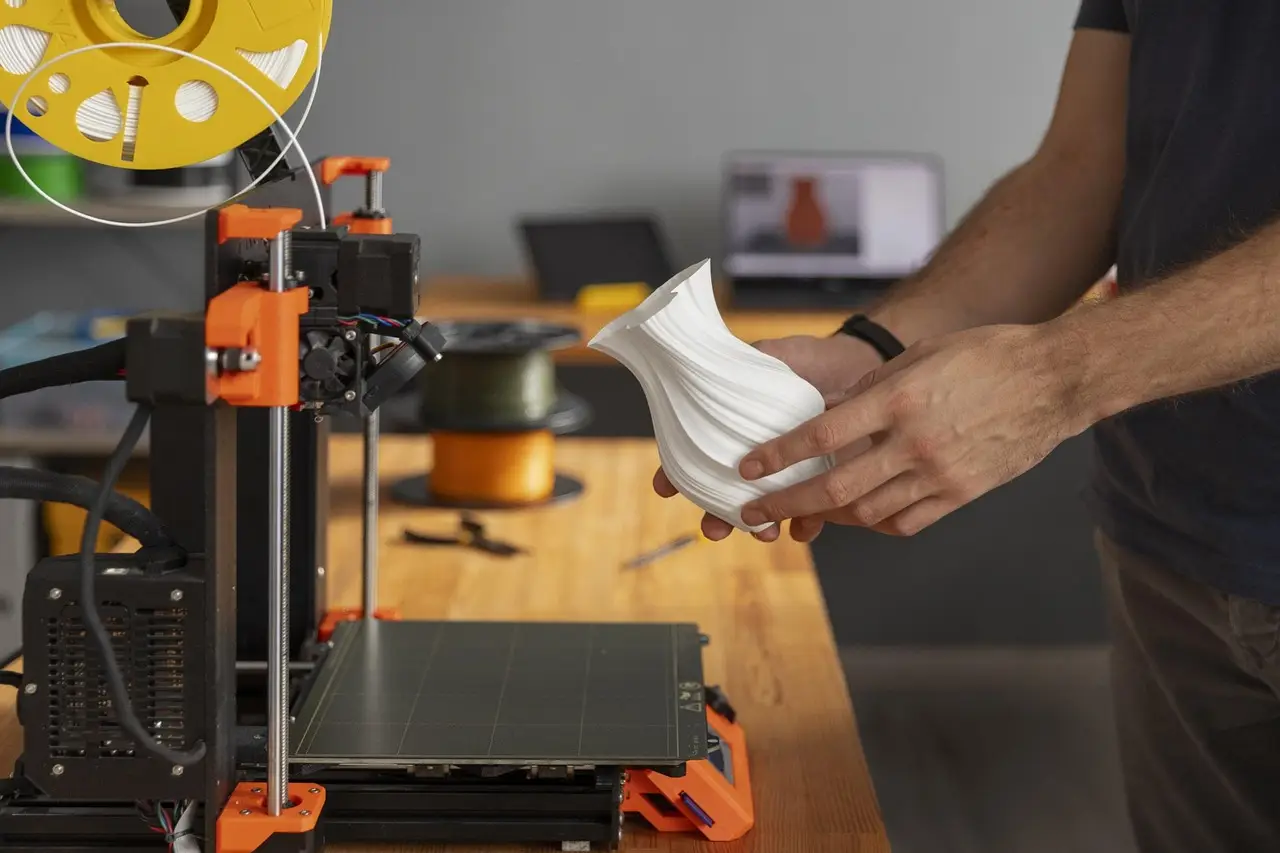
The company makes metal 3D printers and printed parts for aerospace and defense supply chains. Its expansion now centers on Forge 1, a Livermore production campus that Velo3D opened in July and is bringing online in phases.
When does profitability arrive?
Velo3D now targets positive EBITDA and positive operating cash flow in 2028. That goal replaces its earlier expectation of positive EBITDA in the second half of 2026. The company also dropped a target of more than 30% gross margin for the second half of 2026, pushing its EBITDA milestone beyond the earlier schedule.
These are forward targets rather than present results. Gross margin rose to 26.5% from 3.2%. Net loss widened to $16.7 million from $11.2 million, while adjusted EBITDA was negative $9.8 million versus negative $7.3 million. Operating expenses more than doubled to $22.7 million from $10.4 million.
CEO Arun Jeldi said: “While a substantial portion of our planned capital expenditures is shifting into 2027, we believe these investments in infrastructure, talent and manufacturing capabilities are essential.”
Velo3D hired for Forge 1 as it brings the Livermore campus online in phases, and operating expenses included $5.7 million of stock-based compensation. The loss per share nevertheless narrowed to 52 cents from 65 cents because the share count nearly doubled.
What drove the revenue gain?
Revenue from printers and parts rose 57% to $18.8 million, reflecting more systems sold, higher prices and additional output from the company’s Rapid Production Solutions parts business. Gross margin improved on pricing, mix and volume.
Two accounting and cost-allocation changes also helped the reported margin. Velo3D released inventory reserves on a net basis and began reallocating some labor and overhead costs out of cost of revenue in the second quarter.
Sequential growth was muted. MLQ.ai calculated second-quarter revenue of $20.7 million by subtracting first-quarter revenue of $13.8 million from the nine-month total. On that basis, third-quarter revenue was roughly flat against the prior quarter.
What does the cash position support?
Cash reached $75.7 million on Sept. 30, up from $39.0 million at the end of 2025. Velo3D raised about $50 million in an April stock offering and about $59.4 million through its at-the-market program, while debt fell to $7.4 million from $31.0 million.
Management also concluded that it no longer had substantial doubt about Velo3D’s ability to continue as a going concern over the next 12 months. That conclusion addresses near-term funding, not the company’s target for positive operating cash flow in 2028.
What does 2026 guidance require?
Velo3D kept its 2026 revenue guidance at $65 million to $75 million and adjusted operating-expense guidance at $45 million to $55 million. It cut planned 2026 capital spending to $10 million to $20 million from $40 million to $50 million, consistent with Jeldi’s comment about shifting expenditures into 2027.
With $54.9 million of revenue through September, the company’s full-year range implies fourth-quarter revenue of about $10 million to $20 million. That implied range is below the third quarter’s $20.5 million even at its upper bound, despite bookings exceeding shipments during the quarter.
What else changed in the quarter?
Velo3D also revised its first- and second-quarter 2026 statements to correct errors in its inventory reserve; the correction reduced the first-half net loss by about $1.6 million. Separately, Mears Machine ordered its sixth Sapphire XC system for copper-nickel parts used in shipbuilding.
The near-term test is whether Velo3D can convert $28.9 million of new bookings and $40.1 million of backlog into shipments as Forge 1 comes online, while retaining the pricing and mix gains behind its 26.5% gross margin and holding the 2028 cash-flow target.
Source: mlq.ai
More from Rebecca Stone
Show full bio
Correspondent covering technology and product news in Semiconductors, chip manufacturing, hardware, AI compute at Chip Dispatch.
892 articles
Related articles
3d-systems-revenue-recovers-as-free-cash-flow-stays-negative
3D Systems revenue recovers as free cash flow stays negative
soundhound-revenue-rose-more-than-48-gross-margin-fell-to-50-3
SoundHound Revenue Rose More Than 48%; Gross Margin Fell to 50.3%
knowles-rebases-8-10-growth-target-from-688-million
Knowles Rebases 8-10% Growth Target to 2029 From $688 Million