Science & Technology · 2 min read
Verde Technologies to Fly Perovskite Solar Cells on ISS in 2027
Verde Technologies will bolt flexible perovskite-only solar cells to the ISS MISSE platform no earlier than June 2027, a six-month first space validation under a NASA contract.
Key takeaways
- Verde's perovskite cells fly on the ISS MISSE platform no earlier than June 2027 for six months.
- The cells are perovskite-only on a flexible substrate, not printed on silicon or glass.
- Verde pivoted from terrestrial solar to space markets about a year ago.
- CEO Jean-Noel Poirier plans market entry via satellites, then constellations and orbital data centers.
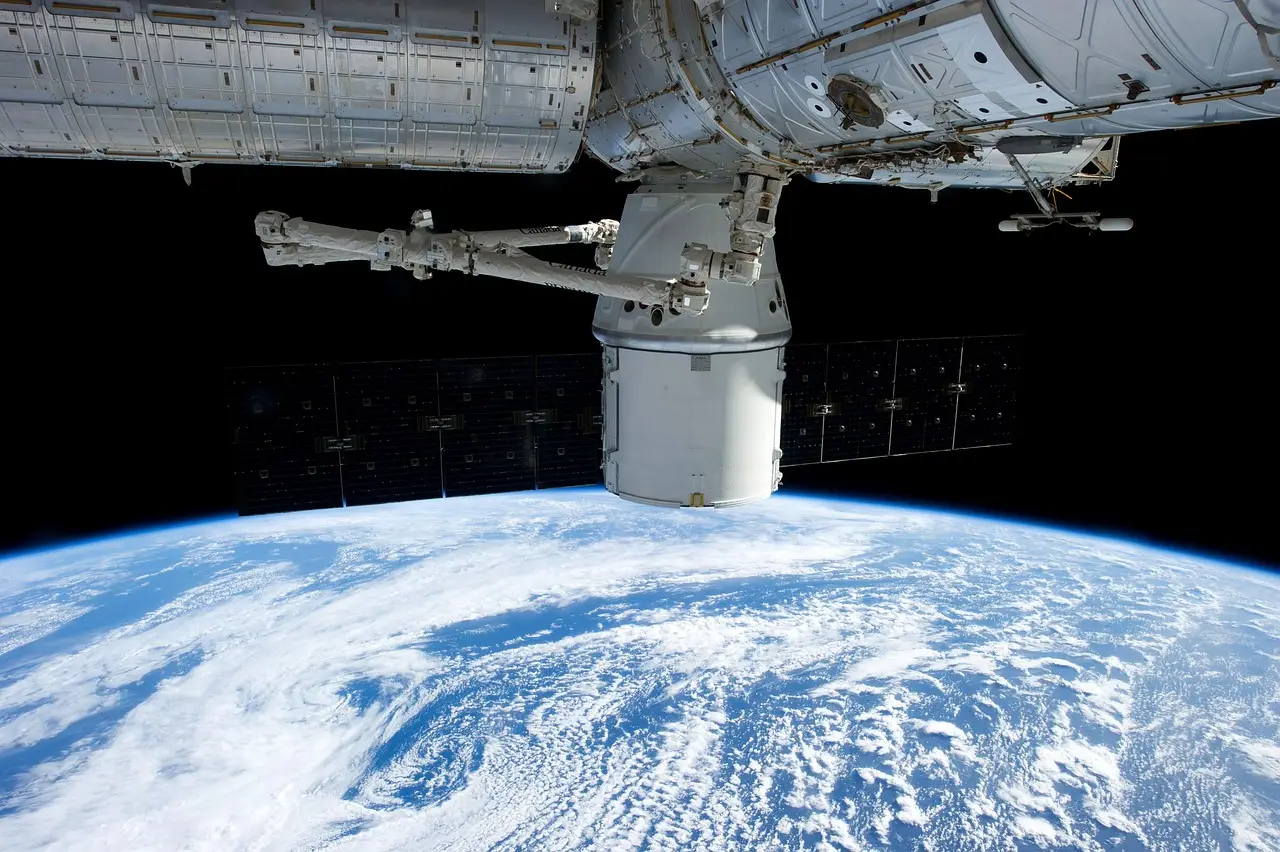
Verde Technologies will fly its ultra-thin perovskite solar cells on the outside of the International Space Station in 2027 under a contract with NASA. The mission marks the first space validation of the company's technology and a concrete step into a market now dominated by gallium arsenide and silicon.
The cells will ride to orbit no earlier than June 2027. They will bolt to the station as part of the Materials International Space Station Experiment, or MISSE, a NASA platform that exposes new materials and components to the space environment. The exposure lasts six months. Afterward the hardware returns to Earth for analysis.
What makes Verde's cells different?
Most perovskite efforts in the industry print the material on silicon or glass. Verde builds perovskite-only cells on a lightweight, flexible substrate instead. That choice defines both the product and the go-to-market plan.
The cells can fold or roll for launch and unfurl into large arrays once in orbit, the company said. Partners supply structures that keep the unfurled arrays rigid. The flexible format is a sharp contrast with conventional rigid panels, and it is the property that makes rolled deployment attractive for mass and volume-constrained launches.
Why the company left terrestrial solar behind
Verde started out targeting the terrestrial solar market. About a year ago it pivoted to space and high-altitude applications after what company officials described as a large rise in demand from satellite builders.
The demand sits in a market with an awkward supply picture. Most spacecraft today use gallium arsenide cells, which NASA relies on but which lack production capacity, or silicon cells, which are plentiful but heavier, less efficient and degrade in space. Silicon also comes mostly from China. Avoiding silicon lets Verde sidestep that supply chain and sell directly to the U.S. defense market, the company said.
What comes after the flight?
Chief executive Jean-Noel Poirier set out the sequence plainly. The plan is to "validate the technology completely, then start entering the market in steps," he said.
Those steps run from satellites and high-altitude drones first, then to small satellites, large satellites and constellations. The end point on the roadmap is orbital data centers, an application that would demand very large deployed array areas if it materializes.
The 2027 MISSE flight is the gating milestone for all of it. Six months of direct exposure to atomic oxygen, ultraviolet radiation and thermal cycling outside the station will test whether the flexible perovskite cells survive conditions that degrade even silicon. If the returned hardware holds up, Verde gains the orbital flight heritage that satellite buyers typically require before qualification, and the company can move from defense-adjacent niches toward constellation-scale volumes.
mlq.ai (Source)
More from Grace Kim
Show full bio
Market editor covering people, launches and day-to-day practice in Semiconductors, chip manufacturing, hardware, AI compute at Chip Dispatch.
1,257 articles