Vishay Puts $56.4 Million Into Indian Packaging Venture With Kaynes
Vishay will pay $56.4 million for 49% of a Kaynes Technology packaging venture, gaining captive back-end capacity in India and a joint bid under India Semiconductor Mission 2.0.
- By
- Nathan Brooks
- Filed
- Channel
- Chip Manufacturing
- Read
- 3 min read
Vishay Intertechnology will pay $56.4 million for a 49% stake in a packaging joint venture with Kaynes Technology India, according to a binding term sheet signed on Thursday and disclosed in an SEC 8-K filing. Kaynes keeps 51% and control of its own subsidiary, at least on paper.
The structure is straightforward. Vishay buys into an existing Kaynes subsidiary rather than building a new company from scratch. Both partners are expected to fund the venture in proportion to their holdings.
What does the venture actually do?
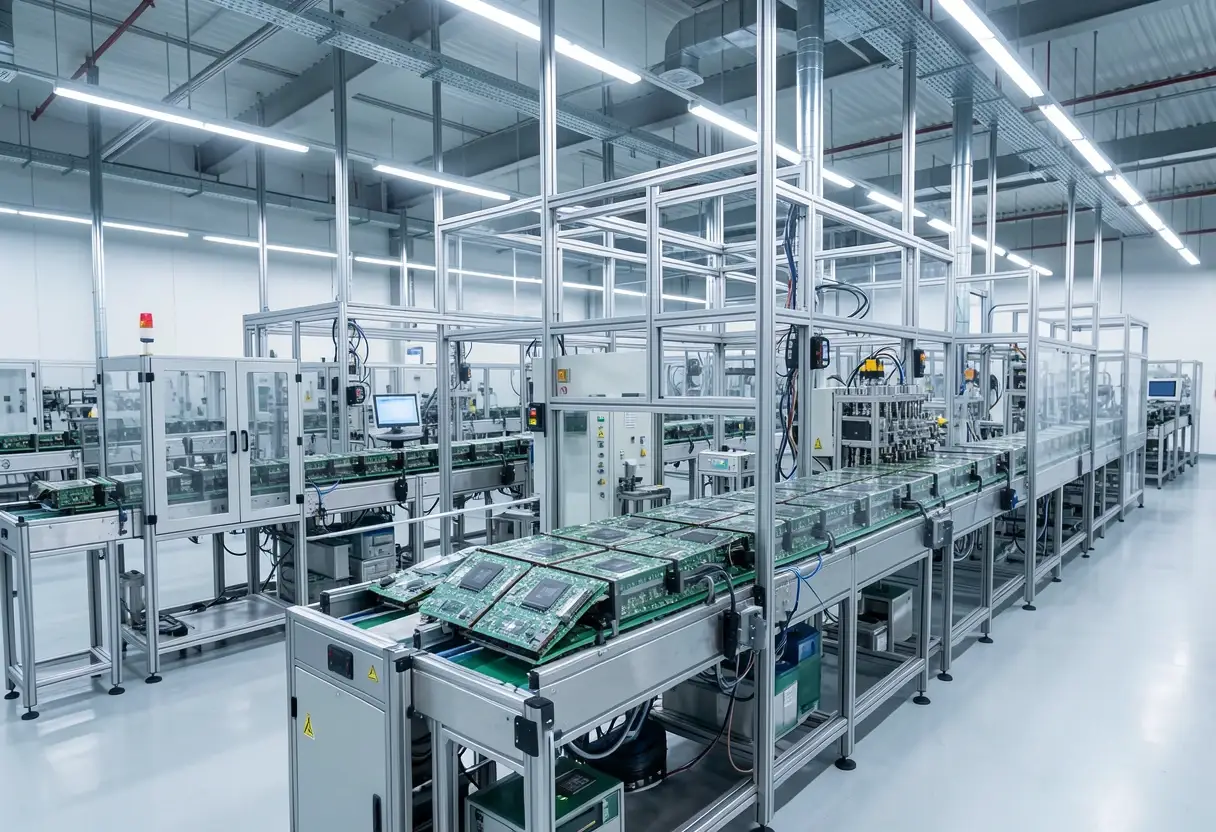
The joint venture would give Vishay captive back-end manufacturing in India. That covers the unglamorous but essential work after the fab: post-fabrication wafer processing, assembly, test and packaging. The venture may also take work from third-party customers, though Vishay group business anchors the plan.
For a company that makes discrete semiconductors and passive components, back-end capacity in India is a hedge as much as a cost decision. Assembly and test sit at the labor-intensive end of the supply chain, the segment most exposed to geography and tariffs. Owning it, rather than contracting it, shortens the distance between Vishay's designs and its delivery commitments.
Who holds the levers?
The governance terms reward a close reading. Although Vishay is the minority owner, it secures the right to decide certain matters on its own:
- appointment of auditors, internal controls and IT systems;
- the choice of vendors and equipment;
- approval of customers outside the Vishay group.
Specified reserved matters still require approval from both parties. In practice, Vishay has bought itself control of the operational plumbing while Kaynes retains the majority economics. A neat arrangement, if you are the minority partner.
What about India Semiconductor Mission 2.0?
The two companies plan to file a joint application for central and state government support under India Semiconductor Mission 2.0, the country's recently announced chip incentive program. That detail explains the deal's timing as much as any commercial logic. India is paying manufacturers to build domestic chip capacity, and a joint venture with a committed anchor customer is precisely the kind of application the program rewards.
Whether the subsidy arrives on schedule is a separate question. Vishay offered no timetable for definitive agreements, required approvals or customary closing conditions. It also gave no capacity figures, which leaves the venture's scale as a matter for future filings rather than present analysis.
A record quarter in the background
The investment lands on solid financial footing. Vishay reported record third-quarter revenue of $978.9 million last week. A company at peak revenue can fund a $56.4 million commitment without straining its balance sheet; the sum amounts to roughly six percent of one quarter's sales.
That framing matters. This is not a bet-the-fab move. It is a measured purchase of packaging capacity in a country actively subsidizing packaging capacity. The commercial logic barely requires a spreadsheet.
What happens next?
Three things must fall into place before anything is manufactured. The partners must convert the binding term sheet into definitive agreements. They must secure the necessary approvals and satisfy customary closing conditions. And their joint application under India Semiconductor Mission 2.0 must clear the government's process.
None of these steps carries a published date. Investors watching for capacity numbers, output schedules or pricing effects will find the 8-K silent on all three.
The venture's competitive significance, when it comes, will rest on whether subsidized Indian back-end costs undercut Vishay's existing assembly network in Asia. On the evidence filed so far, the deal gives Vishay optionality at a modest price, and gives India another foreign anchor tenant for its chip program. Both parties, one suspects, consider that a fair trade.
Source: mlq.ai
More from Nathan Brooks
Show full bio
Senior reporter covering people, launches and day-to-day practice in Semiconductors, chip manufacturing, hardware, AI compute at Chip Dispatch.
892 articles
Related articles
kaynes-semicon-targets-31-million-revenue-seeks-foreign-partners-08bb816e
Kaynes Semicon Targets $31 Million Revenue, Seeks Foreign Partners
india-s-semicon-2-0-state-money-to-match-vc-bets-on-chip-design-3e1ba525
India's Semicon 2.0: State Money to Match VC Bets on Chip Design
india-s-chip-veterans-exit-multinationals-to-launch-startups-f2c662fc
India's Chip Veterans Exit Multinationals to Launch Startups
bigendian-raises-6-million-to-commercialize-first-india-designed-chip-86e56aaf
BigEndian Raises $6 Million to Commercialize First India-Designed Chip