Vulkan Failure Destroys 40 Amazon Leo Satellites, Grounding a Rocket With 37 More Booked Missions
A ULA Vulcan failed 10 minutes after liftoff on Nov. 15, destroying 40 Amazon Leo satellites on the first of 38 booked launches — with backup rockets grounded too.
- By
- Rebecca Stone
- Filed
- Channel
- Science & Technology
- Read
- 4 min read
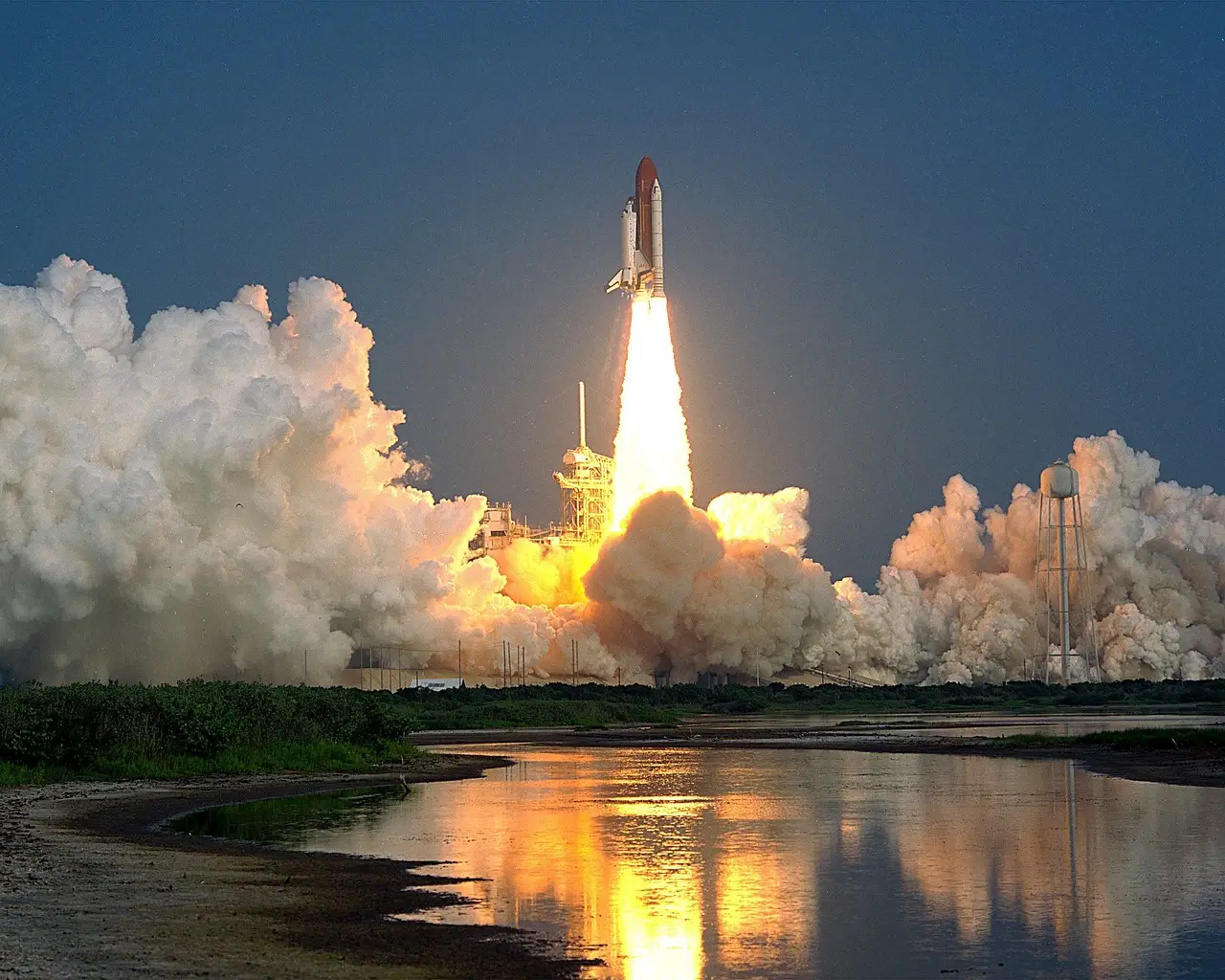
A United Launch Alliance Vulcan rocket failed roughly 10 minutes after liftoff from Cape Canaveral on Nov. 15, 2026, destroying 40 Amazon Leo satellites on what was supposed to be the first of 38 booked missions on that vehicle. GeekWire and Spaceflight Now both report it was ULA's first total mission failure since the Boeing-Lockheed Martin joint venture formed in 2006. The rocket never reached orbit.
The hardware loss is real but modest for Amazon. The schedule damage could be enormous. And ULA — owned 50/50 by Boeing (NYSE:BA) and Lockheed Martin (NYSE:LMT) — now faces questions about the one rocket Amazon has leaned on hardest.
What exactly failed?
ULA says it doesn't yet have specific data on the cause. Spaceflight Now reported the anomaly struck during the Centaur upper stage burn — the rocket's second stage — and that the first stage appeared to burn longer than planned. Both details remain preliminary. Northrop Grumman's (NYSE:NOC) solid rocket boosters, which caused problems on two earlier Vulcan flights, appeared to perform normally this time, per the same reporting.
Amazon's response was measured. Amazon Leo posted on X on Nov. 15: "There is risk with any launch, and that's especially true for inaugural missions like LV-01. ULA has been a trusted partner for Amazon."
Why does this one rocket matter so much?
Because Amazon stacked its constellation plan on it. According to GeekWire, the failed flight was the first of 38 Vulcan launches Amazon has purchased — signed contracts, not options. Vulcan is scheduled to carry more than 1,500 first-generation Leo satellites, GeekWire reports, more than any other rocket in the program. Amazon's director of launch systems called Vulcan the program's "primary workhorse over the next several years."
A second Vulcan mission had been possible within weeks. That now waits on ULA's investigation.
Amazon had launched 396 satellites across 14 missions since April 2025 before this failure, GeekWire reports. The regulatory clock matters more than the lost hardware: Amazon must deploy and operate all 3,232 first-generation satellites by July 30, 2029. In June, the FCC allowed Amazon to keep deploying even though it had missed a July 30 target of having roughly half the constellation in service. Satellites not operational by their deadlines temporarily lose priority in key spectrum bands.
Against a market cap near $2.88 trillion and roughly $220 billion in 2026 capital spending, the destroyed satellites are a rounding error. The schedule is the exposure.
How did the stocks react?
Mostly with a shrug, in Monday's premarket trading:
- Amazon (NASDAQ:AMZN) indicated at $265.25, down 0.5%.
- Boeing slipped 0.7% to $170.36.
- Lockheed Martin eased 0.1% to $595.20.
- L3Harris (NYSE:LHX) fell the most, 3.4% to $263.00 — though Barron's had already tied that weakness to an FAA nationwide groundstop unrelated to the launch.
Neither Boeing nor Lockheed reports ULA results separately. Boeing's Defense, Space & Security backlog stands at $101 billion; Lockheed's backlog is a record $292 billion. Their exposure here runs through reputation and through Vulcan's national security launch work — which the Space Force already paused after a February booster nozzle problem.
L3Harris builds the RL10 engines that power the Centaur stage, which makes it an obvious name to watch. But no cause has been identified, and nothing has been attributed to any supplier. The company's growth story rests on defense propulsion anyway, including a $6.3 billion THAAD contract and a $4.7 billion PAC-3 MSE contract.
What backups does Amazon have?
Few, and they're compromised. GeekWire reports Amazon holds 24 launch reservations on Blue Origin's New Glenn — grounded since a May ground-test explosion. Blue Origin is privately held. Amazon also has missions booked on Arianespace's Ariane 6 and on SpaceX's Falcon 9, which means the company behind Starlink, Amazon's chief competitor, is also one of its launch providers.
Several things remain undisclosed: the cost of the lost satellites, whether they were insured, and any revised deployment or service timeline. No Amazon press release had been issued as of early Nov. 16.
Does this delay Amazon Leo?
Yes, it slows deployment. Amazon's third-quarter release promised initial service "later this year," and that can still happen with satellites already in orbit. But filling out the constellation cannot stay on plan while both New Glenn and Vulcan — the rocket assigned the most satellites — sit grounded.
GeekWire reports the next Leo launch is an Ariane 6 carrying 36 satellites, targeted for Nov. 23 at the earliest. The math from there is straightforward. If that launch flies close to Nov. 23, and ULA names a root cause and a return-to-flight date before Amazon's next earnings report, the setback stays contained. If either slips, the July 30, 2029 deadline becomes the story.
Source: 247wallst.com
More from Rebecca Stone
Show full bio
Correspondent covering technology and product news in Semiconductors, chip manufacturing, hardware, AI compute at Chip Dispatch.
1,036 articles
Related articles
barracuda-ai-hacking-tool-artex-roamed-10-cloud-accounts-in-44-hours
Barracuda: AI Hacking Tool Artex Roamed 10 Cloud Accounts in 44 Hours
google-project-zero-cuts-vendor-disclosure-to-30-days
Google Project Zero cuts vendor disclosure to 30 days by Jan. 3, 2028
pentagon-picks-seven-laser-teams-for-counter-drone-shoot-off
Pentagon Picks Seven Laser Teams for Counter-Drone Shoot-Off
carnegie-mellon-team-demonstrates-in-plane-anomalous-hall-effect
Carnegie Mellon Team Demonstrates In-Plane Anomalous Hall Effect