Why 120-V AC Regenerative Electronic Loads Cannot Pass Safety Certification
Regenerative e-loads returning power at 120 V AC through power strips bypass breaker protection, creating fire risk and blocking NRTL safety certification, Keysight's Bob Zollo writes.
- By
- Grace Kim
- Filed
- Channel
- Hardware & Components
- Read
- 3 min read
A low-power 120-V AC regenerative electronic load cannot obtain safety certification because users can plug it into power strips, where its bidirectional power flow bypasses overcurrent protection and creates a fire hazard. That is the conclusion of Keysight Technologies solution architect Bob Zollo, who argues the market will simply never see such products from reputable vendors.
What is an electronic load?
An electronic load, or e-load, is a programmable instrument that draws controlled current or power to test power sources. Engineers use it on power supplies, batteries, chargers, DC-DC converters, solar panels, fuel cells and server power systems.
The most common design is the dissipative e-load. It converts absorbed energy into heat through power transistors and heatsinks. The architecture is simple, inexpensive and fast enough for transient testing. It is also 0% efficient by definition: every watt absorbed is wasted as heat.
Cooling that heat drives facility costs. Higher power levels demand larger heatsinks, fans and HVAC infrastructure. Below 10 kW, buyers still accept these tradeoffs for the lower purchase price.
How the control loop works
Basic e-loads run in constant current or constant voltage mode. Constant resistance, constant power and constant impedance modes derive from these two primitives.
In a constant-current design, the instrument adjusts the RDS of a FET. A series shunt resistor senses actual current, an amplifier boosts the signal, and a comparator checks it against a DAC-programmed reference feeding the gate. Excess current raises RDS. Insufficient current lowers it.
If the load cannot reach the programmed value, the gate turns full on and the FET becomes a near short. The limit follows I = V/R, where R equals FET on-resistance plus shunt resistance. Manufacturers specify this floor as minimum on-resistance or short-circuit resistance.
Regeneration changes the equation
A regenerative e-load performs the same test function but returns absorbed energy to the utility grid through an inverter stage instead of burning it as heat. Energy recycling cuts consumption, cooling load and operating cost. Zollo notes the economics turn favorable above 10 kW and up to megawatt levels, where savings offset the higher initial investment during long test runs.
A regenerative e-load is also, functionally, a grid power source. Most operate above 5 kW on hardwired three-phase connections — 208 V or 480 V AC phase-to-phase in the U.S. Electrical code requires a dedicated circuit with its own breaker at these levels.
Where is the hazard?
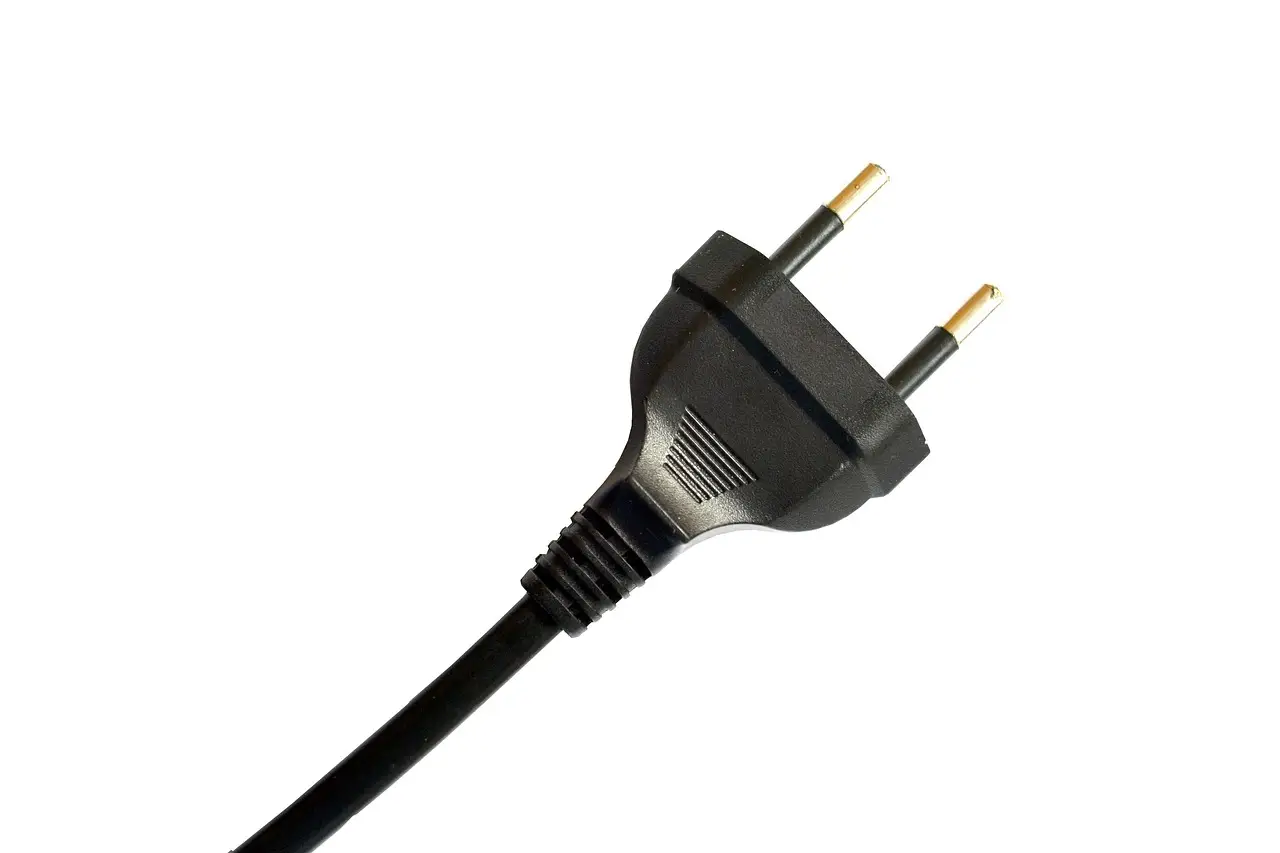
The problem emerges at low power. A 500-to-1500 W regenerative e-load would push less than 20 A back on an AC line and could theoretically use a standard 120-V AC line cord. The hazard is not electrical behavior or grid-interconnection rules, Zollo writes. It is human behavior.
A power strip breaker sits between the strip's outlets and its cord. Protection assumes one-way flow: grid, wall, cord, breaker, devices. A regenerative load breaks that assumption, because current can flow between two devices plugged into the same strip and never reach the breaker. Zollo gives a concrete example:
- Three 800-W power supplies on one power strip total 2,400 W. Full-power operation trips the strip breaker. No hazard.
- Adding a 1,000-W regenerative e-load yields 1,400 W net. The breaker stays closed.
- Internal current in the strip can still exceed its amperage rating.
The result is a fire hazard with no trip.
Why documentation cannot fix it
Safety engineers call predictable deviations from instructions "reasonably foreseeable misuse." Manufacturers must mitigate such misuse through inherently safe design, protective measures or warnings. Warnings rank as the weakest form of risk control in modern product safety.
There is no practical way to guarantee a user connects the e-load to a dedicated branch, Zollo writes. An NRTL will withhold certification when misuse is foreseeable, the hazard is serious and the manufacturer cannot mitigate the risk.
The consequence: 120-V AC low-power regenerative loads will stay uncertified and unavailable from reputable vendors, leaving dissipative designs as the practical choice for low-power bench test.
Source: Electronic Design
More from Grace Kim
Show full bio
Market editor covering people, launches and day-to-day practice in Semiconductors, chip manufacturing, hardware, AI compute at Chip Dispatch.
950 articles
Related articles
power-semiconductor-industry-targets-data-center-efficiency-853d039f
Power Semiconductor Industry Targets Data Center Efficiency
silicon-epi-wafer-market-on-track-for-6-cagr-through-409985af
Silicon EPI Wafer Market on Track for 6% CAGR Through 2030
ls-electric-licenses-kepco-s-seda-diagnostics-to-chase-fab-power-deals
LS Electric Licenses KEPCO's SEDA Diagnostics to Chase Fab Power Deals
advanced-energy-launches-centra-smart-hub-for-fab-temperature-sensing-7fa6e775
Advanced Energy Launches Centra Smart Hub for Fab Temperature Sensing