AI Inference Turns the Memory Wall Into a System Problem
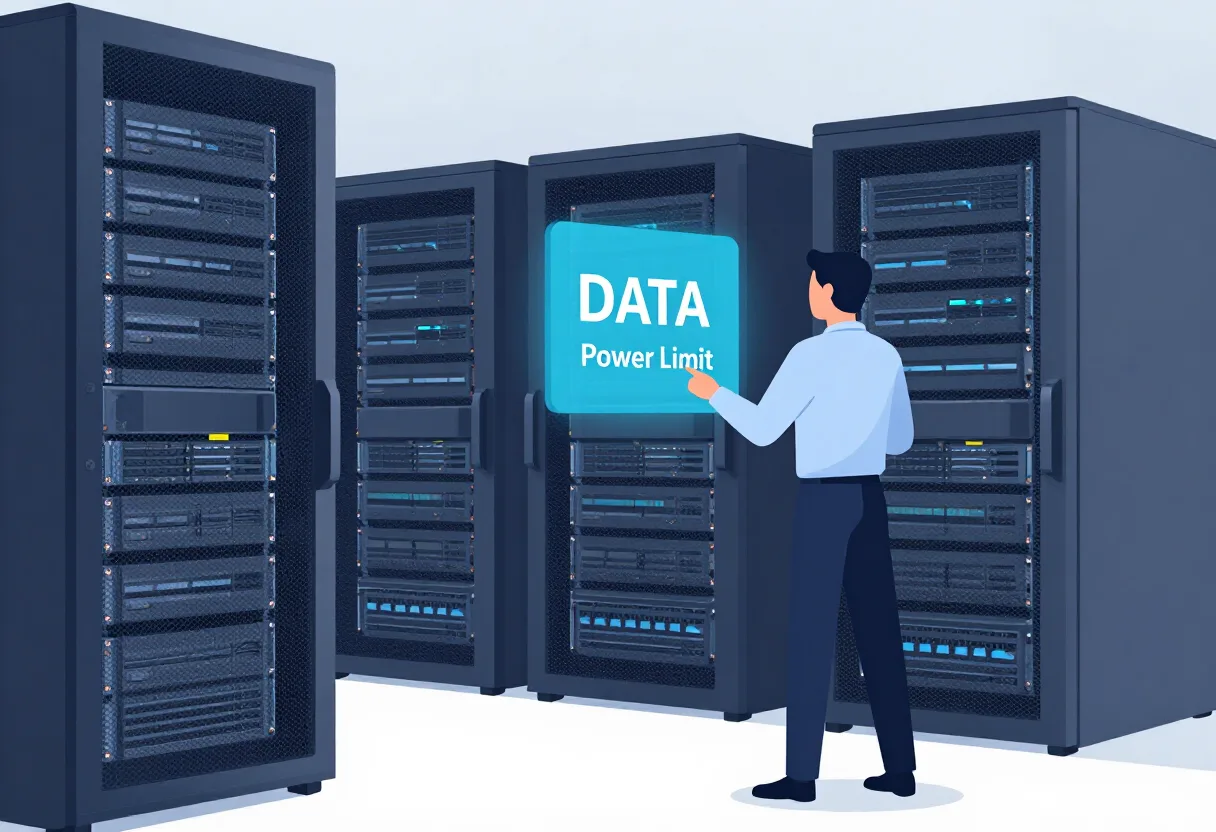
Inference is turning the memory wall into a system constraint across capacity, latency, power and software, with the KV cache exposing the sharpest trade-offs.
- By
- Nathan Brooks
- Filed
- Channel
- AI & Compute
- Read
- 4 min read
By Nathan Brooks
AI inference is turning the memory wall from a bandwidth shortfall into a multidimensional system constraint spanning capacity, latency, power, interconnect, and software. That is the central argument of a new analysis published by Semiconductor Engineering, and it lands at a moment when the industry's compute race has quietly stopped paying the dividends it once did.
For years, AI infrastructure scaled by adding accelerators, building larger heterogeneous clusters, and chasing peak performance. That produced increasingly capable models. Deployment at scale changes the arithmetic. Infrastructure now must support more users, larger models, longer context windows, and more complex applications. Performance still matters, but latency, power, utilization, predictability, and cost per inference now share the ledger.
The piece's sharpest point: the practical limit on an inference system is not installed memory capacity but "usable capacity within the workload's latency, bandwidth, and power envelope." A system may hold substantial aggregate memory, yet data sitting in a lower tier can be technically available and still too distant, congested, or costly to move inside the application's service-level objective.
What does the KV cache actually cost?
The key-value cache illustrates the trade-off with unusual clarity. During transformer inference, attention mechanisms generate key and value representations for tokens in a sequence. Retaining them lets later decoding steps reuse prior states instead of recomputing earlier tokens. The optimization cuts compute demand and, in the same motion, increases the data the system must retain and repeatedly access.
Longer context windows grow the KV-cache footprint of each sequence. Higher concurrency multiplies that requirement across simultaneous requests. What began as a compute saving becomes a memory and data-movement burden.
KV state also has a lifecycle, the analysis notes. It is created during prefill, repeatedly accessed during decode, and may be retained for reuse. Depending on the serving architecture, it may be moved, replicated, compressed, or evicted. Each phase places different demands on bandwidth, capacity, latency, and control. The verdict the authors reach is blunt: "every movement of data must earn its cost." Moving KV state to a cheaper tier helps only when the high-tier capacity it frees, or the recomputation it avoids, outweighs transfer latency, bandwidth consumption, energy, and the risk of missing an SLO.
Why inference changes the economics
Training, for all its enormous compute and bandwidth appetite, is a bounded process: a model gets built or updated. Inference is dynamic and ongoing. Every prompt, generated token, agent action, and application interaction consumes infrastructure resources.
Nor is inference one workload. A conversational assistant may emphasize latency. An enterprise assistant may process substantial proprietary context while serving many users. AI agents may retain information across multiple steps. Consumer services may prioritize throughput and cost per token, while batch inference favors utilization. The architecture must follow the workload, not the other way around.
Is there a single memory metric?
No, and the analysis is firm on this. High aggregate throughput can hide unacceptable time to first token, inter-token latency, or tail latency during congestion. A more meaningful measure may be tokens per watt or tokens per dollar while meeting latency targets. Headline bandwidth alone does not solve the memory wall.
The relevant question, as the piece frames it: "Which combination of compute, memory, interconnect, and software delivers predictable performance within the available power and cost envelope?"
Adding tiers introduces its own decisions. A useful architecture must answer four questions, which the authors list as placement, movement, coordination, and assurance:
- Placement: which data must remain near compute, and which can tolerate a more distant tier;
- Movement: when transferring data beats recomputing it;
- Coordination: how accelerators, memory controllers, interconnects, and software manage placement without congestion;
- Assurance: how the system preserves reliability, isolation, data integrity, and predictable performance as inference state crosses additional boundaries.
The trade-offs compound. Moving data to a larger-capacity tier may add latency. Replication avoids recomputation but consumes bandwidth and capacity elsewhere. Pooling improves utilization only if contention and quality of service stay controlled.
Does the wall keep moving?
It does. Higher-bandwidth memory, greater capacity, faster interconnects, compression, and smarter cache management relieve constraints without eliminating them. As one bottleneck improves, models and applications absorb the additional resources; longer contexts, higher concurrency, multimodal models, and more sophisticated agents will keep relocating the pressure. Hardware-software co-design becomes critical because every layer influences data movement.
The next phase of AI infrastructure scaling, the analysis concludes, will not be defined by compute alone or solved by adding memory. The harder task is coordinating where inference data resides, when it moves, and whether moving it beats recomputing it. The memory wall is becoming a broader test: how effectively a system converts distributed memory resources into predictable AI performance.
Original: rambus.com
More from Nathan Brooks
Show full bio
Senior reporter covering people, launches and day-to-day practice in Semiconductors, chip manufacturing, hardware, AI compute at Chip Dispatch.
884 articles
Related articles
micron-claims-2-8x-inference-gain-by-breaking-kv-cache-memory-wall
Micron Claims 2.8x Inference Gain by Breaking KV Cache Memory Wall
dapustor-maps-kv-cache-offload-to-high-capacity-nvme-ssds
DapuStor Maps KV Cache Offload to High-Capacity NVMe SSDs
power-not-accelerators-now-caps-data-center-ai-scaling-6bd78ff3
Power, Not Accelerators, Now Caps Data Center AI Scaling
volantis-raises-88-million-to-connect-ai-chips-and-memory-37e200c4
Volantis Raises $88 Million to Connect AI Chips and Memory