Hardware & Components · 4 min read
AI Server Boards Burn Through Drill Bits, and China Sells Them
AI server PCBs with 20-plus layers and 40:1 aspect-ratio holes are wearing out tungsten-carbide drill bits in under 200 holes. HSBC forecasts a 24% supply shortfall in 2027, and China's Guangdong Dtech makes 3 in 10 bits worldwide.
Key takeaways
- A micro-drill bit for AI server PCBs can wear out after fewer than 200 holes versus about 2,000 on older materials, per HSBC.
- HSBC forecasts a 24% global supply shortfall in PCB drill bits in 2027, with demand growing 55% annually for three years.
- Guangdong Dtech made roughly 3 in 10 drill bits in 2025, with monthly capacity potentially climbing from 160 million in June to over 235 million by year-end.
- J.P. Morgan's Avery Chan forecasts a qualified HVLP4 copper foil shortage of about 700 tonnes per month in 2026, rising to 1,200 tonnes in 2027.
- An Nvidia Rubin Ultra backplane could contain 78 layers, per HSBC, versus 4-8 layers for a notebook PCB.
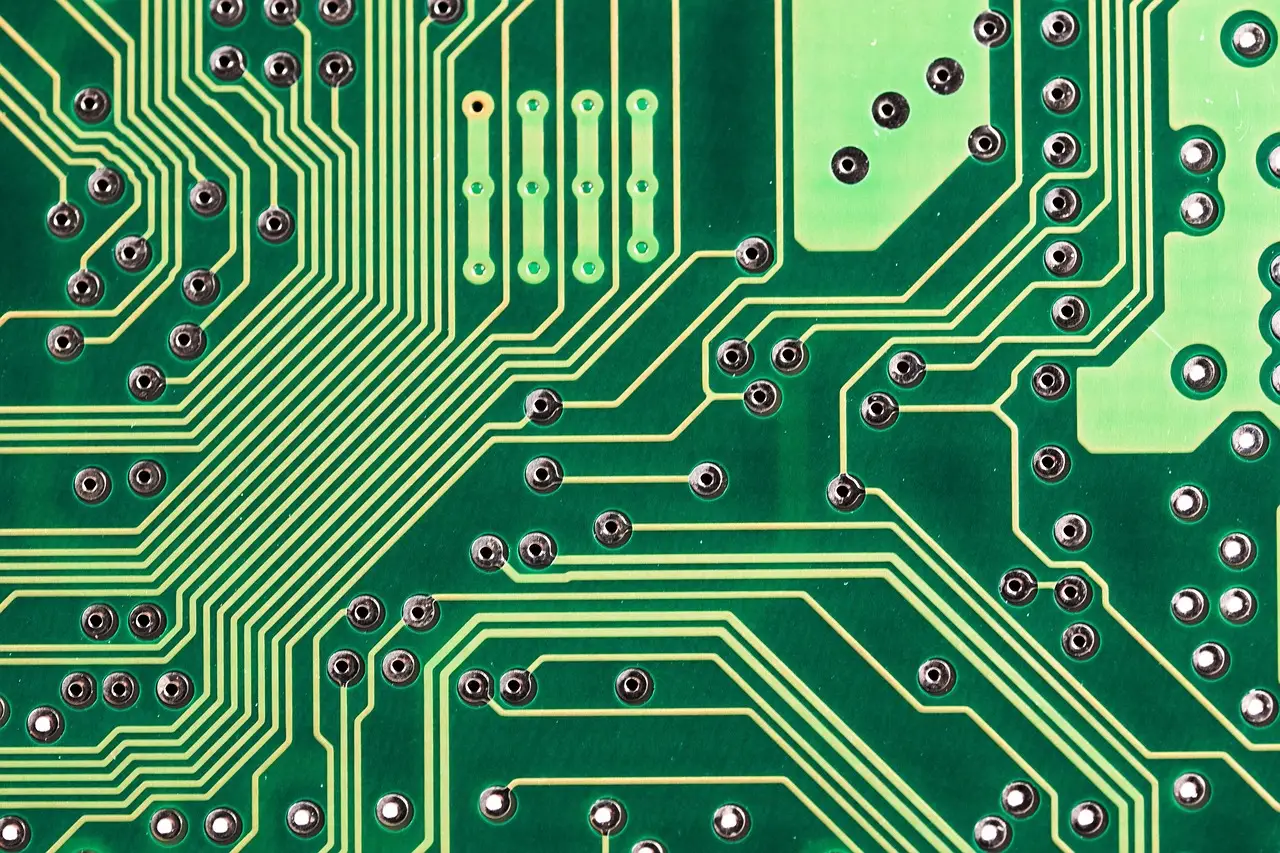
A drill bit boring holes in an AI server's circuit board can be spent after fewer than 200 holes, HSBC estimates — versus roughly 2,000 holes on older materials — and that gap between tool life and board complexity is now reshaping who supplies the PCB industry. China is moving fastest, and Beijing is writing policy to keep it that way.
More than 20 Chinese PCB manufacturers announced major expansion plans in the first half of 2026. Three recent reports from HSBC and J.P. Morgan suggest shortages will stretch well beyond glamorous components like GPUs, down to tungsten-carbide drill bits and the copper foil bonded onto board substrates. The AI boom, in other words, is stressing every link of the manufacturing chain.
Why are boards getting so hard to drill?
PCBs are built by layering copper and insulating material, then drilling holes through the stack to connect circuits. AI servers demand far more of everything.
HSBC estimates a notebook PCB carries four to eight layers. Boards for Nvidia's H100 generation of GPUs run more than 20. And the bank forecasts a backplane in Nvidia's Rubin Ultra systems could reach 78 layers. It also projects a 36% annual rise in holes required per board between 2025 and 2028.
The holes themselves are getting nastier. Taiwanese brokerage KGI Securities reports the depth-to-diameter aspect ratio has climbed from around 20:1 to 30:1 or 40:1. That means pushing an extremely thin bit deeper into tougher material without bending, breaking, or damaging nearby circuitry.
New grades of copper-clad laminate — the glass-fibre-and-resin material onto which copper is bonded — resist the older tungsten-carbide tools. "AI PCBs are denser with thicker layers, requiring more holes drilled per PCB," writes Helen Fang, head of Asia Pacific industrials research at HSBC. Harder laminates, she notes, wear the bits out faster.
Who wins from the wear?
Drill-bit makers, mostly. HSBC forecasts global demand growing 55% a year over the coming three years. Production is rising too, but not enough: the bank still forecasts a 24% supply shortfall in PCB drill bits in 2027.
That shortfall points buyers toward China, just as the West tries to reduce its dependency on the country for rare earths and other GPU inputs. Guangdong Dtech is already the world's largest PCB drill-bit maker by volume. Around three in every ten bits made in 2025 came from the company, and its monthly capacity could climb from 160 million bits in June to more than 235 million by year-end.
Japanese and Taiwanese manufacturers still dominate the premium end, according to consultancy Frost & Sullivan, though Chinese makers are closing that gap. In its 2026 interim results, Dtech said it had begun mass-producing drill bits with aspect ratios exceeding 40:1 while developing techniques for bits beyond 60:1. Its newer diamond-coated tools for particularly tough M9+ board materials have entered small-scale use.
What about copper foil?
China has grip there too. Defu Technology, historically a key copper-foil supplier for lithium-ion batteries, is retooling to chase the AI boom. "AI server PCB/CCL upgrades require smoother HVLP copper foil to reduce high-speed signal loss," writes J.P. Morgan analyst Avery Chan.
HVLP — hyper-very-low-profile — foil must be smooth enough to minimize signal loss yet still adhere to the insulating material beneath it. Suppliers outside mainland China have long ruled the category: Japan's Mitsui Kinzoku and Furukawa Electric, plus Taiwan's Co-Tech, held more than 60% of global HVLP supply in 2025.
Defu shipped around 700 tonnes of HVLP foil in September, including more than 180 tonnes of HVLP4. Chan forecasts a shortage of qualified HVLP4 supply of roughly 700 tonnes a month in 2026, rising to 1,200 tonnes in 2027. Defu plans to add 50,000 tonnes of annual high-end PCB foil capacity across 2027 and 2028 — capacity that must first pass stringent customer testing.
Does testing hardware feel the squeeze too?
It does. Before finished chips ever reach a server, they run through specialist probe cards and sockets that depend on sophisticated PCBs of their own. "PCB is becoming the bottleneck and the value-add in probe cards," wrote J.P. Morgan analyst Jerry Tsai.
China's government is pushing on the same door. In September, the Ministry of Industry and Information Technology and the National Development and Reform Commission published a five-year plan calling for advances in high-frequency, high-speed and densely layered PCBs, alongside copper-clad laminates, low-profile copper foil and specialist manufacturing equipment.
But new fabs won't pay off overnight. The most sophisticated PCBs demand experience, specialist equipment, and the ability to hit complex designs consistently at scale. Tsai's warning is blunt: "the learning curve is measured in years, rather than quarters." With HSBC's 24% drill-bit gap looming for 2027, buyers outside China may find the price of that learning curve rises every year they wait.
Tom's Hardware (Source)
More from Rebecca Stone
Show full bio
Correspondent covering technology and product news in Semiconductors, chip manufacturing, hardware, AI compute at Chip Dispatch.
1,358 articles