Alphabet Sends Google TPUs Into Orbit in First Space Data Center Test
A Falcon 9 rideshare will test Google TPUs on a solar-powered Planet Labs satellite, Alphabet's first orbital validation of AI silicon under radiation and thermal stress.
- By
- Sophie Lindqvist
- Filed
- Channel
- AI & Compute
- Read
- 3 min read
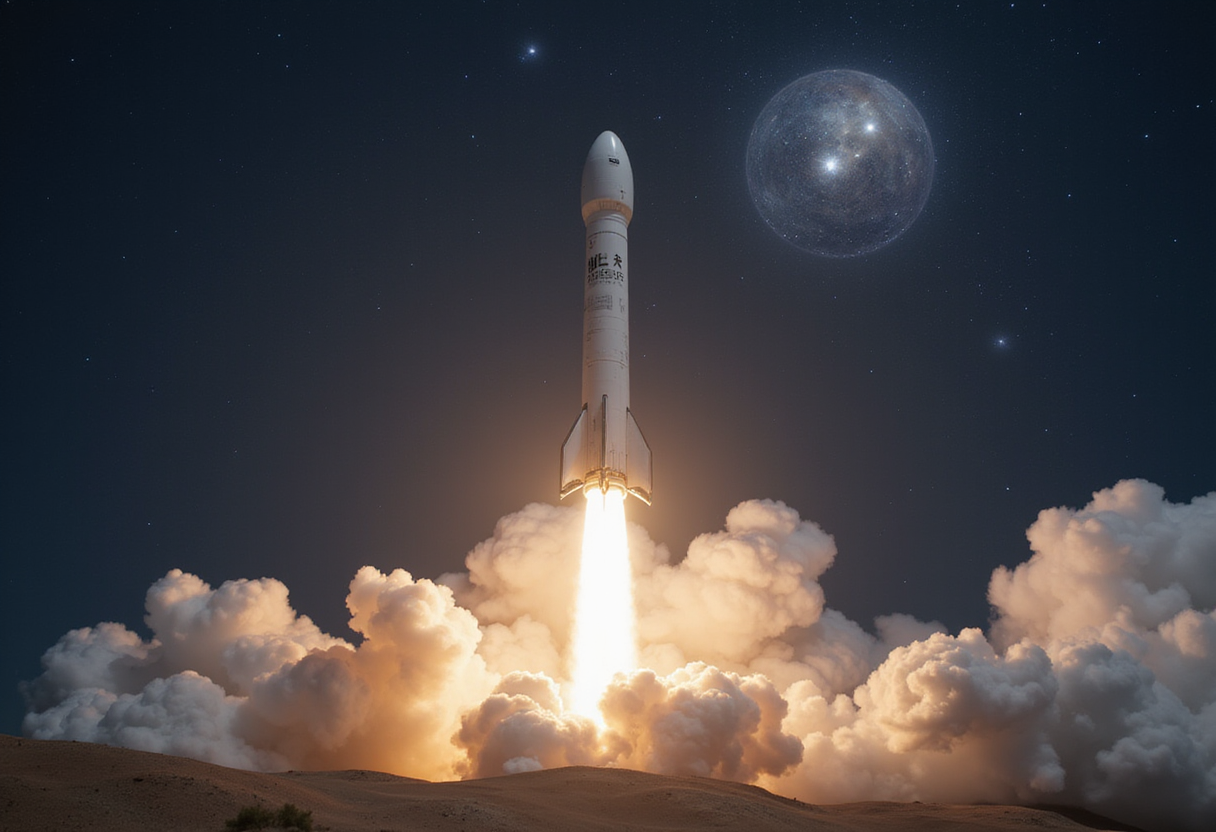
A SpaceX Falcon 9 lifting off Thursday from Vandenberg Air Force Base in California will carry Google tensor processing units into low Earth orbit, marking the first in-orbit test of Alphabet's Project Suncatcher and the most concrete step yet toward AI data centers in space.
The launch is scheduled for 11:15 a.m. PT from Vandenberg, in Santa Barbara County. During the uncrewed Transporter-18 rideshare mission, the rocket will deploy Planet Labs satellites, including a solar-powered prototype equipped with Google's TPUs — the same chip family that backs Google's ground-based AI infrastructure.
Project Suncatcher is a "moonshot" initiative that Google first revealed in November 2025. Alphabet frames it as a means of "exploring whether space could one day host scalable machine learning infrastructure," according to a post announcing the launch plan. The goal: reliable, solar-powered AI computing that runs continuously in orbit.
The physics argument is straightforward. In low Earth orbit, satellites can "access near-constant sunlight, generating up to eight times more solar power than on Earth," Alphabet said. Eventually, the company expects to "link together multiple constellations of satellites, allowing them to manage larger AI workloads while in orbit."
What Alphabet does not yet know is how its TPUs will behave off-planet. The company has already run AI workloads on the chips at a University of California, Davis facility, but low Earth orbit imposes conditions no terrestrial data center replicates — radiation exposure, extreme temperature swings, and the engineering challenge of cooling silicon in a vacuum.
The launch also tightens an already unusual corporate relationship. Alphabet holds a stake in SpaceX valued at more than $82 billion, after SpaceX went public in June in a record IPO. The two companies are close partners even as their AI divisions compete directly with each other.
SpaceX, led by Elon Musk, has its own orbital compute ambitions. The company plans to build and launch its own orbital data centers built from swarms of satellites developed in Redmond, Washington, fitted with GPUs and solar arrays that SpaceX intends to produce with Tesla, Musk's automaker. Musk said earlier this year that data centers in space would be the cheapest way to train AI, "and that will be true within two years, maybe three at the latest." SpaceX COO Gwynne Shotwell said at an event in September that the company will deploy "supercompute in space" in 2027.
Those timelines run ahead of what industry experts consider realistic. Analysts and industry observers describe space-based data centers as a far-out proposition, if feasible at all. Rocket launches remain capacity-constrained and expensive, and orbital compute platforms would need chips and cooling systems hardened against extreme temperatures, radiation shielding, and defenses against the growing problem of orbital debris. Launch cadence — not chip supply — is the binding constraint on the business case.
For semiconductor watchers, the test matters because it pushes AI silicon into an operating environment with no service contract. A TPU that trains models in a Davis server rack tells Alphabet little about how the same die performs under radiation flux and thermal cycling. The Transporter-18 payload is effectively a qualification flight for compute hardware in a new deployment domain, one where replacement requires a rocket.
The business context is pressure on terrestrial AI infrastructure. SpaceX has promoted supercomputers in space as the next frontier in AI infrastructure, touting "infinite real estate" in orbit as a way to escape the data center backlash on the ground — community resistance, power constraints, and water consumption that increasingly complicate new buildouts. Whether orbital platforms can beat the economics of a hyperscale campus depends on launch costs falling far enough to offset hardened-silicon premiums.
Thursday is a busy day for SpaceX beyond the rideshare. The company is also slated to launch astronauts to the International Space Station from Florida's Space Coast for NASA, the start of a six-month mission, making Transporter-18 the second potentially historic SpaceX launch in a single day.
The first Suncatcher test data — power generation, thermal behavior, and TPU throughput in orbit — will determine whether Alphabet commits to larger constellations or keeps the project firmly in moonshot territory.
Original: cms.cnbcafrica.com
More from Sophie Lindqvist
Related articles
google-to-fly-first-ai-chips-in-space-under-project-suncatcher-276fccc3
Google to Fly First AI Chips in Space Under Project Suncatcher
spacex-to-launch-google-ai-chips-into-orbit-f680c03f
SpaceX to Launch Google AI Chips Into Orbit
google-to-launch-ai-chips-into-space-for-orbital-data-centers-d257cc02
Google to Launch AI Chips Into Space for Orbital Data Centers
google-will-test-ai-chips-in-orbit-under-project-suncatcher-2376349e
Google Will Test AI Chips in Orbit Under Project Suncatcher