AMD's MEXT Halves DRAM Needs as Nvidia Absorbs Huang Exit
AMD's MEXT runs 145 servers at half the DRAM; Nvidia absorbs Huang's exit as China reportedly orders 6 million RTX 5500 Pro cards.
- By
- Nathan Brooks
- Filed
- Channel
- Memory & Storage
- Read
- 3 min read
By Nathan Brooks
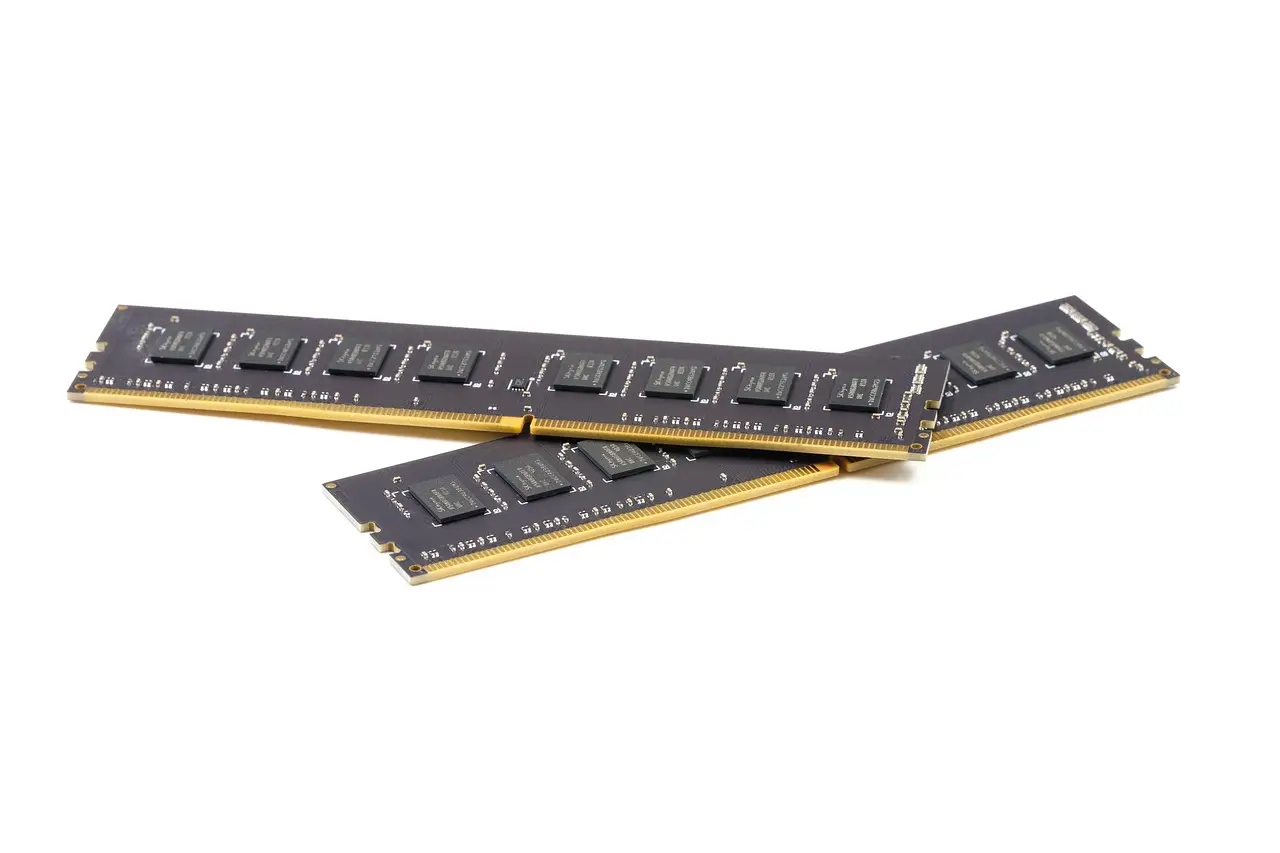
AMD says its MEXT predictive memory engine delivers 99% of a server's performance while running on half the DRAM, and the company already has the system deployed across 145 servers, with plans to reach 2,000 next year. That number matters. DRAM capacity constraints have become an industry-wide sticking point as the AI buildout accelerates die demand, and costs are climbing across client and enterprise hardware alike.
MEXT pairs a transformer model with what AMD describes as clever use of flash storage. The claim is precise: near-full server performance at half the memory footprint. For buyers watching DRAM prices spiral, the arithmetic is the pitch.
Who wins the local AI workstation fight?
Hyperscalers and neoclouds no longer hold a monopoly on AI ambitions. Enthusiasts now buy PCs dedicated to running local models, and the field is crowded, from the recently released RTX Spark to AMD's Strix Halo platform.
Two unlikely contenders have now gone head-to-head: Nvidia's DGX Spark and Apple's Mac Studio. Benchmark suites covering both real-world and synthetic workloads, plus tests of large models on both machines, settled the question of which device suits which workload. With prices at levels the source describes as eye-watering, choosing correctly for the intended workload is no longer optional. It is the whole purchase.
What does Jensen Huang's exit change?
The week's dominant storyline remains Huang's departure as Nvidia's founder-CEO, following a series of alleged extramarital affairs. Much coverage has fixated on his relationship with alleged Chinese spy Alice Huang. Less examined is his unlikely connection to Kang Wei, Ms. Huang's husband, who recently landed in trouble with China's Securities Regulatory Commission.
The context is commercial, not merely tabloid. Nvidia spent five years transforming itself from a gaming GPU manufacturer into an AI business, and the ramifications of losing its founder reach every corner of that transformation.
Can China still get Nvidia compute?
Nvidia-based compute remains difficult to find in China, yet demand has not softened. AI labs are lining up for racks and newer cards such as the RTX 5500 Pro, with over 6 million units reportedly ordered for the export-compliant, GB202-based AI accelerator.
The catch is twofold. Chinese labs may still pay a premium, and they must run enough homegrown silicon to stay clear of Beijing's rules. Some companies have moved to renting compute in Southeast Asian countries, including Malaysia and Singapore, in an attempt to route around export controls. Whether that workaround survives regulatory attention is a question the source leaves open.
Where does Google's TPU stack stand?
Google remains one of Nvidia's largest competitors in AI, and its eighth-generation TPU lineup has expanded again with two new chips: TPU 8i Max and TPU 8tx. The 8i Max doubles the specifications of the original TPU 8i and targets long-context agentic AI. The 8tx is the stranger sibling, swapping AMD's EPYC into the design to serve specialized security workloads. The additions signal further diversification across Google's eighth-generation stack.
Is AI designing chips yet?
Cognichip is rolling out AI-powered chip design tools under the name Artificial Chip Intelligence, or ACI, a suite of proprietary models revealed in September and built specifically for semiconductor engineering. The company's Chief Product Officer laid out the roadmap in an extensive interview. No shipping product yet uses the tools, but the promise is real: automating labor-intensive engineering tasks could substantially improve chip development productivity.
How do you score a jailbreak?
The Frontier Model Foundation has proposed a Jailbreak Rating Framework to classify the type and severity of possible LLM jailbreaks. Four scoring components aim to identify jailbreak vectors and inform labs before they occur in the real world, where consequences could be disastrous. It is a defensive measure, and a modest one, but it arrives as the need for it grows.
The through-line for the week: memory relief from AMD, compute scarcity in China, and a leadership vacuum at Nvidia. Next year's 2,000-server MEXP target will show whether half the DRAM is a roadmap or a reality.
Source: Tom's Hardware
More from Nathan Brooks
Show full bio
Senior reporter covering people, launches and day-to-day practice in Semiconductors, chip manufacturing, hardware, AI compute at Chip Dispatch.
948 articles
Related articles
amd-says-mext-keeps-95-of-server-speed-on-half-the-dram
AMD says MEXT keeps 95% of server speed on half the DRAM
amd-acquires-mext-to-extend-dram-onto-flash-as-memory-prices-surge-c55cecbf
AMD Acquires MEXT to Extend DRAM Onto Flash as Memory Prices Surge
nvidia-flags-15-percent-nvl72-hike-as-memory-spot-prices-climb-sevenfold-92e6ff36
Nvidia Flags 15 Percent NVL72 Hike As Memory Spot Prices Climb Sevenfold
memory-to-hit-62-of-chip-revenue-techinsights-says
Memory to Hit 62% of Chip Revenue in 2027, TechInsights Says