Apple's First Touchscreen MacBook Pro Starts at $2,899
Apple's first touchscreen MacBook Pro pairs a tandem OLED panel with M5 Pro or M5 Max chips. The 14-inch model starts at $2,899, weighs 3 pounds and becomes available Nov. 16.
- By
- Rebecca Stone
- Filed
- Channel
- Consumer Tech
- Read
- 3 min read
By Rebecca Stone
Apple's first touchscreen MacBook Pro starts at $2,899, and the 14-inch model becomes available Nov. 16.
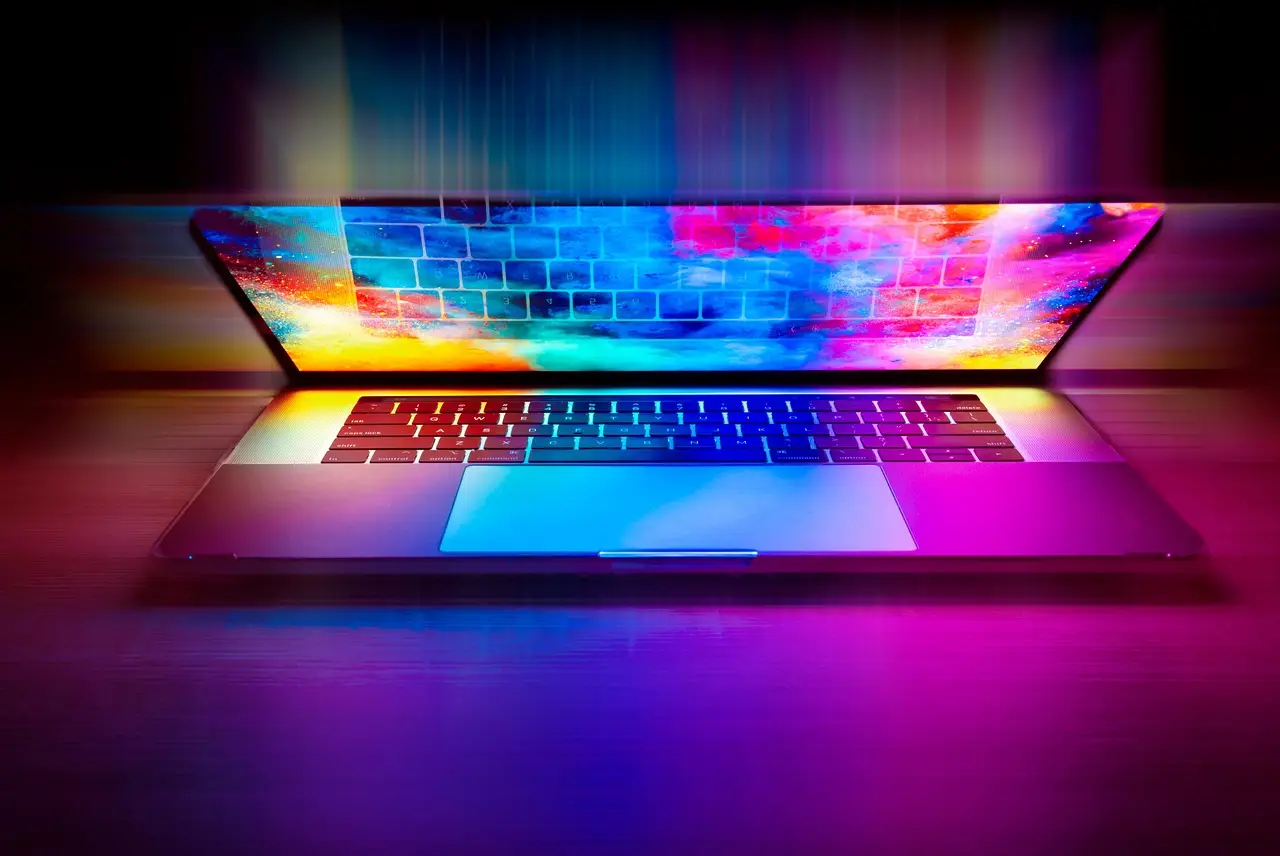
At Wednesday's “Pro and tell” event, CEO John Ternus took the stage to unveil an all-new MacBook Pro equipped with an OLED touchscreen. The 14-inch model weighs 3 pounds, according to Ternus, and a glowing Apple logo has returned to the lid.
The lid detail is small. The product strategy is not. Apple spent more than a decade steering clear of touchscreens on its laptops while repeatedly changing the controls above the keyboard. The new Pro reverses that posture with a panel Apple calls “ProLED XDR,” a tandem OLED display rated at up to 2,000 nits of brightness, a 120Hz refresh rate and a 10,000,000:1 contrast ratio.
What hardware has Apple confirmed?
The laptop will use either an M5 Pro or an M5 Max chip, Apple said at the event. It will not use the M6 chip appearing in the other MacBook Pros announced this week, leaving M5 Pro and M5 Max as the touchscreen model's confirmed silicon options.
The announcement does not specify a process node, core count, graphics configuration, memory capacity or a separate price for the M5 Max option. It also does not attach the $2,899 starting price to either named chip family. Buyers therefore have two confirmed figures—the $2,899 entry price and Nov. 16 availability—but no disclosed configuration-level pricing or manufacturing roadmap.
That leaves the display as the clearest technical differentiator. Apple identifies ProLED XDR as tandem OLED, and the stated specifications pair the touchscreen format with up to 2,000 nits of brightness, 120Hz refresh and a 10,000,000:1 contrast ratio. The announcement gives no panel supplier, production-volume target or touchscreen-integration detail. For commercial planning, the display numbers describe the product specification, not the scale at which Apple can supply it.
Why did Apple wait?
The company's earlier position was blunt. In 2010, Steve Jobs called touchscreen laptops “ergonomically terrible.” Two years later, on an earnings call, then-CEO Tim Cook responded to a question about tablet and laptop convergence with a domestic analogy: “You can converge a toaster and a refrigerator, but those things are probably not going to be pleasing to the user.”
Apple nevertheless experimented with changing the interface between the display and keyboard. Starting in 2016, it replaced function keys with the Touch Bar on MacBook Pros. The 2021 MacBook Pro redesign brought back physical function keys, and Apple fully dropped the Touch Bar in 2023.
The new touchscreen Pro arrives after Apple removed the Touch Bar, rather than extending that control strip. It adds touch input to a notebook line whose 14-inch model starts at $2,899, while the same week brings a different set of Apple hardware: M6-powered iMacs and an iPad Mini with an OLED display.
That sequence matters commercially. Buyers now face a split inside the MacBook Pro line: the touchscreen model uses M5 Pro or M5 Max, while the other MacBook Pros announced this week use M6. The wider week's announcements also include an iPad Mini with an OLED display and M6-powered iMacs.
What remains commercially unresolved?
Apple does not say how the touchscreen changes daily use, whether every configuration reaches the quoted display limits, or what options cost above $2,899. It also does not describe stylus support or software behavior; the onstage specification attributed to CEO Ternus is the 3-pound weight.
Nov. 16 availability puts the immediate test on price and demand: whether customers will pay $2,899 for the 14-inch touchscreen Pro while Apple also pushes the M6 MacBook Pro models announced in the same week.
Original: apple.sjv.io
More from Rebecca Stone
Show full bio
Correspondent covering technology and product news in Semiconductors, chip manufacturing, hardware, AI compute at Chip Dispatch.
726 articles
Related articles
apple-ships-touchscreen-macbook-pro-with-oled-and-a-5-799-problem
Apple Ships Touchscreen MacBook Pro With OLED, and a $5,799 Problem
apples-october-event-could-bring-touch-oled-and-m6-macs
Apple’s October event could bring touch, OLED and M6 Macs
apple-sets-event-m6-silicon-and-oled-macs-take-the-stage-7791ffdc
Apple Sets October 28 Event, M6 Silicon and OLED Macs Take the Stage
fully-specced-touchscreen-macbook-pro-reaches-14-549
Fully Specced Touchscreen MacBook Pro Reaches $14,549