Apple Ships Touchscreen MacBook Pro With OLED, and a $5,799 Problem
Five minutes on a showroom floor: the OLED MacBook Pro is lighter, brighter, and finally touch-enabled. The panel impresses; the $5,799 price does the rest of the talking.
- By
- Nathan Brooks
- Filed
- Channel
- Consumer Tech
- Read
- 3 min read
Apple's first touchscreen MacBook Pro carries a starting problem that has nothing to do with touch: a 16-inch model with an M5 Max, 64 GB of RAM and 2 TB of storage is priced at $5,799. That figure, confirmed at the announcement in Los Angeles, frames everything else about the machine. The OLED panel is the real news. The touchscreen, after more than a decade of speculation, is almost an afterthought.
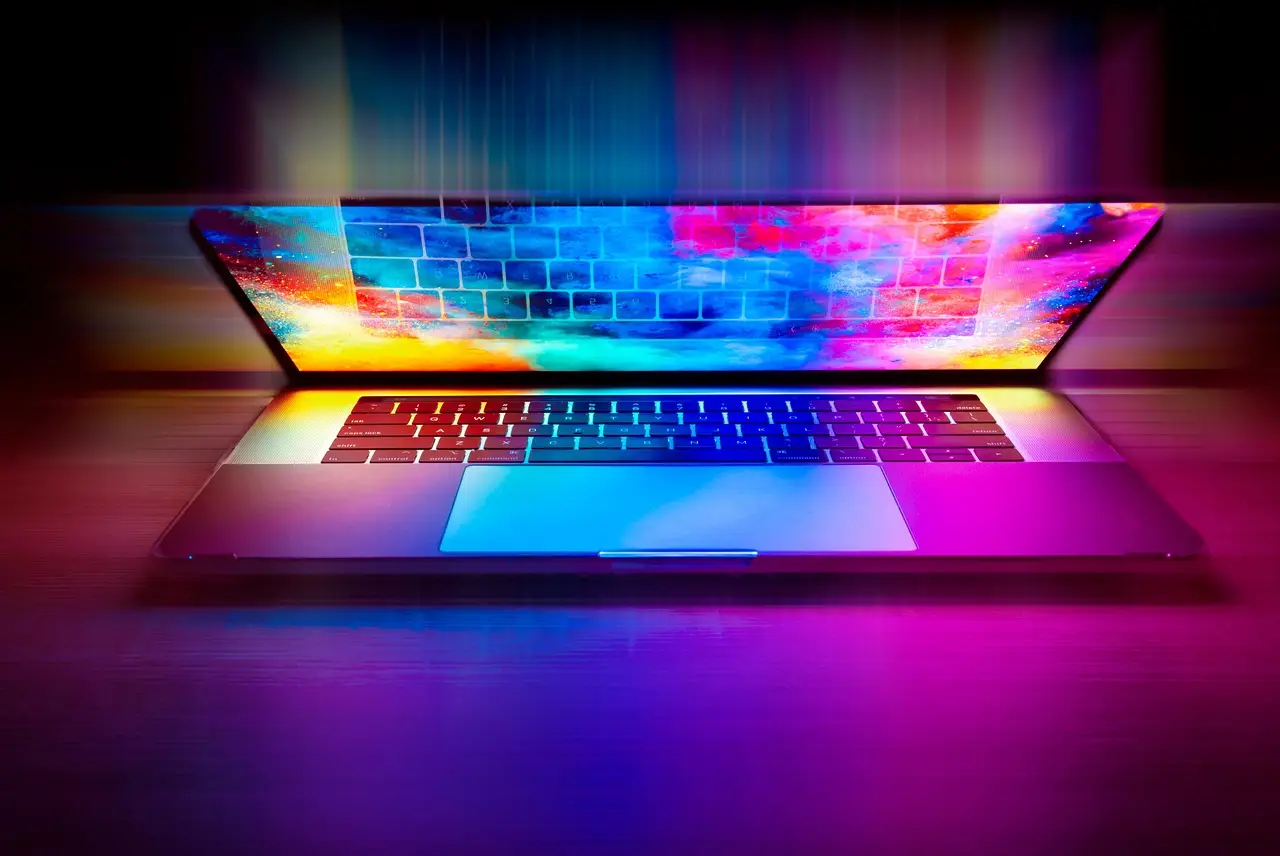
Ars Technica's Samuel Axon spent roughly five minutes with the new MacBook Pro on a crowded showroom floor. His verdict on the display was unambiguous. The peak brightness, absolute blacks, balanced color and dynamic range were, in his words, "genuinely remarkable," and he describes himself as "quite the display snob." He called the panel "an enormous upgrade over the MiniLED screen in the previous MacBook Pro."
How much does the touchscreen actually change?
Not much, at first glance. Axon tested the usual gestures during his brief session with the machine:
- Swiping between desktop spaces with three fingers
- Pinching, zooming and scrolling in images and the Maps app
- Dragging and resizing windows, including a flick gesture that snaps them to either side
- Dragging files between applications
- Launching and closing apps
- Drawing in a painting and illustration app, and sketching colors onto a 3D model
- Scrubbing through video playback
All of that is available today through trackpad gestures, at least at the operating-system level. Some creative applications, such as finger painting directly on the screen, offered a bit more. Playing an on-screen musical keyboard works, though Axon found it awkward because the laptop does not convert into a tablet mode.
The more significant limitation is what the product is not. When credible reports of a touchscreen MacBook Pro first emerged, Axon expected a convertible with Apple Pencil support — effectively a large iPad or drawing tablet. Apple delivered the ordinary laptop shape instead, and staff on the floor confirmed it does not support the Apple Pencil. Steve Jobs was famously against the idea; under Tim Cook and hardware chief John Ternus, Apple proceeded anyway, in the most conservative form imaginable.
What else changed on the chassis?
The new model is noticeably lighter. Axon's daily machine is a 14-inch MacBook Pro with an M1 Max, which he considers heavy for its size, and he could feel the difference immediately when he picked up the new unit. It is not a different weight class. It is simply a difference you notice.
The camera notch has become a Dynamic Island, which can resize to display live activities on the fly. On a laptop's larger screen, it is far less dominant than it is on an iPhone. One open question remains: the notch-era MacBook Pro lets users maximize apps just below the cutout so the image stays intact, and Axon could not yet verify whether fullscreen games behave the same way around the Island. He counts the feature among his favorites on the iPhone — Apple's knack for turning an albatross into an appealing feature.
The Apple logo on the lid glows again, a touch Axon calls "a little bit nostalgic," conceding that some will find it tacky and others essential. The keyboard, touchpad and port selection are unchanged.
Who pays $1,600 for RAM?
The pricing structure does Apple no favors at the high end. Moving from 64 GB to 128 GB of RAM adds $1,600 to the bill. Most buyers need nowhere near that much memory. Some, Axon notes, might want it for future-proofing local AI workflows — the one workload that makes the figure defensible rather than merely extravagant.
His closing judgment follows the lineup's tradition: impressively high-end components, led by an outstanding OLED panel, paired with a very steep price. It took far too long for OLED to reach the MacBook Pro, and Apple cut no immediately obvious corners on quality now that it has arrived. The surprise, after well over a decade of back-and-forth, is simply that the touchscreen finally happened at all. The full review, with battery and sustained-performance testing, will determine whether the panel alone justifies the premium.
Source: Ars Technica
More from Nathan Brooks
Show full bio
Senior reporter covering people, launches and day-to-day practice in Semiconductors, chip manufacturing, hardware, AI compute at Chip Dispatch.
740 articles
Related articles
apple-s-first-touchscreen-macbook-pro-starts-at-2-899
Apple's First Touchscreen MacBook Pro Starts at $2,899
fully-specced-touchscreen-macbook-pro-reaches-14-549
Fully Specced Touchscreen MacBook Pro Reaches $14,549
apples-october-event-could-bring-touch-oled-and-m6-macs
Apple’s October event could bring touch, OLED and M6 Macs
apple-ships-a-touchscreen-macbook-pro-after-15-years-of-saying-no
Apple Ships a Touchscreen MacBook Pro After 15 Years of Saying No