Apple’s record earnings meet a rising margin problem
Apple (NASDAQ:AAPL) delivered roughly 11% earnings growth in a record fiscal fourth quarter, but memory and Siri AI costs, Q1 2027 supply constraints and valuation keep the rating at Hold.
- By
- Nathan Brooks
- Filed
- Channel
- Tech Business
- Read
- 4 min read
By Nathan Brooks
Apple (NASDAQ:AAPL) grew earnings by roughly 11% in a record fiscal fourth quarter even without tariff refunds, according to the analyst. The verdict remained deliberately cool: “I maintain my Hold rating on Apple following a record Q4, driven by strong iPhone and Mac sales.”
What drove the record quarter?
The analysis credits Apple’s iPhone and Mac franchises with most of the revenue beat. It provides no segment revenue, unit shipments, average selling prices, or consensus estimates, so the size and composition of the beat remain unquantified.
That omission limits how precisely the product mix can be read. It does not change the stated order of contribution: iPhone and Mac drove most of the beat, while no other franchise received credit for a material share.
Apple therefore pairs a record earnings result with a less comfortable forward margin picture. The operating result earns the record label; the cost structure earns the caution. That is the commercial tension in the analysis, not a contradiction in the numbers.
Why margin pressure is the harder story
Two cost pressures sit behind the Hold rating:
- Rising memory costs.
- Rising costs associated with Siri AI.
The source provides no dollar amount, gross-margin percentage, or cost breakdown for either pressure. It also identifies no memory supplier, memory type, semiconductor process node, wafer size, or production-capacity figure.
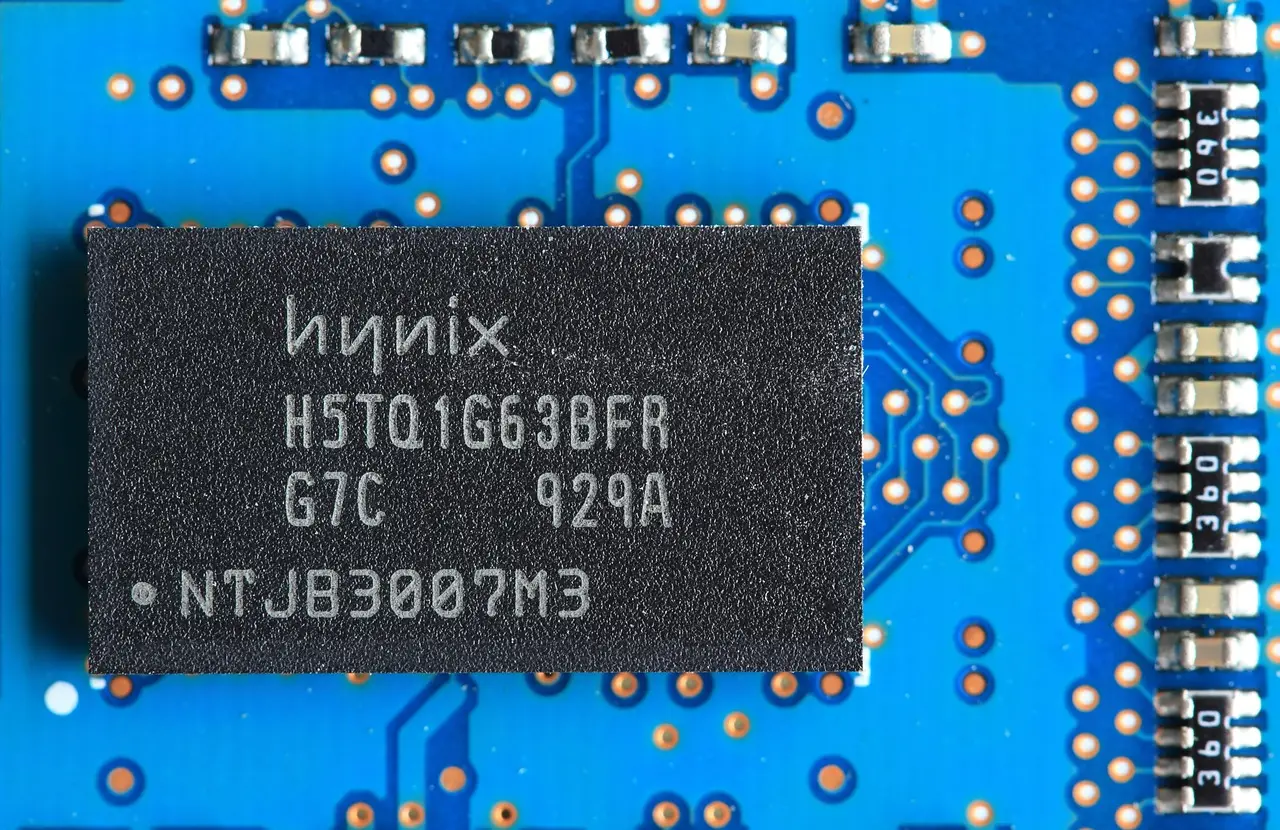
For semiconductor readers, the memory line is the clearest commercial signal. A named component cost is affecting finished-product economics, even though the analysis does not say whether memory prices, availability, or both are responsible.
The Siri AI expense provides a second pressure point, though the source gives no accounting or spending breakdown. Without those details, it is not possible to determine how much of each cost is temporary, recurring, or offset elsewhere in the business.
Stripping out tariff refunds leaves the roughly 11% earnings increase as the cleaner comparison. That supports the record-quarter claim, but it does not establish how much of the future margin pressure will reverse.
What does fiscal Q1 2027 guidance change?
The analyst’s reading of Apple’s guidance is blunt: “Guidance for Q1 2027 implies decelerating margins and supply constraints, with only modest upside in share price targets.”
This is an interpretation of guidance rather than a reported capacity plan. The source gives no numerical revenue, earnings, or margin forecast, and it supplies no production or shipment capacity. It also does not identify the constrained component.
Assigning the constraint to memory would therefore exceed the evidence, even though rising memory cost is one stated pressure. The analysis leaves open whether the issue involves component availability, procurement, or another part of the product chain.
Economically, slower margin expansion alongside constrained supply leaves less room to absorb higher input costs. Revenue can continue rising while profit conversion weakens. That is the tension embedded in the fiscal Q1 2027 guidance.
Why the balance of evidence still says Hold
The source describes Apple’s free cash flow as robust and notes shareholder returns. It gives no cash-flow amount, buyback figure, dividend rate, or payout ratio, so those positives remain qualitative.
The same analysis calls Apple fundamentally strong while saying its valuation is not compelling enough for an upgrade. The split is deliberate: operating performance supports the stock, but the valuation leaves limited room for a more bullish recommendation.
Risk-averse investors may still favor Apple because of that operating strength, according to the analyst. The Hold rating reflects valuation restraint rather than doubt about the quarter or the company’s basic franchise.
No share price or price-target range appears in the source. Without those inputs, the projected upside remains directional rather than measurable.
Disclosure and analytical limits
The source analyst states they hold no stock, option, or similar derivative position in any company mentioned and plan to initiate no such positions within the next 72 hours. The analyst says the analysis expresses their own views, was written without compensation other than from Seeking Alpha, and has no business relationship with any company whose stock is mentioned.
Seeking Alpha states that past performance does not guarantee future results and gives no recommendation about whether an investment is suitable for a particular investor. It also says the analyst’s views may not reflect Seeking Alpha as a whole.
The platform states that it is not a licensed securities dealer, broker, US investment adviser, or investment bank. Its analysts are third-party authors, including professional and individual investors who may not be licensed or certified by any institute or regulatory body.
What to watch in fiscal Q1 2027
The first test is whether Apple can sustain the iPhone and Mac demand behind the record quarter while memory and Siri AI costs continue to rise. Supply constraints could narrow that margin path faster than the underlying sales suggest.
If fiscal Q1 2027 constraints persist while those costs increase, Apple may have less room to convert strong product demand into margin expansion. That would leave valuation support, rather than operating momentum, as the deciding factor for the shares.
Source: seekingalpha.com
More from Nathan Brooks
Show full bio
Senior reporter covering people, launches and day-to-day practice in Semiconductors, chip manufacturing, hardware, AI compute at Chip Dispatch.
789 articles
Related articles
apples-5-trillion-test-services-slow-as-memory-costs-rise
Apple’s $5 Trillion Test: Services Slow as Memory Costs Rise
apples-145-10-billion-cash-flow-faces-memory-costs
Apple’s $145.10 Billion Cash Flow Faces Memory Costs
apple-spent-2-2-billion-on-capex-while-amazon-spent-77-3-billion
Apple Spent $2.2 Billion on CapEx While Amazon Spent $77.3 Billion
apple-s-inventory-jumps-154-as-memory-costs-bite-into-margins
Apple's Inventory Jumps 154% as Memory Costs Bite Into Margins