Bluetooth HDT Delivers 7.5 Mbps, Enough for Lossless Audio
Bluetooth SIG's new HDT feature reaches 7.5 Mbps, nearly 4x Bluetooth LE 2M, finally covering true lossless audio up to 24-bit 96 kHz over wireless.
- By
- Grace Kim
- Filed
- Channel
- Consumer Tech
- Read
- 3 min read
The Bluetooth Special Interest Group announced High Data Throughput (HDT) on November 4, a feature with a maximum bandwidth of 7.5 Mbps. That figure is almost four times the 2 Mbps ceiling of Bluetooth LE 2M. For the first time, the standard carries enough raw capacity for true lossless audio transmission over a wireless link.
What does 7.5 Mbps actually buy?
The margin over existing audio formats is decisive. CD-quality lossless audio requires roughly 0.8 to 1.4 Mbps. Bluetooth LE 2M, at 2 Mbps, could not reliably carry even the CD tier, which is why Bluetooth audio has relied on compressed codecs: SBC, AAC, aptX, LDAC and LC3. HDT clears every common studio tier with room to spare:
- 16-bit CD lossless: 0.8–1.4 Mbps
- 24-bit 48 kHz: about 2.3 Mbps
- 24-bit 96 kHz: about 4.6 Mbps
- 24-bit 192 kHz: 9.2 Mbps — the only common tier above the 7.5 Mbps ceiling
Audiophiles have long criticized Bluetooth on these grounds. Purists who prefer lossless playback have stayed on wired connections, treating codec compression as a downgrade even when, as the source notes, most listeners likely cannot distinguish lossless from a high-quality 320 kbps MP3 file. HDT removes the bandwidth argument itself rather than the perceptual one.
The feature is not aimed solely at audio. The SIG positions HDT for high-bandwidth device-to-device interactions, including AI workloads, spatial computing and extended reality (XR). Smartwatches and other data-hungry devices are named as intended beneficiaries.
Efficiency and reliability improve alongside bandwidth
HDT is not a pure speed play. According to Bluetooth's feature enhancements page, the feature also delivers improved reliability for consistent communication and lower power consumption. The SIG states that HDT provides the capacity, efficiency and wireless performance needed for high-resolution and lossless audio. Reduced power draw matters for earbuds and wearables, where throughput gains traditionally carry an energy penalty.
Will every Bluetooth 7.0 device support it?
No. Compliance with the Bluetooth Core Specification 7.0 does not guarantee HDT support, and HDT support does not guarantee the full 7.5 Mbps rate. The Core_v7.0 document, on page 2795, defines the requirement tiers: HDT2, HDT3 and HDT4 are mandatory when HDT is featured, while HDT6 and HDT7.5 are optional.
Buyers will need to check specifications carefully, since a device advertising HDT may top out well below the lossless-capable rates. Even the highest HDT7.5 tier does not guarantee a good listening experience on its own, the source notes, because tuning of the audio implementation remains a major factor in final sound quality.
What changes for the headphone market?
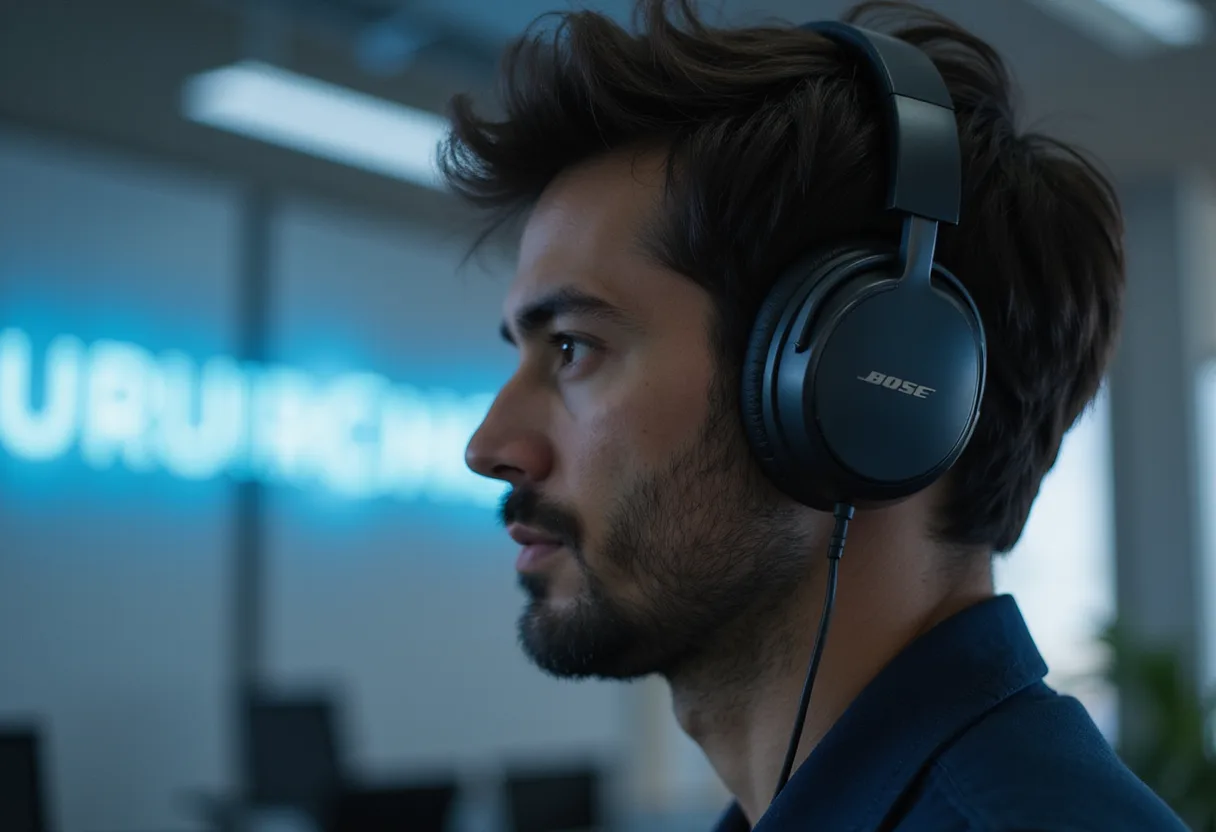
The commercial significance lies in product categories, not just numbers. HDT makes it technically possible for high-end wired audiophile favorites — headphones and IEMs that never shipped in wireless form — to gain wireless versions without the codec compromise that kept serious listeners on cables. The wired audiophile segment has resisted Bluetooth for a generation, and this is the first specification revision that removes the hard bandwidth constraint behind that resistance.
Adoption will depend on silicon vendors shipping HDT7.5-capable radios and on manufacturers tuning them well. Until then, the capability exists on paper for every lossless tier except 24-bit 192 kHz, and the burden shifts to implementation.
Source: Tom's Hardware
More from Grace Kim
Show full bio
Market editor covering people, launches and day-to-day practice in Semiconductors, chip manufacturing, hardware, AI compute at Chip Dispatch.
716 articles
Related articles
nordic-demos-bluetooth-hdt-on-silicon-3-8-mbps-in-2-mb-transfer
Nordic Demos Bluetooth HDT on Silicon: 3.8 Mbps in 2 MB Transfer
bluetooth-hdt-raises-the-bluetooth-le-rate-ceiling-to-7-5-mbps
Bluetooth HDT raises the Bluetooth LE rate ceiling to 7.5 Mbps
bose-ships-auracast-firmware-for-quietcomfort-ultra-gen-2-bd78b65a
Bose Ships Auracast Firmware for QuietComfort Ultra Gen 2
vdura-ceo-says-bandwidth-not-capacity-should-size-ai-ssd-tiers
VDURA CEO says bandwidth, not capacity, should size AI SSD tiers