CFR Analysis Presses Case Against China's Supply-Chain Leverage
The Council on Foreign Relations has posted an analysis titled 'Dismantling China's Supply-Chain Weapon,' entering the policy debate over how Washington and its allies should respond to Beijing's grip on critical industrial inputs.
- By
- Rebecca Stone
- Filed
- Channel
- Chips & Policy
- Read
- 2 min read
The Council on Foreign Relations has posted an analysis titled "Dismantling China's Supply-Chain Weapon" to its website, adding a fresh entry to a multi-year Washington debate over how the U.S. and its allies should respond to Beijing's grip on critical industrial inputs.
The paper's full text wasn't available at the time of writing. The title alone, though, frames the discussion in terms now familiar across U.S., EU, and Japanese industrial policy.
What is "China's supply-chain weapon"?
The phrase, common in CFR programming since at least 2020, treats a country's dominance in specific industrial inputs as statecraft rather than market outcome. Rare-earth processing is the textbook example — Chinese refiners handle the bulk of global supply for several of the 17 elements classified as critical by the IEA's May 2023 Critical Minerals Outlook. Neodymium-iron-boron magnets, which drive EV traction motors and direct-drive wind-turbine generators, are the most-cited downstream product at risk.
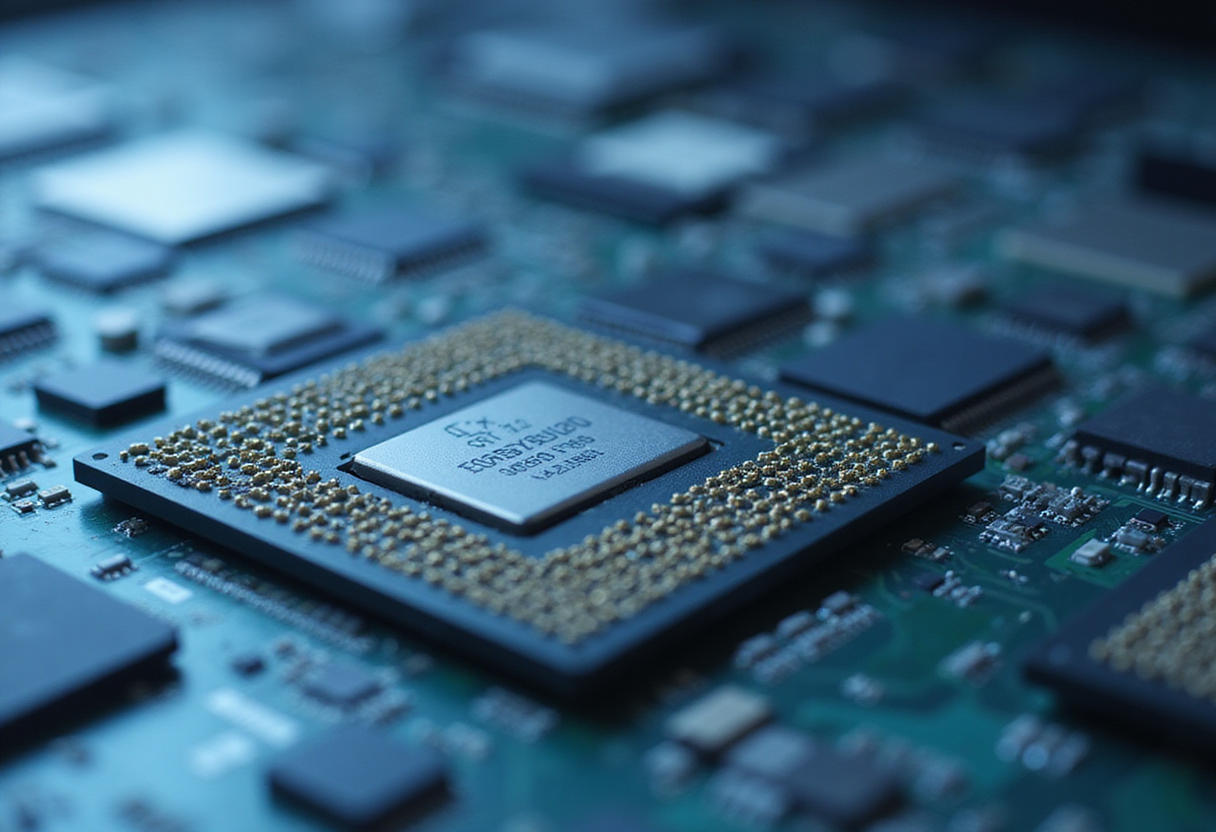
Other contested choke points include the photoresist chemistries used in advanced lithography, dominated by Japan's JSR, Tokyo Ohka Kogyo, and Shin-Etsu Chemical; the ABF substrates Ibiden and Shinko Electric build for advanced IC packaging; and mature-node foundry output, much of it in Taiwan, that feeds analog and power-management chips the auto industry can't easily substitute.
Why allied governments now fund the unwind
Each choke point has driven a piece of legislation or a subsidy program since 2022. The U.S. CHIPS and Science Act, signed August 9, 2022, authorized $52.7 billion in semiconductor manufacturing and research incentives. The European Chips Act, finalized in April 2023, targets €43 billion in mobilized investment and a 20 percent EU share of global semiconductor production by 2030. Japan's METI has earmarked roughly ¥4 trillion — about $27 billion — in subsidies covering TSMC's two Kumamoto fabs, the Rapidus 2nm Hokkaido project, and Kioxia's flash fabs.
The CFR paper lands mid-execution.
Where the build now sits
TSMC's Arizona complex is in phased ramp across three fabs. Intel's Ohio site, delayed twice, targets first production in 2025-2026. Samsung's Taylor, Texas fab targets production by late 2024. The U.S. Department of Commerce has moved past preliminary memoranda of agreement into binding award documents covering tens of billions of CHIPS Act dollars.
That is the terrain the CFR paper now maps. Construction is underway. The question now: did the build, allied politics, and any more aggressive dismantle posture actually shift the leverage.
What the paper enters
The CFR paper lands as the U.S. industrial-policy cycle shifts from authorize-and-fund to execute-and-measure. The verb in the title — dismantle — signals a posture that goes beyond diversification. What the analysis carries that posture into will set the terms of the next twelve months of allied debate over export controls, stockpiling, and coordinated procurement.
Source: Google News: chip export controls
More from Rebecca Stone
Show full bio
Correspondent covering technology and product news in Semiconductors, chip manufacturing, hardware, AI compute at Chip Dispatch.
455 articles
Related articles
beijing-s-export-controls-mature-as-trump-pulls-back-china-tech-curbs-001e83ea
Beijing's Export Controls Mature as Trump Pulls Back China Tech Curbs
csis-allied-export-controls-accelerate-china-s-chip-localization-5b4caef6
CSIS: Allied Export Controls Accelerate China's Chip Localization
chosun-ilbo-us-and-japanese-toolmakers-still-lean-on-chinese-materials-babda649
Chosun Ilbo: US and Japanese Toolmakers Still Lean on Chinese Materials
realcleardefense-china-s-semiconductor-bottlenecks-are-receding-c5df2203
RealClearDefense: China's Semiconductor Bottlenecks Are Receding