China Reportedly Approves Nvidia RTX PRO 5500 Sales to Alibaba, ByteDance
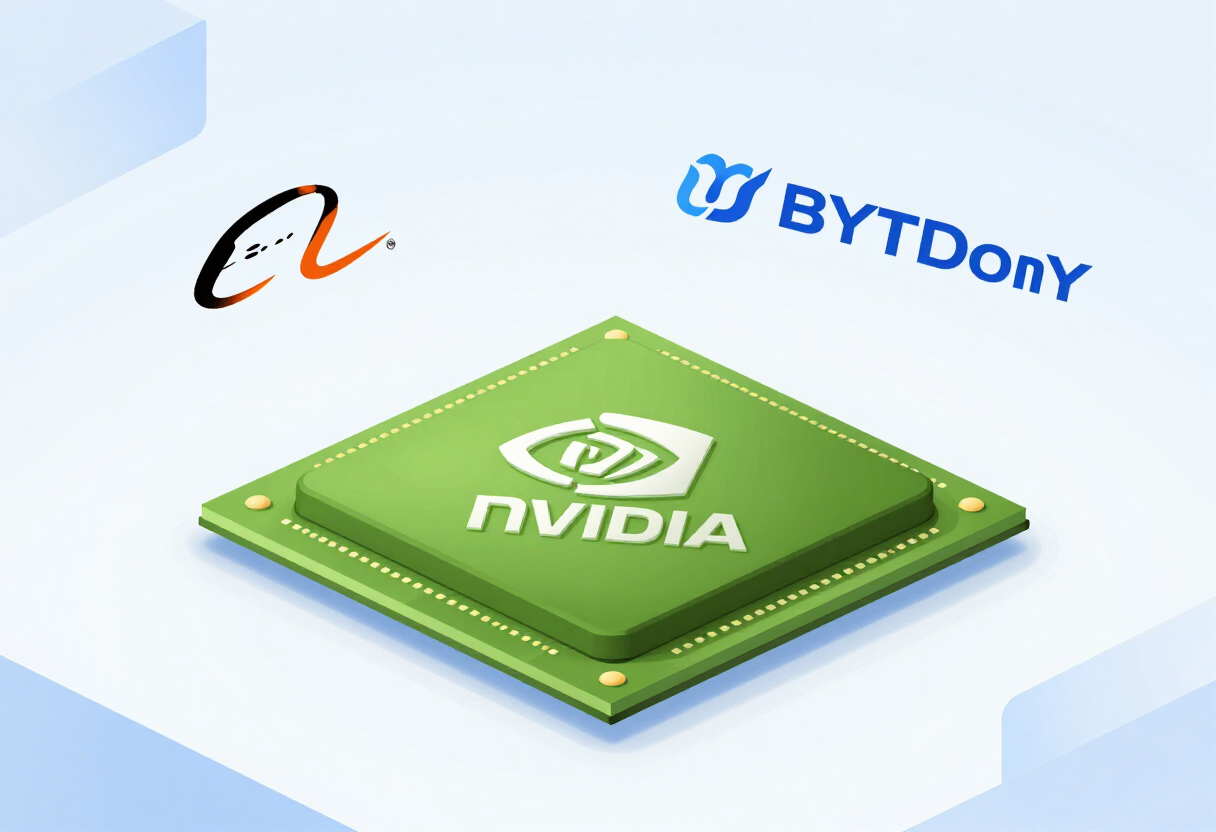
China has reportedly cleared Nvidia's RTX PRO 5500 workstation GPU for sale to Alibaba and ByteDance, an unconfirmed signal that Beijing may ease its stance on mid-tier Western silicon.
- By
- Tom Whitfield
- Filed
- Channel
- Semiconductors
- Read
- 3 min read
China has reportedly given the green light for Nvidia to sell its RTX PRO 5500 chips to domestic buyers including Alibaba and ByteDance, according to a report surfaced via TradingView, citing unnamed sources familiar with the matter.
The report remains unconfirmed. Neither Nvidia, Alibaba, nor ByteDance has issued a public statement, and no Chinese regulator has published an approval notice. The claim arrives amid a tangled regulatory environment in which both Washington and Beijing must effectively sign off before high-performance silicon changes hands.
The RTX PRO 5500 sits in Nvidia's workstation-class product family, a tier below the data-center flagship GPUs that have been the focal point of US export controls since 2022. That positioning matters. Chips the US government classifies below certain performance thresholds can ship to China with fewer restrictions, but Beijing has in the past pressured its own cloud and internet giants to avoid buying even compliant Nvidia parts, part of a broader push to accelerate domestic accelerator development.
If the reported approval holds, it would mark a notable shift in that stance. Alibaba and ByteDance are two of China's largest buyers of AI compute. Alibaba Cloud operates one of the country's biggest GPU fleets and is racing to train and serve its Qwen family of large language models. ByteDance, the parent of TikTok and Douyin, runs massive recommendation and AI infrastructure and has ranked among Nvidia's most significant customers globally.
For Nvidia, the Chinese market once generated roughly a fifth of its data-center revenue before successive rounds of US export controls cut off its top-tier products. Chief executive Jensen Huang has repeatedly said the company will comply with US rules while continuing to develop China-compliant products, and he has warned publicly that American restrictions risk ceding the market to domestic rivals such as Huawei.
Beijing's calculus appears equally pragmatic. Reports over the past year have suggested Chinese authorities at times permitted limited purchases of downgraded Nvidia parts, particularly when domestic alternatives could not meet demand at scale. An approval for the RTX PRO 5500, a workstation part rather than a data-center flagship, would fit that pattern: enough capability to ease compute bottlenecks, not enough to undermine the policy of nurturing homegrown chips.
Investors treated the headline with cautious interest. Nvidia shares have traded hypersensitive to China-related news since export controls began biting into revenue, and any signal that even mid-tier parts can flow to major Chinese buyers tends to move expectations for the company's addressable market.
The strategic backdrop complicates any deal. Huawei's Ascend accelerator line, along with chips from Cambricon and others, is advancing, and Chinese cloud vendors are under informal pressure to prioritize domestic silicon. A purchase of Nvidia workstation GPUs by Alibaba or ByteDance would therefore likely be sized to fill specific gaps rather than signal a return to large-scale buying.
Neither company has disclosed orders, volumes, or delivery timelines. The original report offers no figures on shipment size or revenue impact, and Nvidia does not break out China revenue by product family in a way that would make such sales independently verifiable in the near term.
Watch for confirmation in three places: an official statement from Nvidia or the buyers, customs data showing chip flows, and any follow-up reporting that names the approving Chinese authority. Until one of those materializes, the RTX PRO 5500 approval should be treated as a reported signal of Beijing's flexibility on mid-tier Western silicon, not a policy reversal.
Source: Google News: AI chips
More from Tom Whitfield
Show full bio
Staff writer covering consumer brands and retail at Chip Dispatch.
56 articles
Related articles
china-clears-alibaba-and-bytedance-to-buy-nvidia-s-rtx-pro-5500-e1d3d8e6
China Clears Alibaba and ByteDance to Buy Nvidia's RTX Pro 5500
beijing-may-greenlight-alibaba-s-purchase-of-nvidia-rtx-chips-409abffd
Beijing May Greenlight Alibaba's Purchase of Nvidia RTX Chips
china-may-let-alibaba-bytedance-buy-new-nvidia-chips-ca6ed54a
China May Let Alibaba, ByteDance Buy New Nvidia Chips
beijing-may-greenlight-nvidia-rtx-chip-purchases-by-alibaba-1f274455
Beijing May Greenlight Nvidia RTX Chip Purchases by Alibaba