CoreWeave Debt Swells to $35.1 Billion as Bond Yields Top 16%
CoreWeave carried $35.1 billion in debt at June 30 as its bond yields topped 16%, exposing lenders to contract, collateral and depreciation risk across AI finance.
- By
- Tom Whitfield
- Filed
- Channel
- AI & Compute
- Read
- 6 min read
By Tom Whitfield
CoreWeave carried $35.1 billion of debt at June 30, and some bonds now yield above 16%. Reuters reported Monday that some banks have become reluctant to fund more AI deals even with technology-company guarantees. The trigger included Thursday's Nasdaq 100 selloff, which erased about $2.5 trillion, plus midterm results and tighter data-center oversight talk.
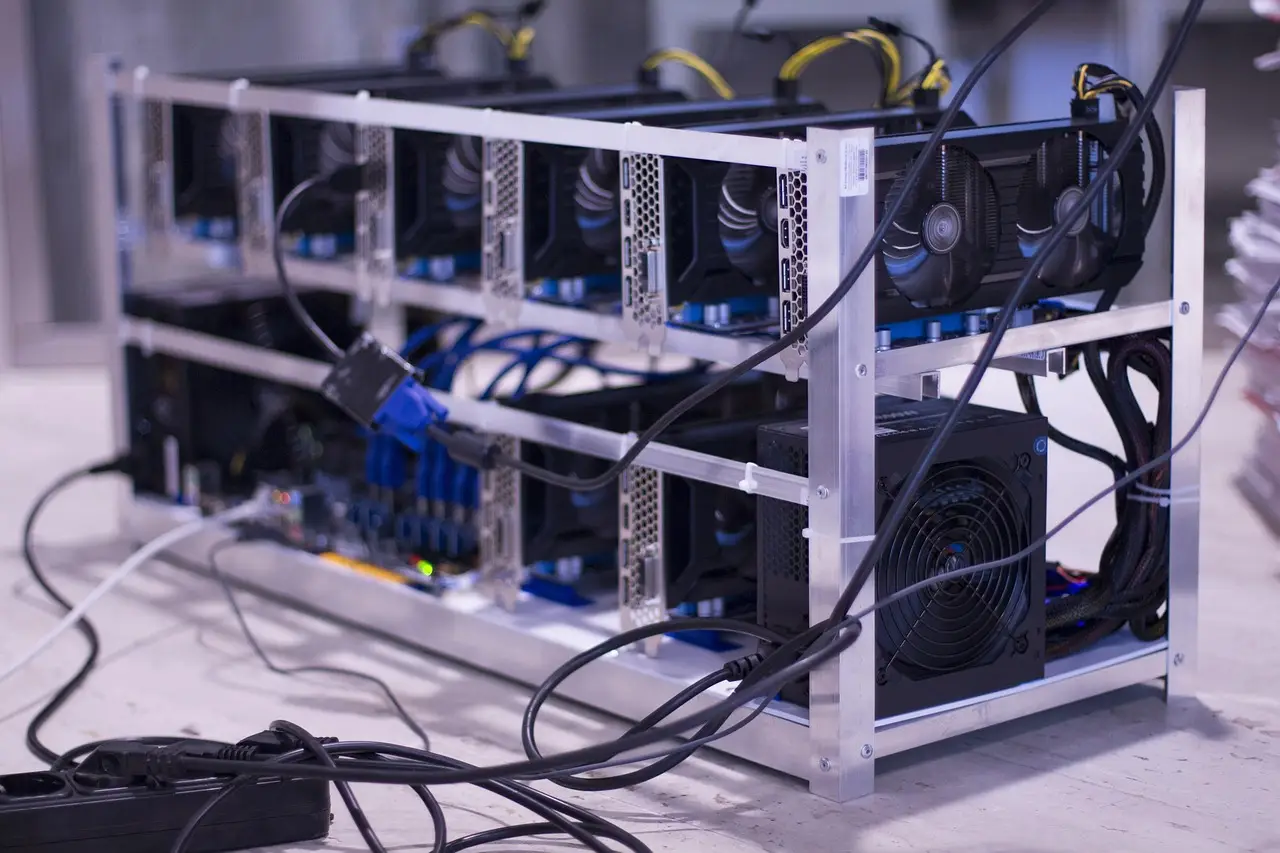
The chain starts with neoclouds borrowing against GPUs and customer contracts. Lenders syndicate those loans, while chip suppliers guarantee debt or leases. Oracle, SpaceX and Anthropic raise money in the same market, so weakness can spread.
How much strain has reached CoreWeave?
CoreWeave had $35.1 billion of debt, up from $21.4 billion at end-2025, plus $5.5 billion of cash at June 30. CNBC listed $1.3 billion at 15% due March 2028 and $3.2 billion at 11% due August 2030.
Some bonds yield above 16%, including its 2032 issue on Friday. The five-year credit-default-swap spread exceeds 1,240 basis points, up 50% in a month. CoreWeave and Nebius each lost about half their market value.
Chief executive Mike Intrator wrote on LinkedIn that CoreWeave does not anticipate any impact to existing customer commitments or associated backlog. Freedom Capital Markets' Paul Meeks described the market narrative as a self-fulfilling doom cycle.
Morningstar's Luke Yang said CoreWeave can fund existing contracts but needs more capital to grow, while the stock price works against it. LSEG data cited by CNBC put third-quarter revenue at about $3.55 billion, 160% above a year earlier.
MLQ's filing-derived quarterly revenue and depreciation-and-amortization figures, in millions:
- Q3 2024: revenue $584M; D&A $254M.
- Q4 2024: revenue $747M; D&A $365M.
- Q1 2025: revenue $982M; D&A $443M.
- Q2 2025: revenue $1,212M; D&A $560M.
- Q3 2025: revenue $1,365M; D&A $630M.
- Q4 2025: revenue $1,572M; D&A $821M.
- Q1 2026: revenue $2,078M; D&A $1,147M.
- Q2 2026: revenue $2,575M; D&A $1,393M.
In the first half of 2026, CoreWeave spent $14.1 billion on capital expenditure. D&A rose from 43% of revenue in Q3 2024 to 54% in Q2 2026, making rapid chip depreciation visible in the income statement. The commercial test is whether GPU collateral lasts as long as its loans.
Why are banks reading contract exit terms?
Lenders now stress-test cash flows, service obligations, deadlines and customer cancellation rights, Reuters said. Some planned bond sales tied to data centers and chips have been shelved.
Ropes & Gray finance partner Chris Poggi said: “Debt investors' books have become full.” Nebius considered a high-yield bond in September, dropped it in October, then signed a $3.5 billion senior secured loan led by Citigroup.
Bank of America's Yuri Seliger said 10-year hyperscaler debt spreads widened about 50 basis points this year, versus about 20 for high-grade non-AI industrials. Goldman Sachs Research still expects $420 billion of global hyperscaler debt issuance in 2027.
Microsoft declined to renew a 2023 server deal with Oracle and passed on an option to more than double Nscale's Texas contract. Reporting linked those choices to Microsoft renting less AI capacity.
About 48% of IREN's backlog ties to Microsoft, and IREN carries $10 billion of debt. Co-CEO Daniel Roberts said capital markets have become more selective in recent weeks. Banks now price the right to cancel, not just promised compute demand.
Who holds the depreciation risk?
Semafor reported Monday that some investors who rushed to fund data centers now want out, with entire loan portfolios marketed at steep discounts. One person said GPU financings were getting smoked because loans may outlive the chips' useful life.
ING is trying to sell $500 million of data-center loans, including a $25 million slice tied to Stargate. Ares Management CEO Michael Arougheti said on the firm's earnings call: “I, for one, personally do not know how to underwrite the decline and depreciation curves on that type of technology.”
SpaceX's roughly $40 billion master finance lease for Nvidia Vera Rubin GPUs will test the market most; Goldman Sachs and Apollo are selling it to investors in slices. An Apollo-managed entity buys the hardware and leases it to SpaceX for about five years per tranche, with deliveries scheduled for the first half of 2027.
Terms reported by 24/7 Wall St. leave SpaceX free of a residual-value guarantee, so investors hold the depreciation risk. Investors, not merely chip buyers, now absorb the technology's decline in value.
Who must finance the capacity?
Reuters says chipmakers backstop senior debt for advanced chips and guarantee long-term data-center leases, attracting banks and private credit.
Aletheia analyst Stefan Chang cut Nvidia to hold from buy and removed his $340 target. He estimates the AI Computing Partner program has lifted Nvidia's commitments more than tenfold to $165 billion, including $105 billion for one Ohio data center. He describes Nvidia as a financial enabler for neocloud expansion.
Aletheia estimates CoreWeave, Nebius and IREN need about $124 billion over the next 12 to 15 months for 3.5 to 4 gigawatts of capacity. It estimates $450 billion to $500 billion for another 11 to 12 gigawatts by 2030.
Nvidia invests in CoreWeave and Nebius and also faces a board investigation into CEO Jensen Huang. Guarantees reduce neocloud funding risk but enlarge Nvidia's exposure to customer defaults and obsolete hardware.
Oracle said Oct. 28 it would limit additional capital raises through fiscal 2030 to $20 billion, excluding refinancing, split evenly between equity and debt. On Nov. 2, it raised the full amount through $10 billion of stock and $10 billion of bonds in five tranches. Order books peaked at $38 billion; pricing was about 0.3 percentage point above existing debt.
Anthropic's amended S-1 lists about $895 billion of compute purchases and leases. IPO buyers want less than its roughly $1.5 trillion target valuation; one suggested raising about $80 billion rather than up to $100 billion, according to The Wall Street Journal as reported by MLQ. Anthropic is pressing ahead.
Large compute buyers now ration capital too. That limits how quickly contracts become deployed capacity.
What results will test the market?
CoreWeave reports on Tuesday, Nov. 10, at 5 p.m. ET. Nebius reports Thursday, with LSEG analysts expecting about $908 million of revenue, sixfold growth, while Nvidia reports Nov. 17.
Credit pricing after those reports will show whether lenders fund 3.5 to 4 gigawatts of planned neocloud capacity without treating GPU depreciation as a greater risk than contracted demand. The test is whether contract demand can carry the credit structure without a higher depreciation charge.
Source: mlq.ai
More from Tom Whitfield
Show full bio
Staff writer covering companies, deals and strategy in Semiconductors, chip manufacturing, hardware, AI compute at Chip Dispatch.
782 articles
Related articles
coreweave-s-13-5-billion-capex-meets-a-16-bond-yield
CoreWeave's $13.5 Billion Capex Meets a 16% Bond Yield
pimco-ceo-warns-ai-downturn-will-make-things-break-as-debt-piles-up
PIMCO CEO Warns AI Downturn Will Make Things 'Break' as Debt Piles Up
coreweave-stock-falls-15-as-bond-yields-hit-15-on-ai-debt-fears-22f273a8
CoreWeave Stock Falls 15% as Bond Yields Hit 15% on AI Debt Fears
anthropics-1-5-trillion-ipo-tests-ai-infrastructure-credit
Anthropic’s $1.5 Trillion IPO Tests AI Infrastructure Credit