DeepSeek Releases Huawei AI Chip Tools That Could Replace Nvidia's
DeepSeek has unveiled AI chip tools built for Huawei processors that Bloomberg says could replace Nvidia's, striking at the CUDA software moat underpinning Nvidia's AI dominance.
- By
- Tom Whitfield
- Filed
- Channel
- AI & Compute
- Read
- 3 min read
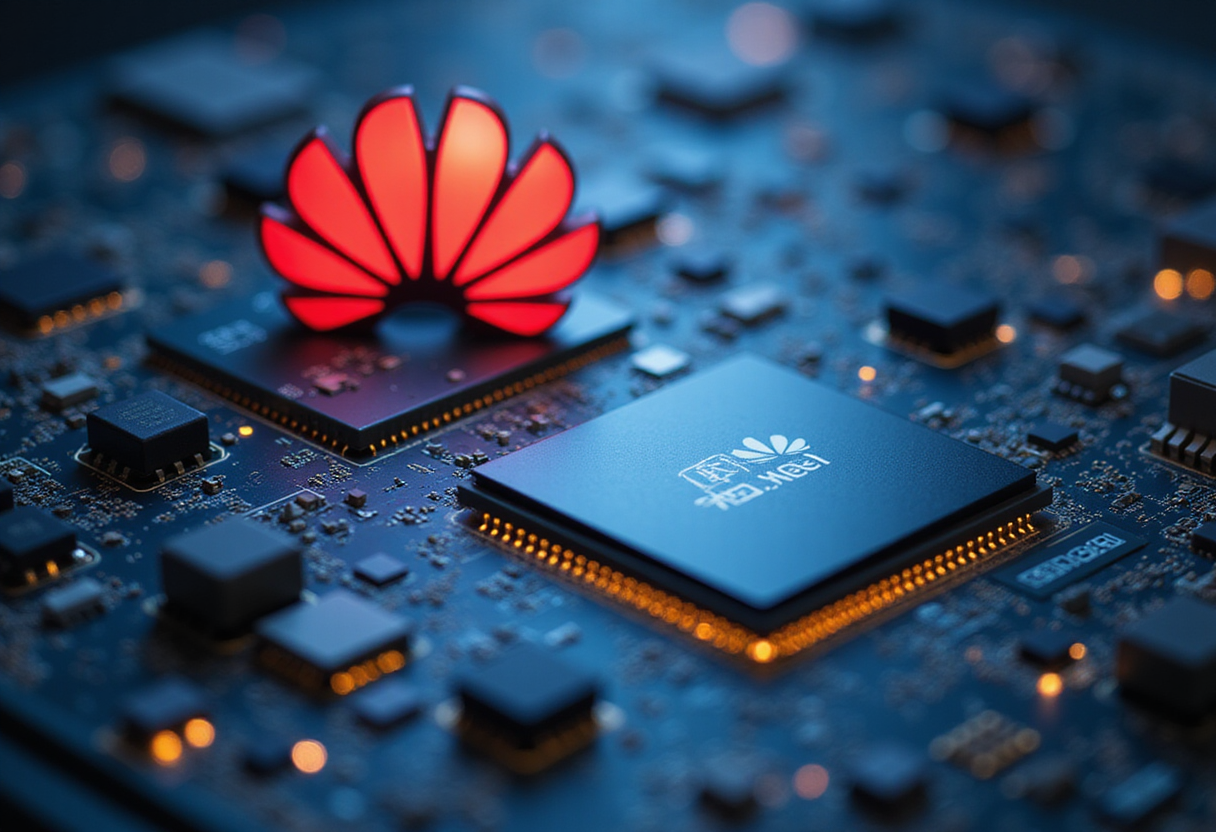
DeepSeek has unveiled a set of AI chip tools designed to work with Huawei's silicon — tooling that, according to a Bloomberg report, could substitute for Nvidia's software ecosystem in Chinese AI training and inference workloads.
The announcement, surfaced by Bloomberg, marks one of the most concrete steps yet in the slow decoupling of China's AI software stack from Nvidia's CUDA ecosystem. DeepSeek, the Chinese AI lab whose low-cost models rattled the industry earlier this year, built the tooling explicitly around Huawei's AI processors rather than porting an afterthought compatibility layer.
That distinction matters commercially. Nvidia's grip on the AI accelerator market rests as much on its software moat — CUDA, cuDNN and two decades of developer tooling — as on its hardware. Every credible alternative stack that ships erodes the switching costs that keep cloud providers and AI labs locked to Nvidia GPUs even where rival chips are cheaper or, in China's case, simply available.
Huawei is the obvious beneficiary. Washington's export controls have cut Chinese customers off from Nvidia's most advanced data-center GPUs, and Huawei's Ascend line has become Beijing's favored domestic answer. What Ascend has lacked is a software ecosystem approaching CUDA's maturity. Tools from DeepSeek — a lab whose models are already among the most widely deployed in China — attack that gap directly at the workload level rather than the driver level.
The Bloomberg report frames the release as potentially substitutive for Nvidia's tools, though it stops short of quantifying performance parity, adoption targets or revenue impact. No benchmark figures, supported model sizes or customer commitments appear in the report, and any claim that the tooling matches Nvidia's on production-scale training remains unverified.
The competitive read is straightforward all the same. DeepSeek has already demonstrated that frontier-adjacent models can be trained on constrained hardware budgets. Pairing that methodology with tooling tuned for Huawei accelerators gives Chinese developers a vertically domestic path — model, software and silicon — for the first time with a leading lab's explicit backing.
For Nvidia, the immediate financial exposure is limited. China revenue has already been curtailed by export licensing, and DeepSeek's tooling will take time to reach the reliability CUDA users expect. The longer-term risk is different: a large, captive market that stops upgrading along Nvidia's roadmap entirely, removing China as a swing source of data-center GPU demand in shortage cycles.
For Huawei, the release strengthens the case that Ascend can carry serious workloads without foreign software intermediaries, a prerequisite for the capacity expansions the company has signaled across its domestic fab network.
Bloomberg does not report a release date for general availability, pricing, or whether the tools will be open-sourced — all factors that will determine whether adoption extends beyond DeepSeek's own infrastructure. Watch for early adoption signals among Chinese cloud providers and independent model labs; that, rather than feature parity claims, will show whether Nvidia's software moat inside China has begun to drain.
Source: Google News: AI chips
More from Tom Whitfield
Show full bio
Staff writer covering consumer brands and retail at Chip Dispatch.
107 articles
Related articles
deepseek-builds-software-bridge-to-huawei-ai-chips-pressuring-nvidia-086badd4
DeepSeek Builds Software Bridge to Huawei AI Chips, Pressuring Nvidia
deepseek-and-huawei-team-up-on-ai-chip-software-198b1e84
DeepSeek and Huawei Team Up on AI Chip Software
deepseek-partners-with-huawei-on-chip-programming-tools-3c45ff25
DeepSeek Partners With Huawei on Chip Programming Tools
huawei-unveils-new-chip-technologies-escalating-ai-race-with-nvidia-800be81f
Huawei Unveils New Chip Technologies, Escalating AI Race With Nvidia