AI & Compute · 3 min read
Dell revenue doubles to $54.9B as AI backlog hits $132.3B
Dell's fiscal Q3 revenue doubled to $54.9B with AI-optimized servers at $22B, a $132.3B AI backlog, and full-year guidance raised to $202B plus a $25B buyback expansion.
Key takeaways
- Dell Q3 FY27 revenue rose 103% to a record $54.9 billion; diluted EPS rose 287% to $8.82.
- AI orders of $60.2 billion in the quarter left a record $132.3 billion AI backlog.
- AI-optimized server revenue reached $22.0 billion, up 291%; ISG revenue rose 198% to $42.0 billion.
- Full-year revenue guidance raised to $202.0 billion from $192.0 billion; Q4 guided to $56.3 billion, up 69%.
- Board added $25.0 billion to buyback authorization after a record $4.9 billion returned in the quarter.
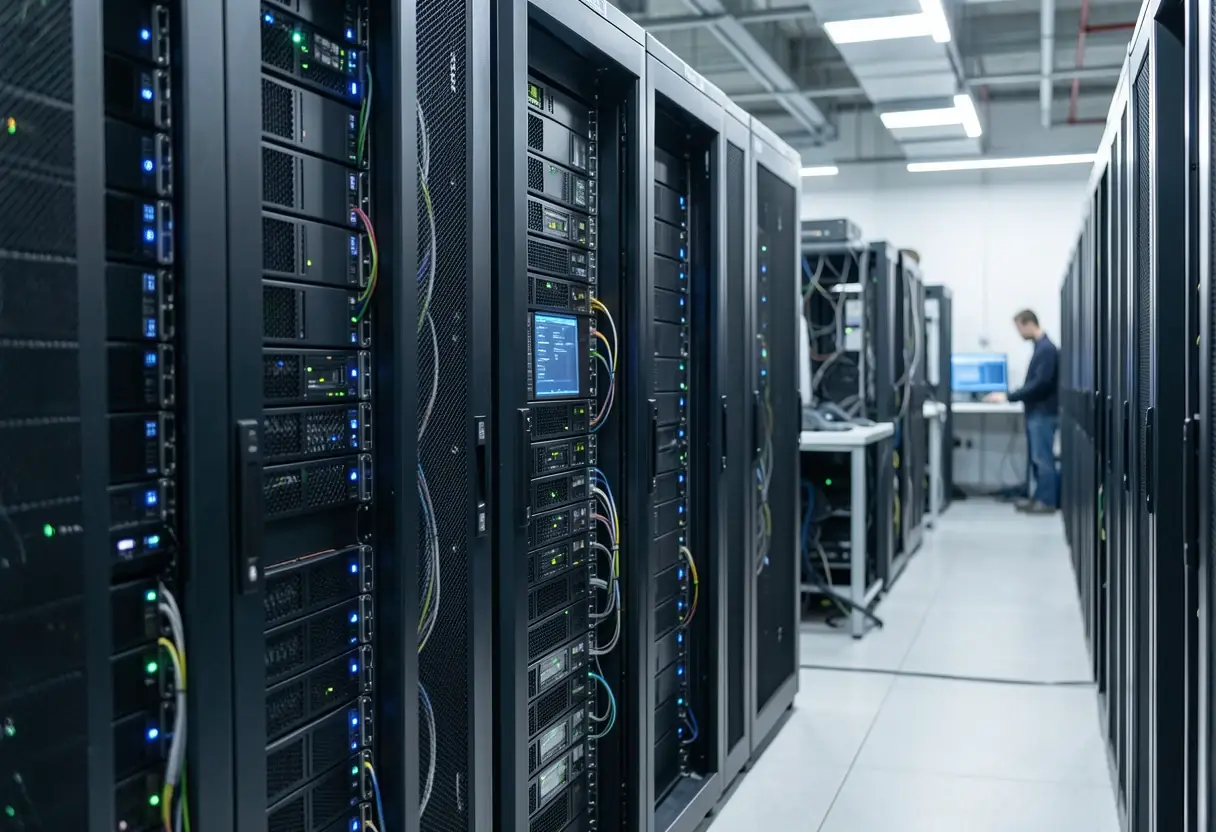
Dell reported third-quarter revenue of $54.9 billion, up 103% from $27.0 billion a year earlier, and closed the period with a record AI backlog of $132.3 billion. The results, released after the market close on Tuesday, Nov. 24, cover the fiscal 2027 third quarter ended Oct. 30, 2026. One quarter now exceeds some full years in the company's history.
Diluted earnings per share rose 287% to $8.82. Non-GAAP diluted EPS rose 265% to $9.45. Net income reached $5,673 million, against $1,548 million in the year-ago quarter, per the company release. Operating income nearly tripled to $7,442 million from $2,119 million.
The quarter's cash engine was AI infrastructure, not PCs.
How large is the AI business now?
Dell booked $60.2 billion of AI orders in the quarter, vice chairman and chief operating officer Jeff Clarke said. Orders outpaced shipments. That gap produced the $132.3 billion backlog, a figure no competitor has disclosed on a similar scale.
Infrastructure Solutions Group revenue rose 198% to a record $42.0 billion. Within it, AI-optimized servers contributed a record $22.0 billion, up 291%. Traditional servers and networking brought in $15.0 billion, up 235%. Storage grew 24% to $4.9 billion.
ISG operating income rose 308% to $7.1 billion, or 17.0% of segment revenue against 12.4% a year earlier. Margins are improving as volume scales. ISG supplied 91% of total segment operating income, against 70% a year earlier, per the release.
"We are now a different company, with Infrastructure Solutions Group (ISG) driving the vast majority of our profit and growth," Clarke said. More than 7,500 customers are deploying Dell AI Factories, he added. The company did not disclose revenue per customer or the concentration of the backlog among its largest buyers. That omission matters when backlog quality drives the stock.
What happened to the PC business?
Client Solutions Group grew revenue 3% to $12.9 billion. Commercial revenue rose 6% to $11.3 billion. Consumer revenue fell 15% to $1.6 billion. CSG operating income fell 6% to $704 million. The PC segment is flat, and its profitability is eroding. ISG is now the company, in financial terms.
Chief financial officer David Kennedy said non-GAAP operating expenses fell to 7% of revenue, "the lowest in our 42-year history." Cash flow from operations was a record $4.5 billion for a third quarter.
What does Dell expect next?
For the fourth quarter, Dell guided revenue to $56.3 billion, up 69% year over year. It guided GAAP diluted EPS to $7.90 and non-GAAP diluted EPS to $8.40.
For the full fiscal year, the company raised its revenue outlook to $202.0 billion, up 78%, from $192.0 billion previously. It now expects AI-optimized server revenue of $78.0 billion, raised from $74.0 billion. Full-year GAAP diluted EPS guidance moved to $28.24 from $24.37. Non-GAAP diluted EPS guidance moved to $29.68 from $25.50.
The company returned a record $4.9 billion to shareholders in the quarter through buybacks and dividends. The board added $25.0 billion to the Class C share repurchase authorization. Buybacks of that scale signal confidence in cash generation. They also reduce the share count against which a 265% EPS increase is measured.
Dell's guidance now assumes $78 billion of AI server revenue ships within the fiscal year. The record backlog of $132.3 billion suggests the constraint is supply, not demand, though the release does not break out how much of that backlog carries firm delivery dates. Whether margins hold as hyperscaler orders fill the pipeline will determine if this growth rate is durable.
mlq.ai (Source)
More from Sophie Lindqvist
Show full bio
News editor covering money, funding and market shifts around Semiconductors, chip manufacturing, hardware, AI compute at Chip Dispatch.
1,290 articles