Google's First Suncatcher Satellite Reaches Orbit to Test AI Chips in Space
Google's first Suncatcher satellite reached orbit to test AI chips in space, the company's first step toward validating accelerator silicon beyond the data center environment.
- By
- Nathan Brooks
- Filed
- Channel
- AI & Compute
- Read
- 3 min read
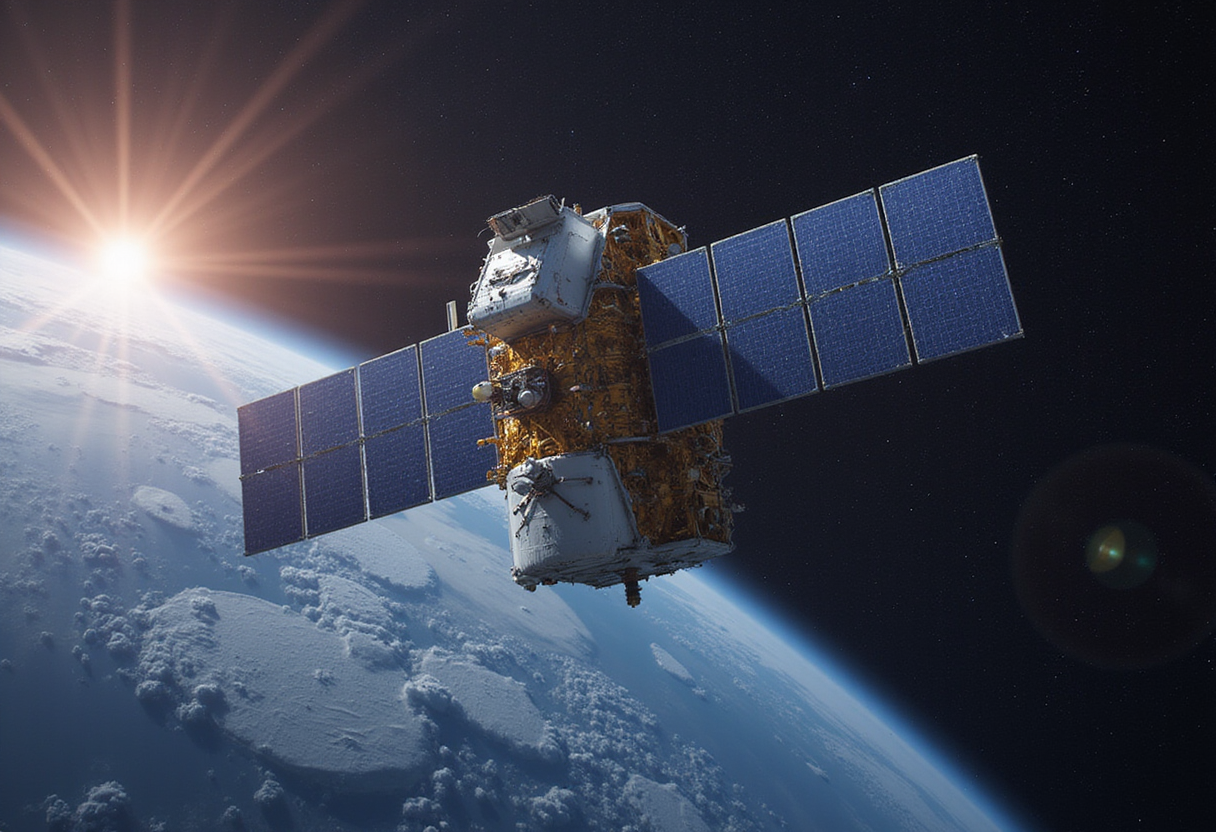
Google's first Suncatcher satellite has reached orbit, marking the company's initial step toward testing AI chips in the space environment rather than in terrestrial data centers. The confirmation of the orbital insertion, reported by DigiTimes, establishes Suncatcher as one of the first dedicated programs from a major hyperscaler designed to validate AI accelerator silicon above the atmosphere.
The significance is straightforward: until now, AI chips from Google and its peers have lived almost entirely in server racks. Moving validation into orbit subjects that silicon to radiation, thermal cycling, and power constraints that no conventional qualification lab reproduces at scale.
What does Suncatcher actually test?
The program's stated purpose is to test AI chips in space. That distinction matters for the semiconductor industry in two ways.
First, orbital deployment forces a different design discipline. Space-grade electronics have historically prioritized radiation hardening and reliability over raw throughput. Commercial AI accelerators invert that trade-off, chasing peak performance per watt for training and inference workloads. Suncatcher sits at the intersection: it asks whether silicon built for hyperscale data centers can survive and compute in orbit.
Second, the test platform creates a feedback loop. Data collected on how commercial AI silicon behaves in orbit informs future chip revisions, packaging choices, and error-correction strategies. Google has not disclosed which chip family flew on this first satellite, the orbit it occupies, or the duration of the test campaign — those details will determine how quickly any engineering conclusions can be drawn.
Why are hyperscalers looking at orbit?
The commercial logic follows power. Terrestrial AI compute is constrained by grid capacity, cooling water, and land. Several operators and startups have argued that orbital data centers could eventually tap continuous solar generation without the same cooling and siting limits.
Google is not alone in probing this direction. The sector's interest in space-based compute has grown alongside launch costs falling, driven by reusable rockets, which changes the per-kilogram economics of placing server-class hardware in orbit. Suncatcher gives Google an early, controlled experiment: fly AI silicon, measure how it performs, and build an engineering basis for any larger deployment decision.
The first satellite is deliberately small in scope. Testing chips — not operating an orbital data center — is the confirmed objective, and Google has not announced follow-on spacecraft, a launch cadence, or a timeline for operational compute in space.
What should supply chain watchers track next?
The near-term signals to monitor are concrete.
- Chip disclosure. Identification of the silicon aboard — whether custom tensor processing silicon or qualified commercial parts — will indicate how far Google is pushing consumer-grade hardware into radiation environments.
- Test duration and results. Performance degradation data over months in orbit would establish whether commercial AI silicon needs redesign or simply revised qualification.
- Follow-on launches. A second or third Suncatcher spacecraft would signal a program, not an experiment.
- Competitor moves. Any parallel programs from other hyperscalers would mark the start of a broader race for orbital compute capacity.
The satellite business is still dominated by communications, imaging, and navigation payloads. Compute payloads remain a niche — but that is precisely the position data center AI accelerators occupied a decade ago before reshaping the entire semiconductor demand curve.
For now, Suncatcher is a single data point in orbit. How quickly it becomes a constellation, and whether radiation-tolerant AI silicon emerges as a distinct product category with its own process and qualification requirements, will depend on what the chips report back — and on whether the economics of launch, power, and thermal management in space can approach those Google already controls on the ground.
Source: Google News: AI chips
More from Nathan Brooks
Show full bio
Senior reporter covering industry trends and analytics at Chip Dispatch.
258 articles
Related articles
google-to-fly-first-ai-chips-in-space-under-project-suncatcher-276fccc3
Google to Fly First AI Chips in Space Under Project Suncatcher
spacex-and-google-send-ai-chips-into-orbit-to-test-space-data-centers-4dc76cb9
SpaceX and Google Send AI Chips Into Orbit to Test Space Data Centers
google-to-fly-ai-chips-in-orbit-under-project-suncatcher-7cc3be7b
Google to Fly AI Chips in Orbit Under Project Suncatcher
google-s-project-suncatcher-orbital-test-reaches-space-aboard-spacex-rocket-544be96a
Google's Project Suncatcher Orbital Test Reaches Space Aboard SpaceX Rocket