AI & ComputeLOT 261120 · 3 min read
Google's Willow chip beats classical limits on up to 105 qubits
A Science paper reports Google's Willow won a magic square game 98.3% of the time against an 88.9% classical cap, and solved a hidden linear function problem on up to 105 qubits.
Key takeaways
- Willow won a four-qubit magic square game 98.3% of the time; classical strategies cap at 88.9%.
- A Bell-Kochen-Specker test scored 5.590, above the classical cap of 4 and below the quantum maximum of 6.
- A hidden linear function problem ran on up to 105 qubits; a GHZ game beat classical rates up to 71 qubits.
- The 2018 theory guaranteeing advantage for these shallow circuits applies only near a million qubits.
- The Science paper appeared Nov. 19; a preprint with 283 authors was posted to arXiv in December 2025.
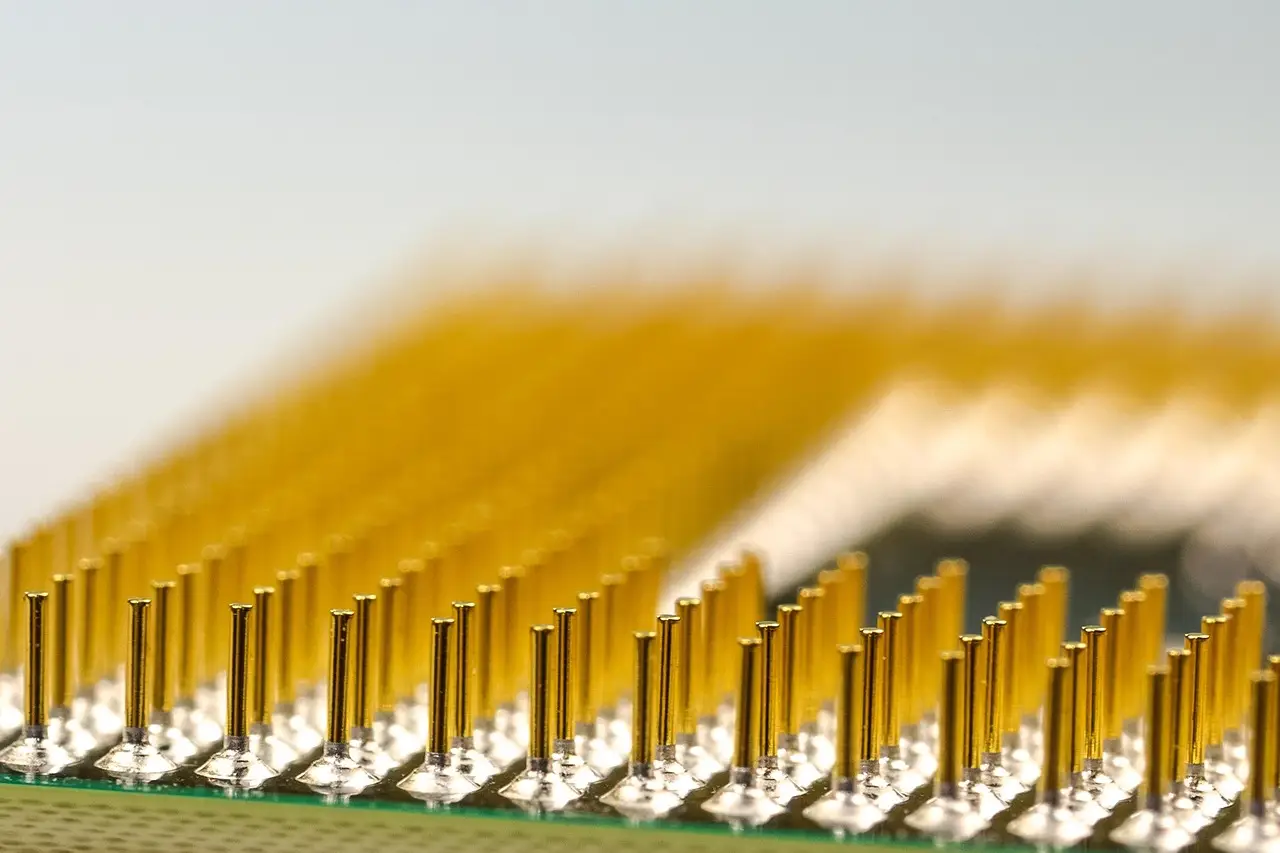
Google's Willow quantum processor won a four-qubit "magic square" game 98.3% of the time, against a best possible classical score of 88.9%. Researchers at Google Quantum AI reported the result in Science on Nov. 19, alongside tests that scaled to 105 qubits.
The experiments test quantum contextuality: the property that a measurement result can depend on which other compatible measurements are made alongside it. Contextuality rules out the idea that every measurable property has a fixed value waiting to be read.
Google frames the work two ways. The tests demonstrate that classical limit on real hardware. They also offer a new benchmark for quantum processors, because the quantum ceiling on these tests is set by physics and does not move as machines improve.
What did Willow actually do?
In the magic square game, two players who cannot communicate fill rows and columns of a three-by-three grid under parity rules. A classical strategy wins at most 88.89% of rounds. Using shared entangled qubits, Willow won 98.30% across nine versions of the game, each played 100,000 times. Google says hardware noise causes about one loss in sixty rounds. Perfect play is possible in principle.
A related Bell-Kochen-Specker test came in at 5.590, against a classical cap of 4 for any non-contextual model and a quantum maximum of 6 — about 7% below the quantum limit. The test is state-independent, so it measures the machine rather than a particular input. It used 540 measurements in a row, repeated 1,000 times.
The team then scaled up:
- A GHZ parity game with one qubit per player: the best classical strategy wins 75% of the time with three players and approaches 50% as players are added. Willow stayed above the classical rate with up to 71 players and verified entanglement across 45 qubits.
- A two-dimensional hidden linear function problem: shallow circuits on grids of up to 105 qubits returned a valid answer more than half the time. Success fell from about 1 to about 0.6 at full size.
What does the paper not show?
The caveats are significant. Noise keeps every result below the ideal and grows with qubit count, so the quantum lead narrows as systems scale. For the 105-qubit problem, the classical bound used for comparison is conjectured, not proven. The 2018 theoretical result that guarantees a quantum advantage for these shallow circuits only applies at far larger sizes — around a million qubits, by the preprint's estimate. The magic square advantage depends on shared entanglement and a prearranged measurement plan.
The tests also exposed subtle coherent errors that random-circuit benchmarks tend to average away, Google says. The authors propose using many-body contextuality to track hardware progress. A preprint of the work, with 283 listed authors, was posted to arXiv in December 2025.
The contextuality benchmark, fixed by physics rather than engineering, gives Google a scale-independent yardstick as Willow-class processors grow toward the million-qubit regime where proven advantage thresholds lie.
mlq.ai (Source)
More from Grace Kim
Show full bio
Market editor covering people, launches and day-to-day practice in Semiconductors, chip manufacturing, hardware, AI compute at Chip Dispatch.
1,166 articles