Google TPUs Head to Orbit on Falcon 9 in First Suncatcher Test
A Falcon 9 launching Thursday from Vandenberg carries a solar-powered satellite with Google TPUs — the first orbital test of Project Suncatcher and a first step toward space-based AI data centers.
- By
- Rebecca Stone
- Filed
- Channel
- AI & Compute
- Read
- 4 min read
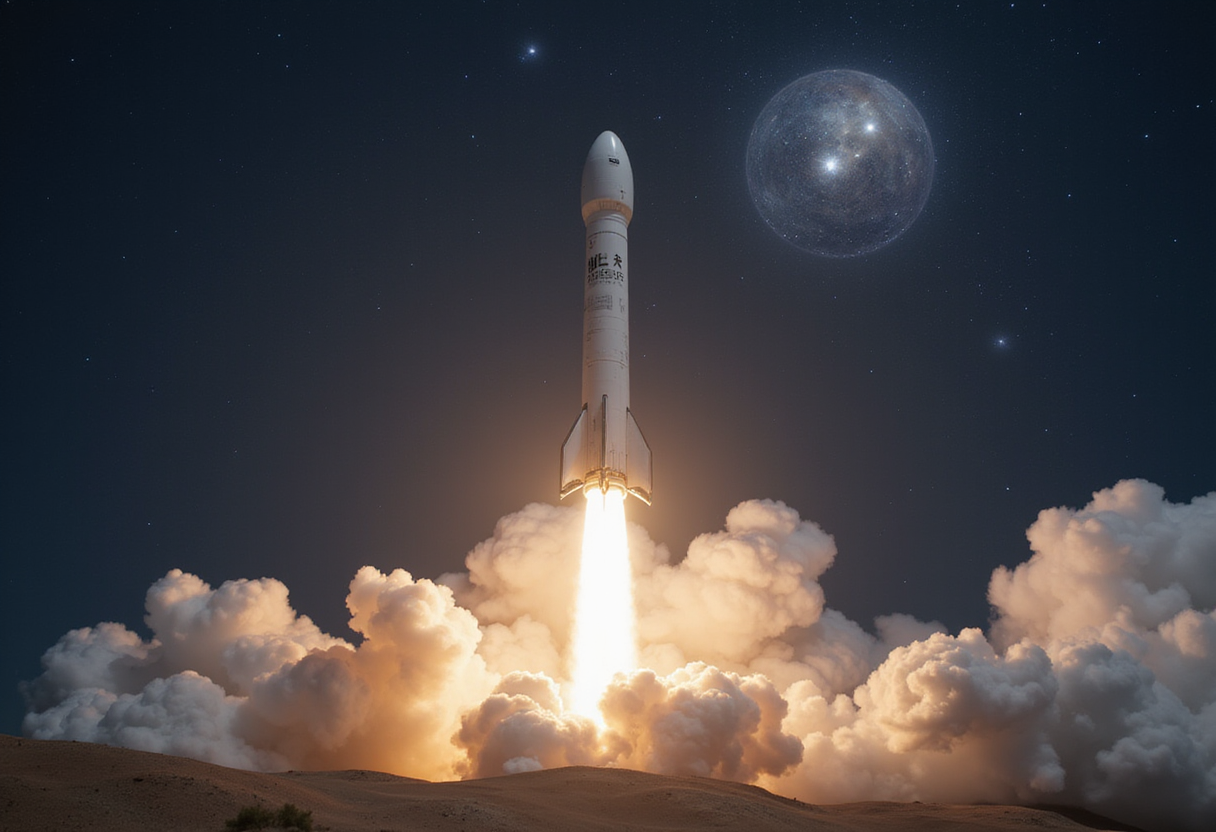
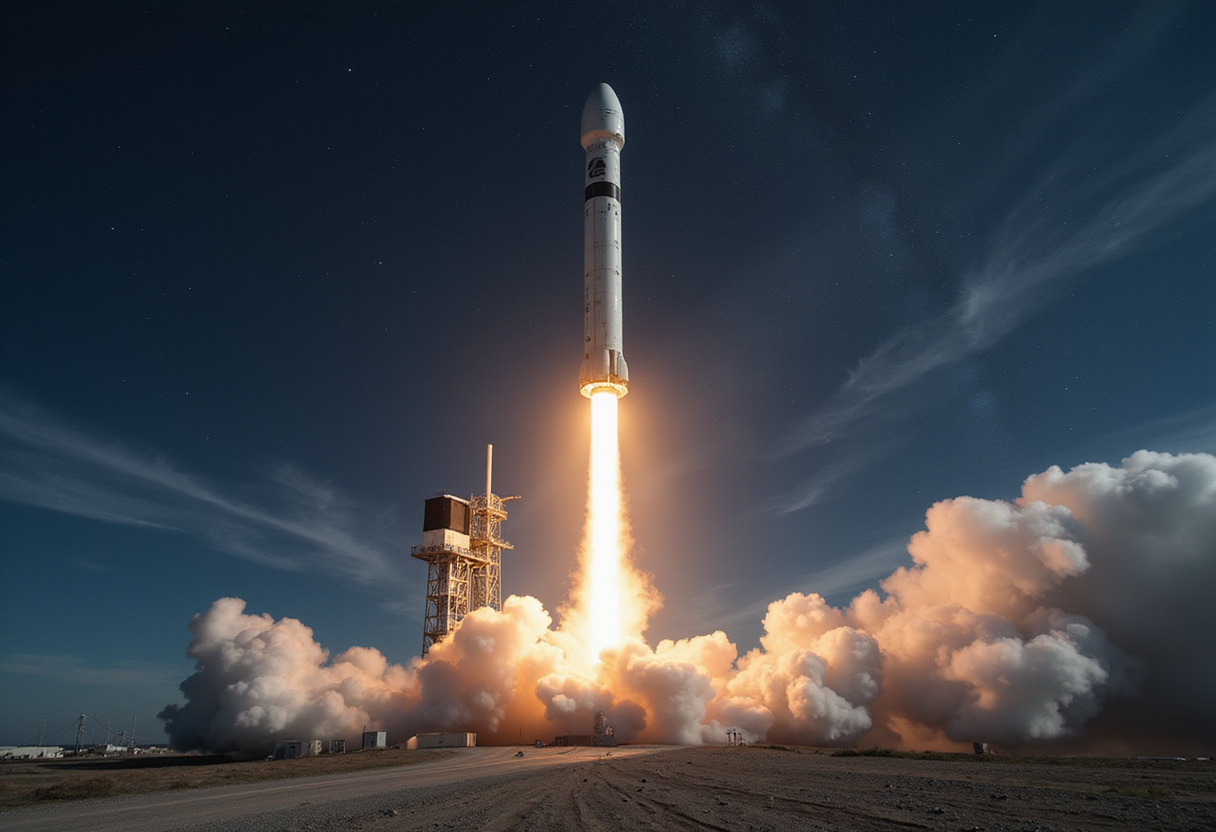
A SpaceX Falcon 9 scheduled to lift off Thursday at 11:15 a.m. PT from Vandenberg Space Force Base in California will carry a solar-powered satellite prototype equipped with Google's tensor processing units — the first orbital test of Alphabet's Project Suncatcher and the first time the company's AI accelerators will operate in space.
The satellite rides as a payload on Transporter-18, SpaceX's uncrewed rideshare mission, alongside satellites from Planet Labs. The launch marks the transition of Project Suncatcher from ground-based validation to orbital reality. Alphabet unveiled the initiative in November 2025 to investigate, in the company's words, "whether space could one day host scalable machine learning infrastructure."
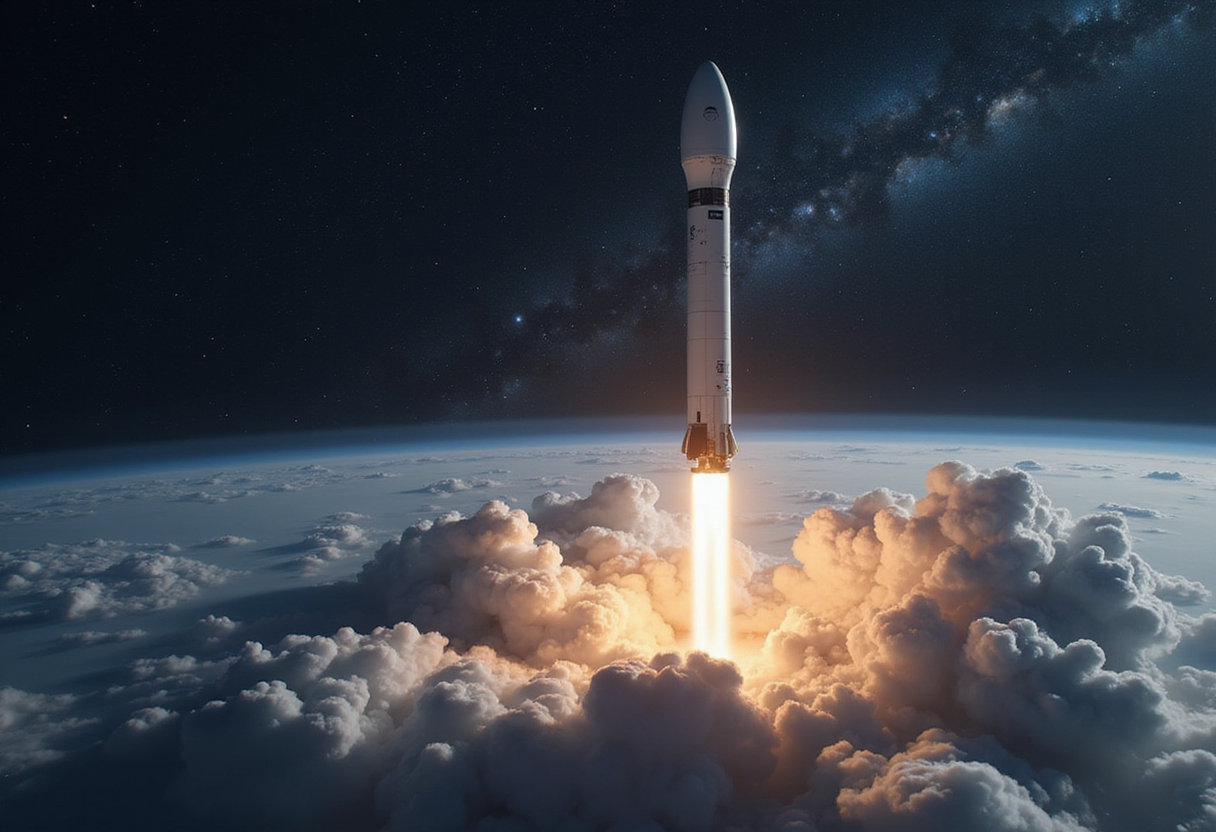
The technical premise is straightforward. Satellites in low Earth orbit receive near-constant sunlight and can generate up to eight times more solar power than equivalent terrestrial systems, according to Alphabet. The company eventually envisions linking multiple satellite constellations so they can collectively handle larger AI workloads — turning individual spacecraft from communications and observation platforms into nodes of a distributed computing network.
That model inverts the conventional data-center economics. Today, AI companies compete for electricity, land, cooling capacity and grid interconnections, all of which have become binding constraints as generative AI drives extraordinary demand for compute. Moving infrastructure above the atmosphere would theoretically provide continuous solar energy while sidestepping land-use disputes, permitting delays and community resistance.
But the trade is not a free lunch. Space removes the physical advantages of terrestrial facilities and introduces radiation, extreme temperature swings and — critically for AI silicon — the difficulty of dissipating heat. AI chips generate substantial thermal loads, and a space-based data center would need cooling systems that function without any of the conventional infrastructure available on Earth. Alphabet has already tested its TPUs running AI workloads at a facility at the University of California, Davis; Thursday's mission provides the first data on how the chips behave in the substantially harsher orbital environment.
The economics remain the harder problem. Launch capacity is limited and expensive, giving large-scale orbital compute a significant transportation cost per unit of hardware. Failed satellites must be replaced, communications links maintained, processors shielded from radiation. Orbital debris and congestion add operational risk as deployments multiply. Those constraints make space-based AI computing a long-term proposition rather than a near-term alternative to terrestrial facilities.
Alphabet is not pursuing this alone, and its partner is also its competitor. SpaceX has been among the most vocal proponents of orbital computing, arguing that orbit offers effectively "infinite real estate" at a time when AI companies face growing opposition to data-center construction on the ground. The company is developing its own orbital data-center concept — swarms of satellites equipped with GPUs and solar arrays, with hardware expected to be manufactured in part through Tesla. Elon Musk said earlier this year that space-based data centers would become the cheapest way to train AI within two or three years, a claim central to the narrative behind SpaceX's record IPO earlier this year. SpaceX President and COO Gwynne Shotwell said at an event in September that the company expects to deploy "supercompute in space" in 2027.
The two companies' ambitions overlap even as their AI businesses compete. Alphabet is also a significant investor in SpaceX, with its stake currently valued at more than $82 billion — giving Google unusually close access to the launch infrastructure required to test a technology that could eventually compete with terrestrial data centers.
Thursday's mission should be read accordingly: not as a demonstration that orbital data centers are commercially ready, but as a test of whether one fundamental component — the AI processor itself — can operate effectively in space. If Google's TPUs perform reliably, Alphabet will have validated the first technical foundation of Project Suncatcher. The far larger remaining task is proving that large numbers of computing satellites can be launched, networked, cooled and maintained at a cost competitive with ground-based facilities.
Transporter-18 is also a busy day for SpaceX beyond the Suncatcher payload: the company is scheduled to conduct a separate launch from Florida's Space Coast carrying NASA astronauts to the International Space Station for a six-month mission. If the TPU test succeeds, expect Alphabet and SpaceX to accelerate the timetable for orbital compute; if it fails, the industry's energy-constrained data-center buildout remains the only game in town.
Original: tekedia.com
More from Rebecca Stone
Show full bio
Correspondent covering media and advertising at Chip Dispatch.
131 articles
Related articles
alphabet-sends-google-tpus-into-orbit-in-first-space-data-center-test-2d6b37f0
Alphabet Sends Google TPUs Into Orbit in First Space Data Center Test
spacex-to-launch-google-ai-chips-into-orbit-f680c03f
SpaceX to Launch Google AI Chips Into Orbit
spacex-to-launch-google-ai-chips-for-space-based-data-centers-cb072fc3
SpaceX to Launch Google AI Chips for Space-Based Data Centers
google-to-fly-first-ai-chips-in-space-under-project-suncatcher-276fccc3
Google to Fly First AI Chips in Space Under Project Suncatcher