Hanmi Semiconductor Brings HBM4 and 2.5D Tools to Semicon West
Hanmi Semiconductor showed HBM4 and 2.5D packaging equipment at Semim West, targeting foundry customers beyond its core memory-bonder base as AI packaging demand widens.
- By
- Nathan Brooks
- Filed
- Channel
- Chip Manufacturing
- Read
- 2 min read
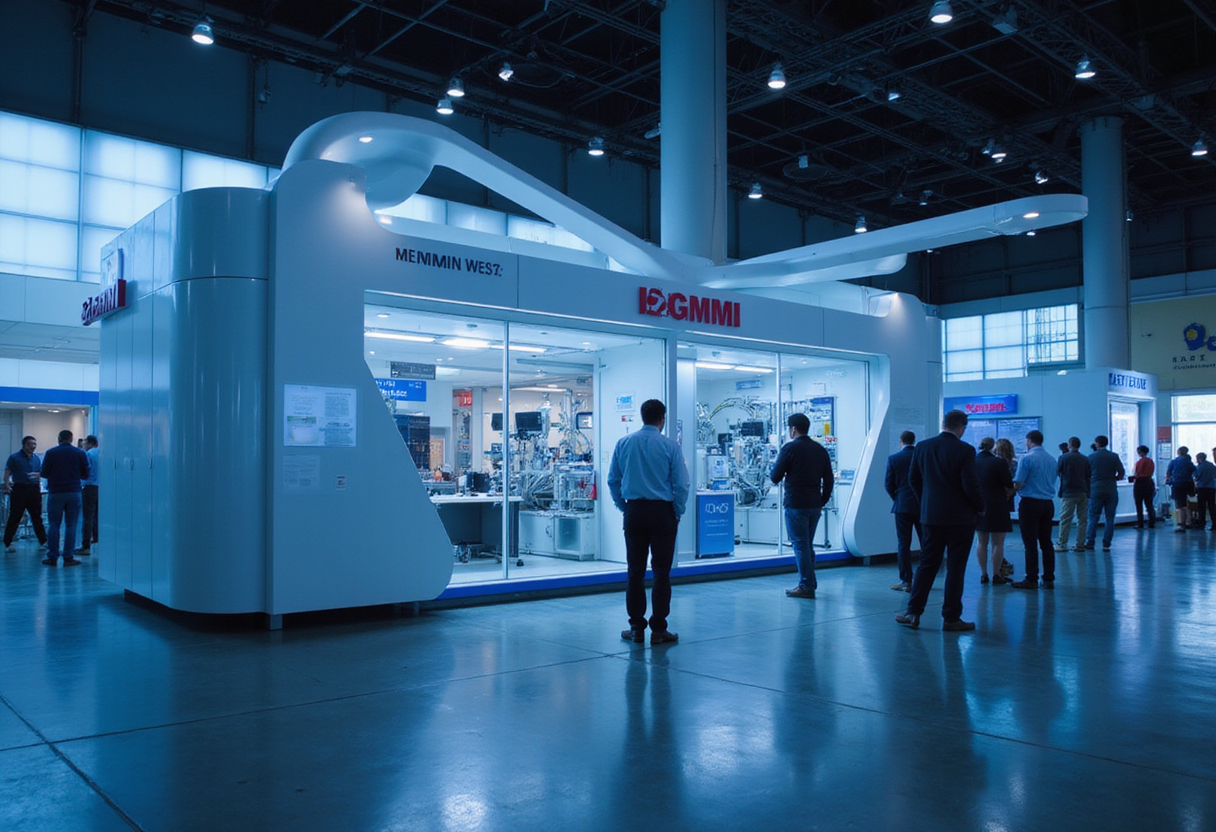
Hanmi Semiconductor showed HBM4 and 2.5D packaging equipment at Semicon West this week, and said it aims to grow its foundry customer base beyond its memory-heavy order book. The display marks the company's most public pitch yet to the foundry and logic segment of the advanced packaging market.
The Korean equipment maker has built its business on bonders for high-bandwidth memory. Its tools sit inside the production lines that supply HBM stacks to AI accelerator makers, a position that made Hanmi a quiet beneficiary of the AI boom. Now it wants the other half of the packaging equation: the 2.5D integration that glues HBM next to logic dies on an interposer.
Why does the foundry pitch matter?
HBM4 arrives with tighter tolerances and larger stack heights than HBM3E. Bonding equipment, once a commodity corner of the fab, now sets yield ceilings for the entire AI module. A vendor that owns both the memory bonding step and parts of the 2.5D flow can sell a broader toolset to the same customer.
That logic explains the foundry push. Foundries and OSATs, not memory makers, run most 2.5D assembly today. Winning them widens Hanmi's addressable market without a new product category. The Chosunbiz report frames the Semim West showcase as exactly this kind of portfolio statement: HBM4-capable gear alongside 2.5D equipment, presented to a foundry-oriented audience.
What did Hanmi actually show?
According to the report from Chosunbiz, the showcase covered two fronts:
- Equipment for HBM4, the next memory generation now entering qualification across the Korean memory industry
- 2.5D packaging tools aimed at foundry customers, the segment Hanmi identifies as its growth target
The company did not announce order values or capacity commitments at the show. The absence is telling. Equipment makers usually save numbers for earnings calls, and Hanmi has preferred that route historically.
The competitive picture
Hanmi faces rivals with larger tool catalogs and deeper foundry relationships. Besi, ASMPT and others already court the same 2.5D customers with hybrid bonding roadmaps. Hanmi's edge remains its installed base in HBM bonding, where memory makers have qualified its tools for successive generations.
The bet, then, is that HBM4 pulls the company forward into adjacent steps. If foundries adopt its 2.5D gear for AI module assembly, Hanmi converts a memory-cycle vendor profile into a steadier mixed one. If they do not, it remains a strong niche supplier in a market that has treated niches well lately.
What comes next
The test arrives with HBM4 qualification schedules, which memory makers and their customers expect to firm up over the coming quarters. Hanmi's foundry push will live or die on whether its 2.5D tools win evaluations at the same fabs that already buy its bonders.
Source: Google News: semiconductors
More from Nathan Brooks
Show full bio
Senior reporter covering people, launches and day-to-day practice in Semiconductors, chip manufacturing, hardware, AI compute at Chip Dispatch.
471 articles
Related articles
hanmi-semiconductor-shows-hbm4-equipment-at-semicon-west-e258ea45
Hanmi Semiconductor Shows HBM4 Equipment at SEMICON West
globalfoundries-tsmc-sign-2b-silicon-interposer-deal-f09a959a
GlobalFoundries, TSMC Sign $2B Silicon Interposer Deal
globalfoundries-and-tsmc-to-co-produce-silicon-interposers-in-the-us-fd592d92
GlobalFoundries and TSMC to Co-Produce Silicon Interposers in the US
ai-interposer-market-set-to-grow-40-fold-samsung-pushes-hbm4e-cooling-to-package-bfe8c8b4
AI Interposer Market Set to Grow 40-Fold; Samsung Pushes HBM4E Cooling to Package and System Level