GlobalFoundries and TSMC to Co-Produce Silicon Interposers in the US
GlobalFoundries and TSMC will jointly establish US-based silicon interposer production, targeting the advanced packaging bottleneck constraining AI chip supply.
- By
- Rebecca Stone
- Filed
- Channel
- Chip Manufacturing
- Read
- 2 min read
GlobalFoundries has partnered with TSMC to establish US-based production of silicon interposers, the advanced packaging components that connect logic dies to high-bandwidth memory in AI accelerators and other high-performance chips.
The deal, first reported by Seeking Alpha, pairs two companies that compete directly in the foundry market — GlobalFoundries, which abandoned leading-edge logic at 7nm in 2018, and TSMC, the world's largest contract chipmaker and the dominant supplier of advanced packaging capacity. Neither company has yet disclosed the investment size, target capacity, or production timeline for the joint effort.
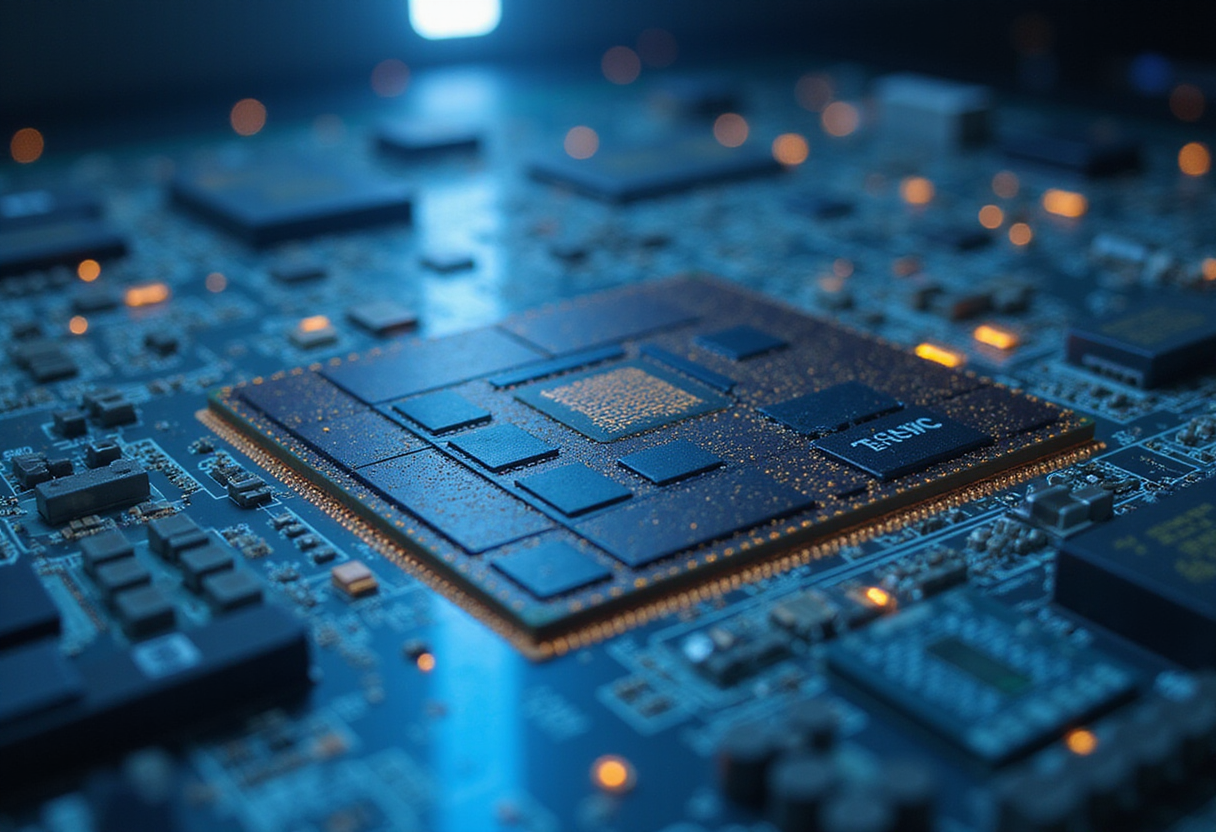
Silicon interposers sit at the heart of 2.5D packaging architectures. They carry the dense wiring that links a GPU or AI accelerator die to HBM stacks on the same substrate. Demand for this packaging capacity has tightened sharply as AI chip shipments grow, and TSMC's CoWoS family of interposer-based technologies has become a well-known bottleneck in the AI supply chain.
Why does a US interposer fab matter?
Nearly all advanced interposer capacity today sits in Taiwan. That concentration exposes AI chip suppliers — including US designers — to geographic risk in the Strait of Taiwan, and it adds shipping and logistics time to an already constrained packaging step.
Building interposer production on US soil would give chip designers a domestic option for a critical packaging layer, complementing the wave of US wafer fab construction already underway from TSMC's own Arizona operations, Intel, and Samsung's Taylor, Texas site. Packaging, not just wafer fabrication, has become the focus of Washington's supply chain policy — the Commerce Department has directed CHIPS Act funding toward advanced packaging specifically.
What do we know — and not know — yet?
The confirmed facts of the announcement are limited:
- The two companies have formed a partnership to produce silicon interposers in the United States.
- Neither investment value nor fab location has been disclosed publicly so far.
- No production start date or capacity target has been announced.
For GlobalFoundries, the deal fits its strategy of monetizing its specialty process portfolio — the company already runs US fabs in Malta, New York and Essex Junction, Vermont, and has received CHIPS Act funding to expand them. For TSMC, it extends a pattern of cooperating with US-based manufacturers on non-leading-edge capacity rather than exporting its most advanced process nodes outright.
How could this change the packaging market?
Analysts tracking advanced packaging have repeatedly flagged interposer and CoWoS-class capacity as the binding constraint on AI accelerator output over the next several years. Any additional capacity — particularly one located outside Taiwan and backed by two established foundries — would alter the competitive dynamics of a market that TSMC currently dominates.
The commercial details will determine the real impact. Until the partners disclose volumes, timelines, and customer commitments, the announcement stands as a directional signal: the advanced packaging supply chain is beginning to localize, and even fierce foundry rivals see more value in building that capacity together in the US than in letting it remain concentrated overseas.
Source: Google News: TSMC
More from Rebecca Stone
Show full bio
Correspondent covering media and advertising at Chip Dispatch.
238 articles
Related articles
globalfoundries-lands-2-billion-tsmc-interposer-deal-in-new-york-a870eaf9
GlobalFoundries Lands $2 Billion TSMC Interposer Deal in New York
globalfoundries-tsmc-partner-on-2b-us-interposer-deal-9f7641c6
GlobalFoundries, TSMC Partner on $2B US Interposer Deal
globalfoundries-to-build-silicon-interposers-for-tsmc-6d577db4
GlobalFoundries to Build Silicon Interposers for TSMC
globalfoundries-tsmc-ink-u-s-silicon-interposer-supply-deal-d6f368cb
GlobalFoundries, TSMC Ink U.S. Silicon Interposer Supply Deal