Huawei Expands LogicFolding Chips as China Hits Manufacturing Ceiling
Huawei is scaling its LogicFolding stacked-die chips as advanced packaging substitutes for the leading-edge nodes China cannot access, though no capacity figures have been disclosed.
- By
- Nathan Brooks
- Filed
- Channel
- AI & Compute
- Read
- 3 min read
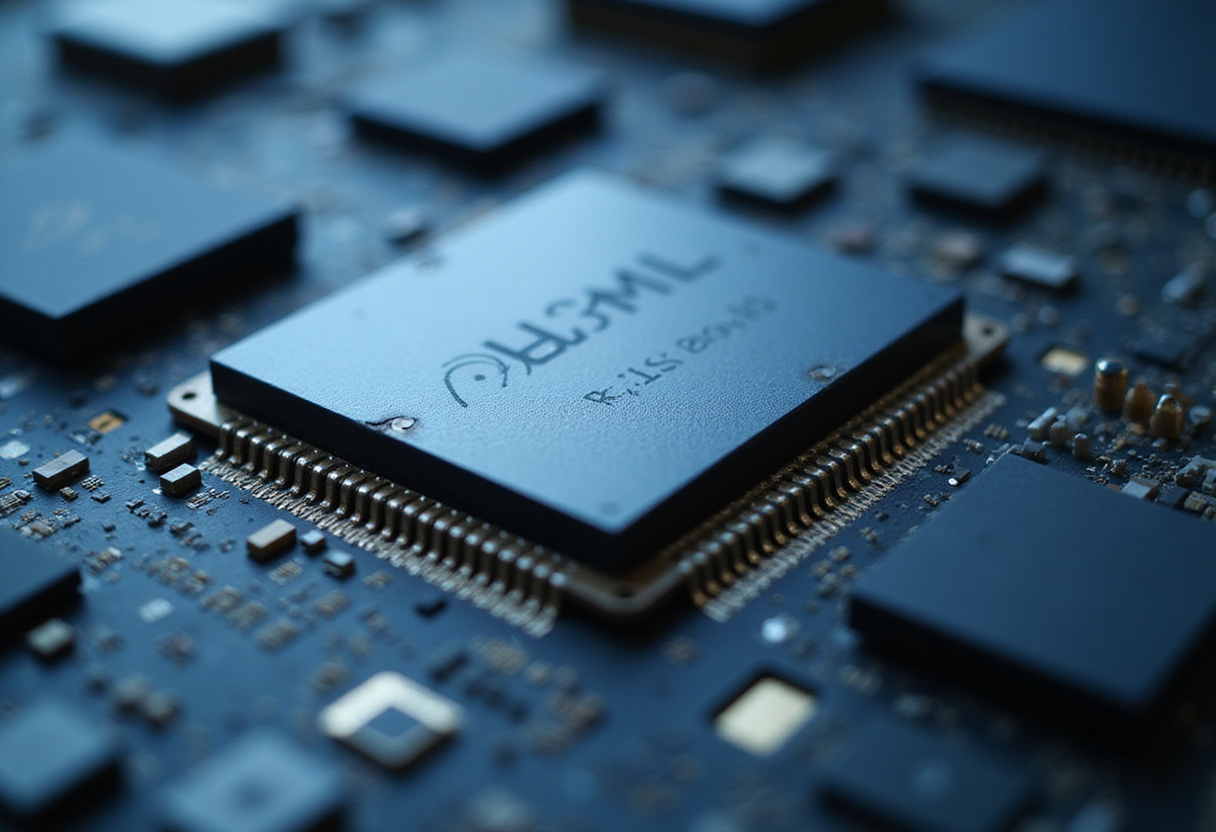
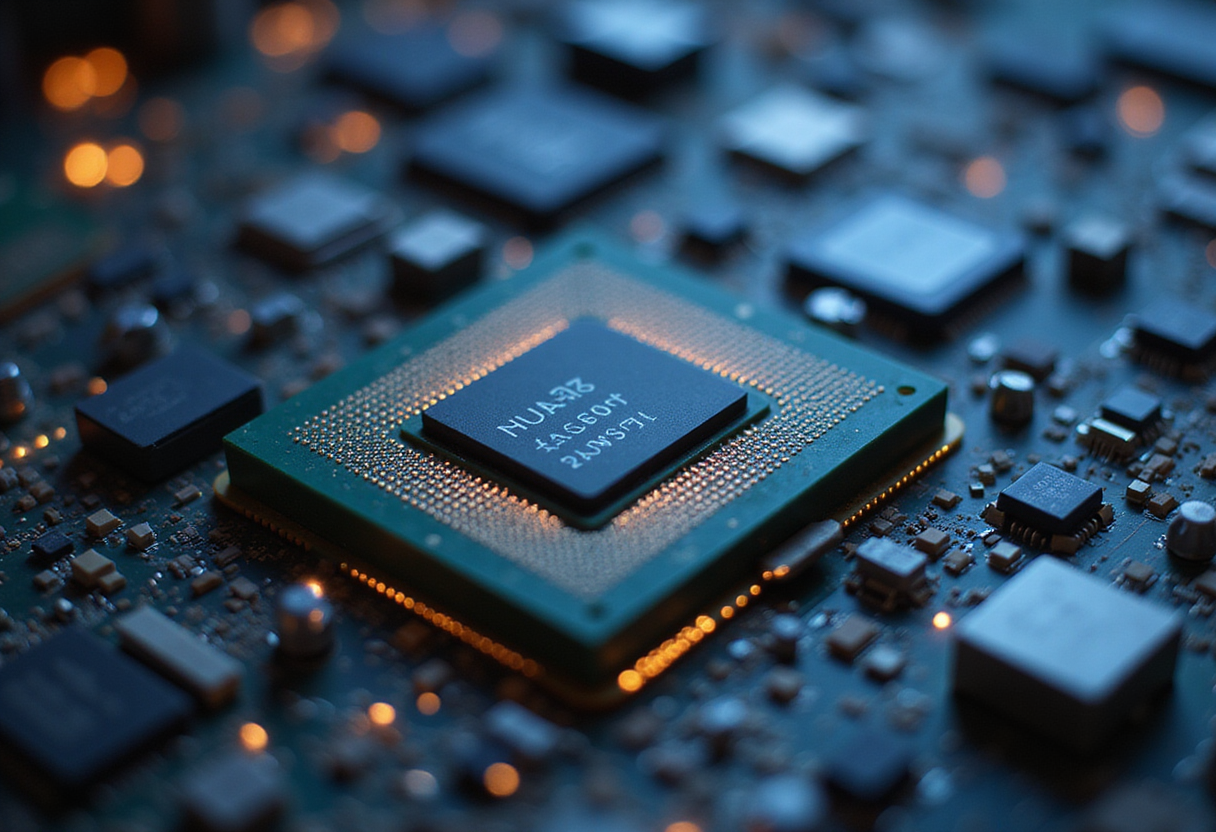
Huawei is expanding its LogicFolding chip line, according to Tech Wire Asia, betting on advanced packaging as the practical path forward while China's access to leading-edge wafer fabrication remains constrained.
The reported push centers on a simple commercial reality. US export controls have cut Chinese designers off from the extreme ultraviolet lithography equipment needed to pattern sub-7nm logic at scale, and the capacity that domestic foundries can offer at those nodes remains limited. Huawei's answer, per the report, is to keep building chips on the process nodes it can actually source in volume and recover performance by stacking and folding logic dies on top of each other.
LogicFolding is Huawei's branded approach to that stacking strategy. Rather than pursuing a denser single die, the technique partitions a design across multiple dies fabricated on an accessible node and integrates them through advanced packaging — an approach that trades wafer-level transistor density for three-dimensional integration density.
The strategy is not unique to Huawei. AMD has shipped chiplet-based processors since 2019, Intel is building its Foveros direct-bonding packaging stack, and TSMCo has made 3D stacking a pillar of its roadmap with its SoIC process. What distinguishes the Chinese effort is its motive: packaging innovation as a substitute for lithography access, rather than as a complement to it.
Tech Wire Asia frames the expansion against the backdrop of China's broader manufacturing limits. Domestic lithography champion SMIC has demonstrated production at 7nm-class nodes using deep ultraviolet multi-patterning, but that method carries cost and yield penalties that constrain volume economics, and no Chinese supplier has yet fielded EUV tooling. That gap defines the ceiling Huawei's packaging roadmap is designed to work around.
The commercial logic cuts both ways. Stacked-die designs can claw back transistor budgets and shorten interconnect lengths, improving performance and power efficiency relative to a planar part on the same node. But packaging complexity introduces its own yield and cost risks, and multi-patterned base dies remain more expensive per transistor than EUV-patterned equivalents. Huawei has not disclosed capacity figures, wafer allocations, or revenue targets for the LogicFolding line, and Tech Wire Asia's report does not cite confirmed shipment numbers — so the expansion's scale remains a roadmap claim rather than a measured output figure.
Geopolitically, the move signals where Chinese silicon investment is flowing. With leading-edge front-end capacity constrained, advanced packaging — back-end assembly, bonding and test — is becoming the differentiating layer for Chinese silicon vendors serving domestic AI and datacenter demand. That shift matters for equipment suppliers and materials vendors, since packaging-driven designs consume different tool sets than lithography-bound ones.
It also matters for Huawei's competitive position. The company has continued to ship AI processors and server silicon despite sanctions, and packaging-led performance gains are one of the few levers available to keep those products within reach of what TSMC-fabricated competitors deliver on 4nm and 3nm-class nodes.
How far folding can close that gap depends on yields and on the pace of China's domestic packaging capacity buildout — variables Huawei has not yet quantified publicly, and which will determine whether LogicFolding becomes a volume product line or a proof of concept.
Source: Google News: AI chips
More from Nathan Brooks
Show full bio
Senior reporter covering industry trends and analytics at Chip Dispatch.
154 articles
Related articles
asml-ceo-warns-china-export-bans-could-hand-huawei-an-opening-48d9373a
ASML CEO warns China export bans could hand Huawei an opening
cfr-analysis-huawei-cannot-close-ai-accelerator-gap-with-nvidia-5e159372
CFR Analysis: Huawei Cannot Close AI Accelerator Gap With Nvidia
huawei-s-chip-advance-fuels-debate-over-us-export-controls-1cbd4a9b
Huawei's Chip Advance Fuels Debate Over US Export Controls
huawei-launches-mate-90-line-betting-on-domestic-silicon-1fa65f15
Huawei Launches Mate 90 Line, Betting on Domestic Silicon