Humyn Labs Raises $47 Mn to Harvest Human Motion Data for Robots
Humyn Labs raised $47 Mn for robot training data collection, claiming $50 Mn annualised revenue in six months. Consent and labour questions remain unanswered.
- By
- Sophie Lindqvist
- Filed
- Channel
- Startups & Funding
- Read
- 3 min read
Physical AI startup Humyn Labs has raised $47 Mn (about ₹439 Cr) to scale its human motion data collection and robot deployment business. The round splits into $26 Mn in Series A equity led by Accel and $21 Mn in venture debt led by Lighthouse Canton, with Trifecta Capital also participating. The figures come from the company itself; no investor has disputed them.
The equity side drew a broad syndicate. Prosus, BeeGlobal, Bajaj Finserv Intelligence, Bajaj Alts AI Opportunities Fund, Dallas Venture Capital, Jump Trading LLC and angel investor Anita Pramoda all joined. Debt-heavy structures of this kind often signal founders protecting dilution. They also raise repayment obligations before revenue quality is proven.
What does the company actually do?
Founded earlier this year by former Nazara CEO Manish Agarwal and Ishank Gupta, the San Francisco-based startup collects data across more than 20 countries. Its clients are AI research labs, robotics companies and developers of world models — systems that simulate how physical environments respond to actions.
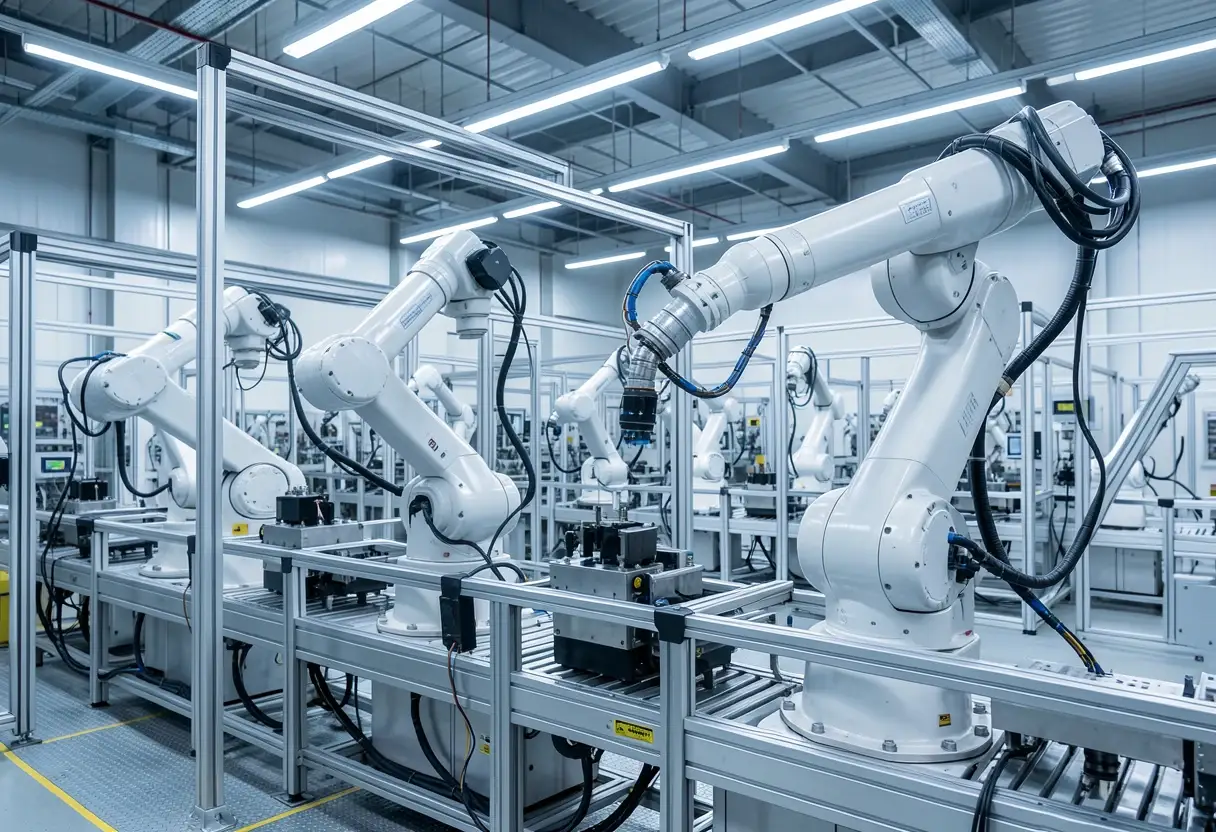
The method is straightforward. Humyn Labs records how people perform tasks in factories, warehouses, farms and homes. Proprietary devices capture human movements and interactions. Those recordings become labelled datasets used to train robotics models. The company also tests robots in real-world settings for robotics developers.
Physical AI differs from conventional AI in one decisive respect. A warehouse robot must learn to pick up varied objects, navigate obstacles and handle materials without instructions for every movement. That competence requires data about how bodies and objects behave, not how text is ordered. Human demonstration is the raw material.
How credible is the revenue claim?
The startup claims it crossed $50 Mn in annualised revenue within six months of starting operations. The word to weigh is annualised. That figure extrapolates a short period into a full year, and no audited revenue, client list or contract values accompany it. A company founded months ago claiming $50 Mn annualised revenue is making a strong assertion; the absence of disclosed customers leaves it unverified.
The expansion plan is concrete regardless. Humyn Labs intends to extend robot deployment operations to Brazil, South Korea and India. It also plans to strengthen data collection hardware and processing capabilities, and to build out presence in San Francisco, London and Seoul. These are stated plans, not completed buildouts.
Why India matters to the business
India is central to the commercial thesis. A July 2026 Counterpoint Research report estimates India's data collection and annotation services for physical AI could unlock a $10 Bn revenue opportunity by 2030. That is an analyst projection, not booked income. It rests on India's large workforce, diverse working environments and comparatively low data collection costs.
Cheap labour is the competitive advantage. It is also the ethical fault line.
What is not being said
The business raises unresolved questions around privacy, consent and ownership of training data. Physical AI datasets can involve recordings of people inside their homes, factories and workplaces. Such footage may capture personal information, household activities, workplace processes and commercially sensitive details.
Informed consent, data storage rules and restrictions on sharing recordings therefore carry unusual weight here. The company's announcement says nothing about its consent protocols, compensation terms for recorded workers, or whether workers retain any control over footage used to train commercial systems.
A broader labour question sits underneath. Warehousing, packaging, assembly-line operations, cleaning and inventory management are among the activities physical AI robots could take over. The workers whose movements are recorded are training the systems that may replace them. Human labour is becoming a key input into technology built to reduce dependence on human labour.
That contradiction does not invalidate the business. It does mean the industry's social licence is untested at scale. Investors have priced the opportunity at $47 Mn. Consent frameworks, worker compensation and data ownership remain unpriced.
Humyn Labs will now deploy capital across three continents while its revenue claim awaits verification. Whether the $10 Bn India opportunity materialises will depend less on robot capability than on whether data harvesting can survive scrutiny.
Source: inc42.com
More from Sophie Lindqvist
Show full bio
News editor covering money, funding and market shifts around Semiconductors, chip manufacturing, hardware, AI compute at Chip Dispatch.
1,135 articles
Related articles
humyn-labs-raises-47m-to-feed-u-s-robotics-firms-real-world-data
Humyn Labs Raises $47M to Feed U.S. Robotics Firms Real-World Data
genesis-ai-raises-500m-series-a-at-3-5b-valuation-for-factory-robots
Genesis AI Raises $500M Series A at $3.5B Valuation for Factory Robots
agentic-ai-startup-mirendil-raises-1b-series-a-to-top-weekly-funding
Agentic AI Startup Mirendil Raises $1B Series A to Top Weekly Funding
mercor-raises-750m-at-20b-valuation-for-ai-agent-evals
Mercor Raises $750M at $20B Valuation for AI Agent Evals