IBM, AMD and Oak Ridge Put Quantum and HPC Under One Roof
IBM's 120-bit Nighthawk quantum chip and Oak Ridge's AMD-powered Umbra HPC system now share a Poughkeepsie floor to crack error correction ahead of a 2028 federal target.
- By
- Rebecca Stone
- Filed
- Channel
- AI & Compute
- Read
- 3 min read
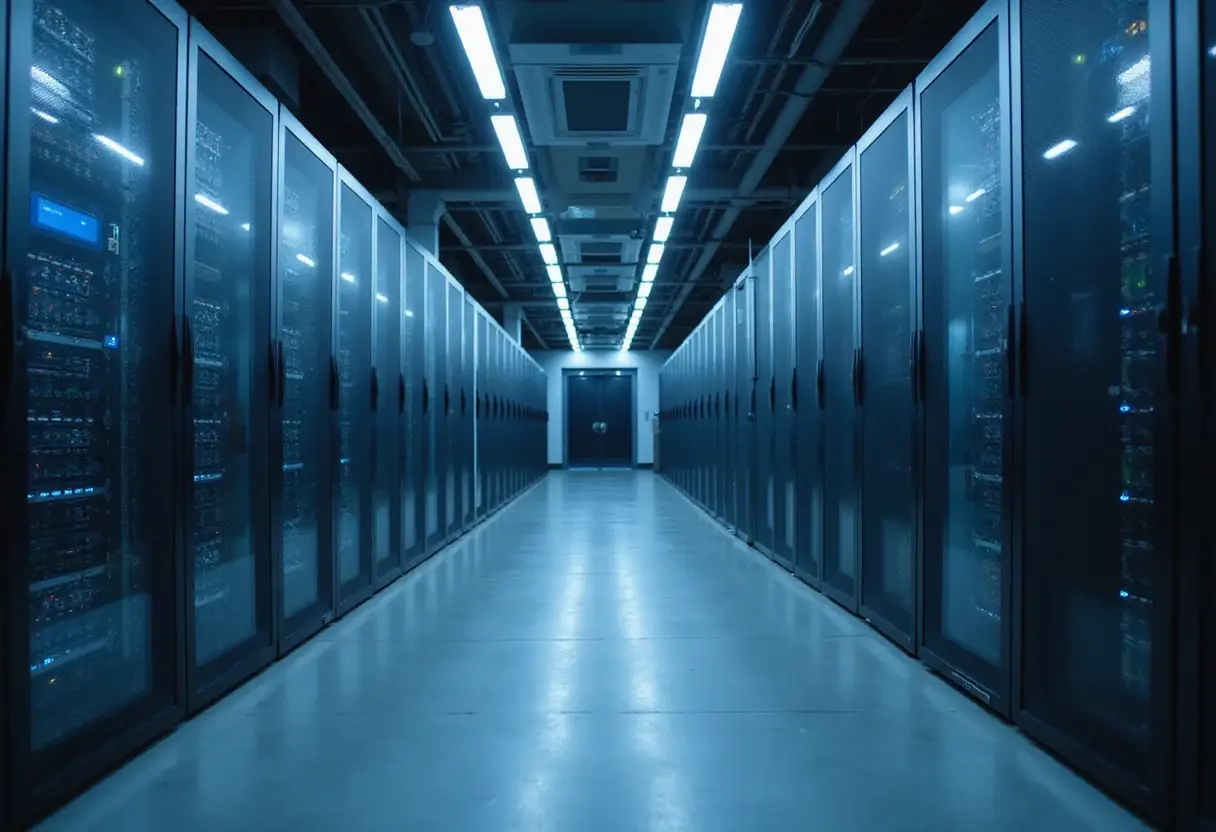
IBM, AMD and the Quantum Science Center at Oak Ridge National Laboratory this week unveiled a co-design platform for quantum error correction that puts quantum computers and classical HPC systems in the same room — a rarity in a field where the two usually talk over cloud APIs.
The platform will live at IBM's facility in Poughkeepsie, New York. It pairs IBM's 120-bit Nighthawk r2 quantum chip with Oak Ridge's Umbra HPC system, powered by AMD's fifth-generation Epyc "Turin" 9005 CPUs and "Antares" Instinct MI355X GPUs. The AMD silicon will drive research into quantum error correction, decoding optimization and software orchestration, the organizations said.
Why co-location matters
Today's quantum systems carry gate error rates of roughly one error per 100 to 1,000 operations — far too noisy for fault-tolerant machines. Qubits are fragile. Light, sound, even the activity of neighboring qubits can make them decohere and lose their quantum nature.
Logical qubits — grouping many physical qubits together — cut errors, but researchers need faster feedback loops to push further. Cloud connectivity adds complexity and delay, according to IBM.
"In order to experiment with these techniques and build algorithms, quantum and classical processors need to be able to work closely together," said Seetharami Seelam, Distinguished Engineer and chief architect of classical system co-design for quantum-centric supercomputing at IBM.
In these hybrid environments, QPUs act as another accelerator alongside GPUs and TPUs. AI serves as connective tissue, and Oak Ridge scientists are already probing what roles generative and agentic AI will play.
"The collaboration will also focus on exploring how AI can develop more effective algorithms and workflows, as well as advancing error correction through both new methods and improvements to existing approaches," Seelam said. "The GPUs that are part of the co-design platform will play a key role in running the AI models or algorithms that scientists plan to develop and improve upon."
What does Nighthawk change?
Nighthawk ditches IBM's previous "heavy-hex" chip architecture for a square lattice — a 2D grid where most qubits connect directly to four nearest neighbors. That's roughly a 60 percent connectivity boost over heavy-hex, and it brings shorter execution times plus compatibility with the standard surface code for error correction.
Through IBM's quantum API, researchers get deep pulse control: they can measure qubits mid-calculation, process results in real time, and time signals precisely to shield qubits from noise. That lets them compare error correction techniques head-to-head on qubit count, runtime and classical compute cost.
One target is hierarchical error correction, which layers two codes — an inner code protecting qubits within a module and an outer code adding a second protective layer — while keeping hardware demands simpler. IBM research says the approach could reach a trillion logical operations at a physical qubit error rate of one in 1,000.
The 2028 deadline
The platform backs the US Energy Department's Quantum Genesis Mission, which targets fault-tolerant quantum systems. IBM and the University of Chicago demonstrated experiments with up to 70 logical qubits and 438 hard operations in July.
"The Quantum Genesis Mission's Q Competition targets 100 logical qubits running 100,000 such operations by late 2028," Seelam said. "To reach this goal, the broader quantum community needs to achieve a 238-fold increase in hard operation count, and we need to do it fast. We believe this goal is feasible, but achieving it will require progress across several areas and close collaboration among industry, national laboratories and government researchers."
IBM will also feed lessons from the platform into Quantum Starling, the fault-tolerant system the company says it will deliver by 2029.
Original: ibm.com
More from Rebecca Stone
Show full bio
Correspondent covering technology and product news in Semiconductors, chip manufacturing, hardware, AI compute at Chip Dispatch.
703 articles
Related articles
hpe-and-dell-bet-the-quantum-datacenter-looks-like-a-rack-8f130777
HPE and Dell Bet the Quantum Datacenter Looks Like a Rack
d-wave-opens-beta-for-gate-model-quantum-simulator-built-on-dual-rail-architectu-a48dbf48
D-Wave Opens Beta for Gate-Model Quantum Simulator Built on Dual-Rail Architecture
quera-to-place-256-logical-qubit-libra-system-on-amazon-braket-402d718f
QuEra To Place 256-Logical-Qubit Libra System On Amazon Braket By 2028
ibm-logs-15-minute-quantum-run-that-classical-machines-cannot-match-13cf82a9
IBM Logs 15-Minute Quantum Run That Classical Machines Cannot Match