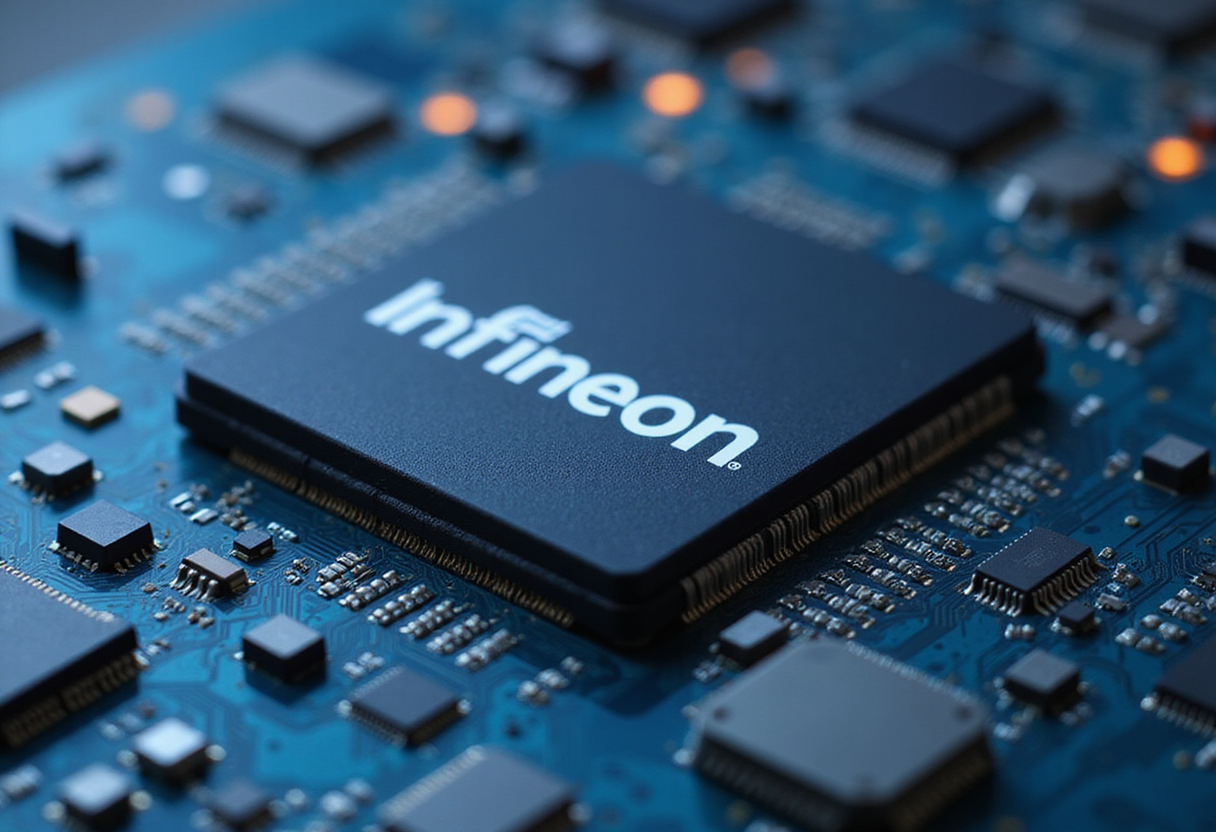
Infineon Opens $1.4 Billion Plant in Thailand
Infineon has opened a $1.4 billion plant in Thailand, the country's largest chip investment to date and a test of whether Southeast Asia's newest entrant can convert policy into capacity.
- By
- Nathan Brooks
- Filed
- Channel
- Chip Manufacturing
- Read
- 2 min read
Infineon Technologies has opened a $1.4 billion manufacturing plant in Thailand, marking one of the largest single semiconductor investments in the country's history and a concrete step in Bangkok's effort to position itself as a meaningful node in the global chip supply chain.
The German power-semiconductor leader joins a small but growing list of global chipmakers that have placed production capacity in Southeast Asia over the past several years. Thailand has long hosted back-end assembly, test and packaging operations for multinational suppliers, but the Infineon plant — with its $1.4 billion price tag — signals an upgrade in both the scale and the strategic weight of the country's role.
Infineon has not specified in the announcement the plant's exact output capacity, process technology or headcount, and those details will determine how significant the site becomes within the company's global manufacturing footprint. What is confirmed is the investment figure itself and the plant's status as a centerpiece of Thailand's current semiconductor push, which Thai policymakers have promoted as a way to capture more value from the industry's geographic diversification.
The timing matters. Since 2020, governments and multinational buyers across the United States, Europe and Japan have pressed suppliers to reduce concentration risk in chip production, a trend accelerated by pandemic-era shortages and ongoing friction between Washington and Beijing over export controls and tariffs. Southeast Asia has been among the clearest beneficiaries: Vietnam, Malaysia and Singapore have all landed expanded chip investments, and Thailand is now working to convert its established electronics manufacturing base into a claim on that same capital flow.
For Infineon, Thailand extends a manufacturing network that already spans Europe and Asia. The company's core business — power semiconductors, microcontrollers and sensors used in cars, industrial drives and power management — has proven less exposed to consumer-chip boom-and-bust cycles than memory or smartphone silicon, but it demands high-volume, cost-competitive production. Adding capacity in Thailand fits that requirement while spreading the company's geographic risk.
The competitive picture for Thailand is not trivial. Malaysia dominates back-end packaging for multinationals, Vietnam has attracted heavy electronics assembly investment, and Singapore holds a far deeper ecosystem of advanced fabs and suppliers. Thailand's pitch rests on established infrastructure, government incentives and a workforce already trained in electronics manufacturing. The Infineon plant gives that pitch its most visible proof point to date.
How the site scales from here is the open question. If Infineon expands the plant's output or moves higher-value process steps to Thailand, the investment could anchor a broader supplier cluster around it — the pattern that played out in Penang and Hsinchu over previous decades. If it remains a single large site, Thailand's semiconductor ambition will still need additional anchor tenants to become self-sustaining. Industry watchers will be looking at whether the $1.4 billion opening triggers follow-on commitments, from Infineon or its competitors, over the next investment cycle.
Source: Google News: semiconductors
More from Nathan Brooks
Show full bio
Senior reporter covering industry trends and analytics at Chip Dispatch.
133 articles
Related articles
infineon-opens-thailand-plant-as-bangkok-accelerates-chip-push-6a66b6d2
Infineon Opens Thailand Plant as Bangkok Accelerates Chip Push
infineon-names-thailand-an-attractive-semiconductor-manufacturing-hub-b19e743d
Infineon Names Thailand an Attractive Semiconductor Manufacturing Hub
infineon-to-acquire-semiconductor-startup-c2i-a18965ba
Infineon to Acquire Semiconductor Startup C2i
vsmc-opens-s-8-5-billion-semiconductor-plant-in-singapore-7de489cb
VSMC Opens S$8.5 Billion Semiconductor Plant in Singapore