Intel Malaysia expands advanced packaging as AI chips grow more complex
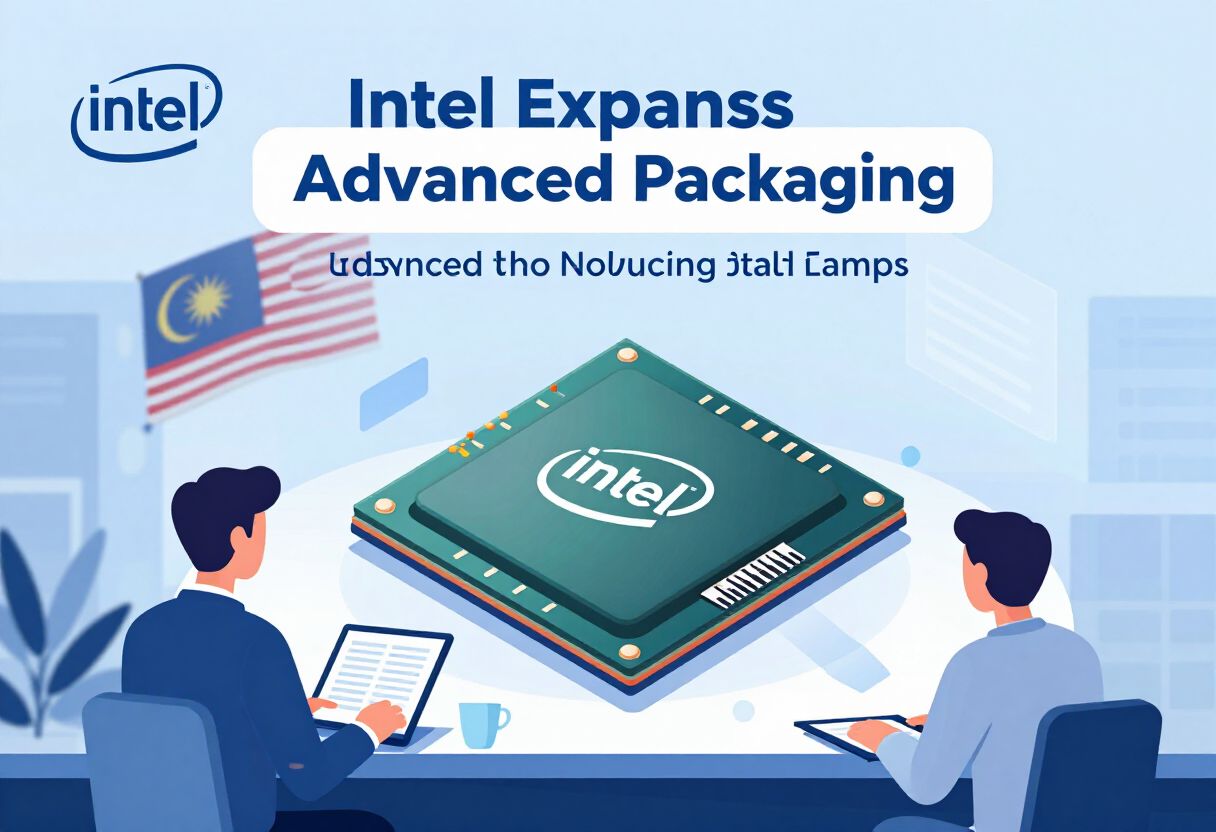
Intel is adding advanced packaging capacity in Kulim, Malaysia, including Foveros and EMIB technologies, as AI chips shift toward complex multi-die packages.
- By
- Grace Kim
- Filed
- Channel
- Chip Manufacturing
- Read
- 3 min read
Intel is expanding advanced packaging operations at its Kulim, Malaysia site, positioning the facility as a key production hub as AI chips grow larger, more complex, and more reliant on chiplet-based architectures.
The expansion covers Intel's advanced packaging portfolio, including the 3D stacking technology Foveros and the embedded multi-die interconnect bridge (EMIB), which the company uses to assemble multi-chiplet processors. As AI accelerators move toward designs that combine logic, memory, and I/O dies in single packages, advanced packaging has shifted from a back-end afterthought to a bottleneck in the supply chain — and a competitive differentiator among foundries and IDMs alike.
Malaysia already hosts one of Intel's largest assembly and test operations. The Kulim campus has served as the company's major assembly and test manufacturing site, and the new investment deepens its role in higher-value packaging work rather than traditional back-end assembly. Intel has previously said its Malaysian operations would support advanced packaging including Foveros-class technologies, and the current expansion extends that roadmap as demand for AI silicon accelerates.
The commercial logic is straightforward. AI devices increasingly ship as multi-die packages: large GPUs and accelerators from major vendors now combine compute chiplets with high-bandwidth memory stacks, and packaging yield and capacity directly constrain how many sellable units a vendor can produce. TSMC, Intel's chief foundry rival, has likewise been racing to expand advanced packaging capacity, including CoWoS capacity that has remained tight amid insatiable AI accelerator demand. Intel's build-out in Malaysia adds capacity into that same contested segment of the supply chain.
The move also carries geopolitical weight. The United States and its allies have pushed to diversify semiconductor manufacturing away from a single point of failure, and Southeast Asia — Malaysia in particular — has emerged as a packaging and test hub in that realignment. Advanced packaging capacity in Malaysia strengthens a node of the supply chain that sits outside both Taiwan and China while remaining inside the US-aligned sphere, a factor that matters for customers weighing supply-chain resilience alongside cost.
For Malaysia, the expansion reinforces its bid to climb the semiconductor value chain. The country has long anchored the global back-end: assembly, test, and packaging operations there account for a substantial share of worldwide semiconductor packaging output. Hosting Foveros- and EMIB-class manufacturing would move Malaysian facilities up the stack into the advanced segment where margins and strategic value are higher, and where fewer countries currently operate at scale.
Intel itself is betting that packaging leadership can complement its foundry strategy. The company markets Foveros and EMIB as differentiators for customers of Intel Foundry Services, offering direct die-to-die interconnect options that compete with TSMC's CoWoS and SoIC families and Samsung's packaging offerings. Capacity in Malaysia gives Intel geographic flexibility to serve foundry customers as well as its own product lines — an important consideration as the company works to land external foundry customers for its 18A-class process roadmap.
The expansion lands amid a broader AI-driven scramble for advanced packaging capacity industry-wide. Memory vendors are ramping high-bandwidth memory output, substrate suppliers are racing to meet demand for large AI-class substrates, and foundries are adding cleanroom space dedicated to die stacking and hybrid bonding. Within that picture, Intel's Malaysian capacity adds another pool of advanced packaging supply — one aimed squarely at the segment where AI silicon complexity is growing fastest.
How quickly that capacity fills, and whether external foundry customers commit to Intel's packaging alongside its process nodes, will shape whether Kulim becomes a decisive asset in the company's foundry turnaround or simply more back-end floor space.
Source: Google News: AI chips
More from Grace Kim
Show full bio
Market editor covering industry trends and analytics at Chip Dispatch.
26 articles
Related articles
intel-malaysia-expands-advanced-packaging-in-penang-for-ai-chips-dcb8f094
Intel Malaysia Expands Advanced Packaging in Penang for AI Chips
intel-commits-5-billion-to-expand-irish-chip-manufacturing-fe497a6a
Intel Commits €5 Billion to Expand Irish Chip Manufacturing
malaysia-weighs-huawei-ai-chips-despite-us-export-warnings-31f4699e
Malaysia Weighs Huawei AI Chips Despite US Export Warnings