Japan Reportedly Commits Up to ¥3 Trillion to New York Fab
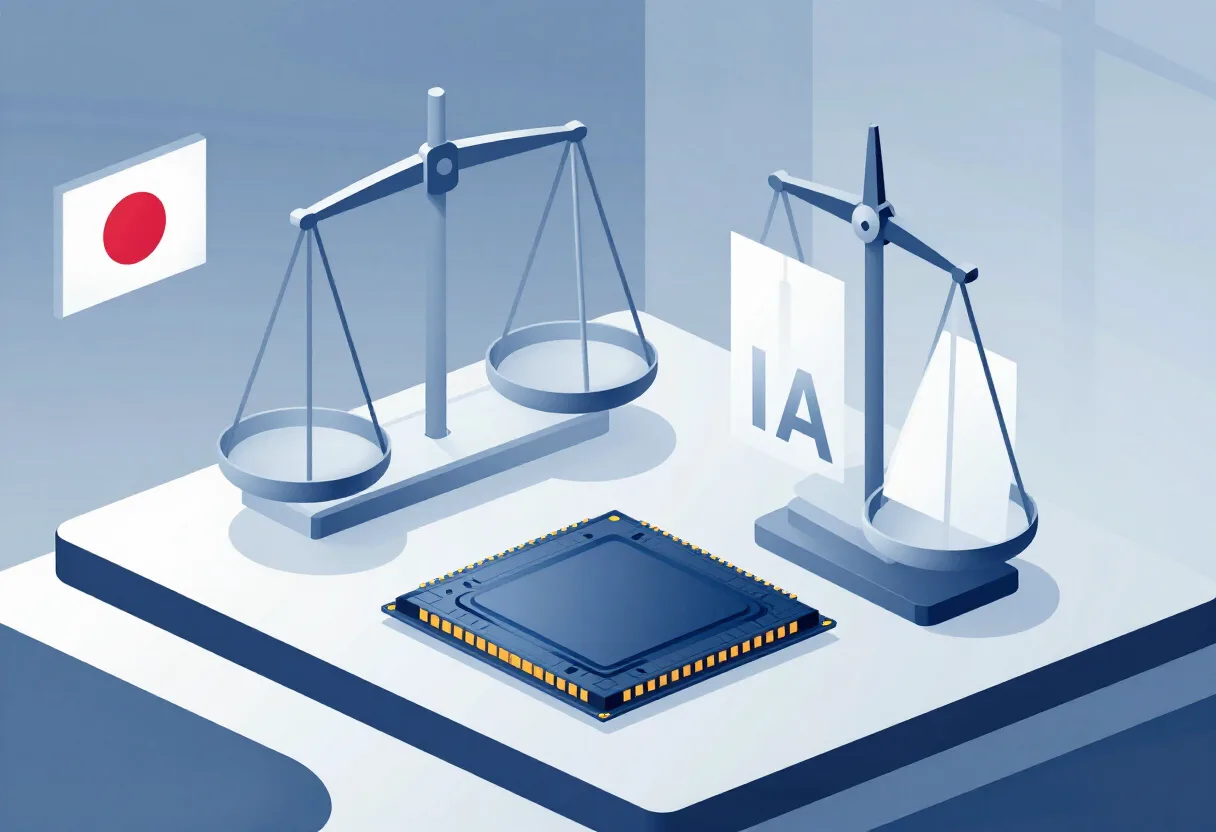
Japan's government will invest up to ¥3.3 trillion in a New York semiconductor plant, a third round of state-backed US chip investment, BigGo Finance reports.
- By
- Grace Kim
- Filed
- Channel
- Chip Manufacturing
- Read
- 3 min read
Japan's government will invest up to ¥3.3 trillion in a semiconductor plant in New York State, according to a report from BigGo Finance. The commitment marks the third round of Japanese government investment in the United States and represents one of the largest single state-backed outlays Tokyo has directed at American chipmaking capacity.
The figure, roughly convertible to more than $20 billion at recent exchange rates, would place the pledge in the same weight class as major fab construction programs in the US, where leading-edge facility costs now routinely run into the tens of billions of dollars per site.
The reported deal does not identify the recipient company, the process node, or the wafer size planned at the New York site. BigGo Finance's headline confirms three elements: the investor, the ceiling amount, and the location. Chip Dispatch could not independently verify the recipient, the disbursement schedule, or whether the funds cover construction, equipment, or operating support.
What does the third round signal?
The designation as a "third round" of US investment indicates a structured, recurring program rather than a one-off grant. Sequential tranches suggest Tokyo is coordinating its overseas semiconductor spending with Washington's own industrial policy, which has channeled federal money into domestic fab construction since the CHIPS and Science Act era.
New York State has actively courted semiconductor manufacturers. The state hosts GlobalFoundries' Fab 8 in Malta, one of the largest operational fabs on the US East Coast, and has offered incentive packages to attract additional advanced-node investment.
Japanese government money flowing into US soil reverses the older pattern, in which American capital and technology built Japan's chip industry after 1980. Tokyo now funds capacity abroad as it simultaneously rebuilds domestic leadership, including the Rapidus advanced-logic program targeting 2nm-class production in Hokkaido.
Why would Japan fund US capacity?
Analysts of Japanese industrial policy have generally framed overseas semiconductor investments as supply-chain insurance. Funding allied-country capacity diversifies production geography at a moment when Taiwan concentrates the majority of leading-edge foundry output and export controls increasingly segment the global equipment market.
A New York commitment also aligns with Japan's broader economic security legislation, which authorizes state support for critical technologies both at home and with allies. The ceiling structure of the ¥3.3 trillion figure suggests the final amount may depend on project milestones, a common feature of government fab subsidies worldwide.
What remains unconfirmed?
Several commercial details stay open:
- The recipient company and its product family — logic, memory, or power semiconductors.
- The process node and wafer size planned for the plant.
- The disbursement timeline across the third round.
- Whether the investment buys equity, guarantees loans, or operates as a direct subsidy.
- Any matching commitment from New York State or the US federal government.
Each of those variables would materially change the commercial weight of the announcement. A subsidy for an established operator reads differently from seed money for a new entrant, and equity participation would give Tokyo direct exposure to fab economics rather than policy influence alone.
Chip Dispatch will update this story as recipient, node, and schedule details are confirmed. If the full ¥3.3 trillion ceiling is drawn down, the deal would stand among the largest foreign government investments in US semiconductor manufacturing to date and would deepen the Japan-US production alliance that both governments have promoted as a hedge against concentrated supply risk.
Source: Google News: semiconductors
More from Grace Kim
Show full bio
Market editor covering people, launches and day-to-day practice in Semiconductors, chip manufacturing, hardware, AI compute at Chip Dispatch.
547 articles
Related articles
japan-and-us-weigh-19-billion-chip-plant-in-tariff-investment-pact-8dcdcf17
Japan and US Weigh $19 Billion Chip Plant in Tariff Investment Pact
two-chip-factories-planned-for-upstate-ny-backed-by-21-billion-from-japan-91fdf7bf
Two Chip Factories Planned for Upstate NY Backed by $21 Billion from Japan
japan-to-put-21-billion-into-globalfoundries-new-york-fabs-af58405b
Japan to Put $21 Billion Into GlobalFoundries New York Fabs
japan-weighs-21-billion-stake-in-globalfoundries-fab-build-out-a9149c78
Japan Weighs $21 Billion Stake in GlobalFoundries Fab Build-Out