Memory & StorageLOT 261119 · 3 min read
JEDEC DDR6 Preview: 12.8 GT/s Modules at 74 mm, Four-Fold Bandwidth Gain
JEDEC's DDR6 preview sets a 12.8 GT/s baseline, 153.6 GB/s per-module bandwidth, 74 mm modules and a path to 1 TB RDIMMs — but no pin count, voltage or launch date.
Key takeaways
- JEDEC's DDR6 preview sets a baseline of 12.8 GT/s and 153.6 GB/s per module — 4X DDR5's 38.4 GB/s baseline.
- DDR6 modules measure 74 mm, 44% shorter than DDR5's 133 mm and only 6% longer than a DDR5 SO-DIMM.
- The standard uses four 24-bit sub-channels on a 96-bit bus and supports 128 Gb dies with TSV stacking.
- RDIMMs could scale to 1 TB per slot, versus 512 GB for current DDR5 server modules.
- No launch date is official; 2029 is a common industry estimate, and pin count and voltage remain undisclosed.
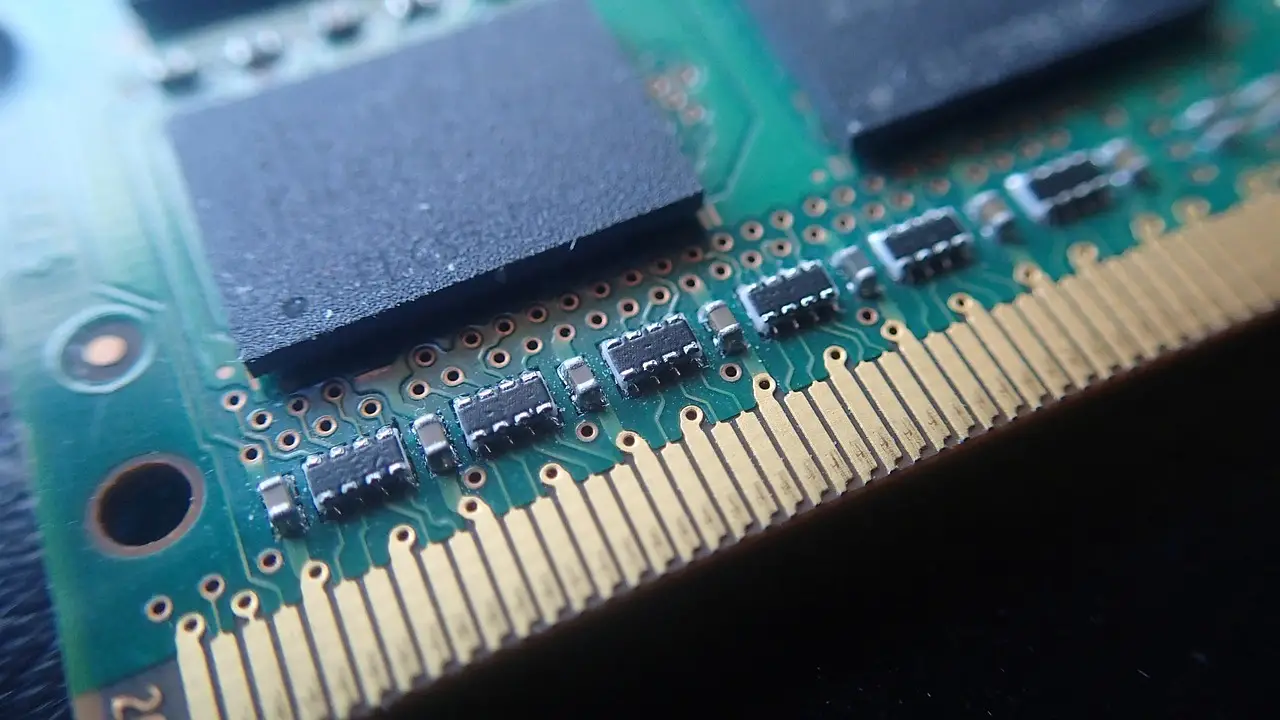
JEDEC's preview of the DDR6 specification sets a baseline transfer rate of 12.8 GT/s — more than double DDR5's 4,800 MT/s starting point — and defines a module only 74 mm long, 44% shorter than DDR5's 133 mm sticks.
The document, published this week by the standards body, sketches a memory generation that quadruples baseline per-module bandwidth to 153.6 GB/s, from DDR5's 38.4 GB/s, through a redesigned channel architecture rather than raw clock speed alone. JEDEC anticipates DDR6 reaching 14,400 MT/s and beyond on the server side.
What changes in the physical design?
The 74 mm module length brings DDR6 within 6% of a DDR5 SO-DIMM, the format used in laptops and mini-PCs. That shrink carries a cost in familiarity. JEDEC has kept a 288-pin pinout since DDR4, but the body has not disclosed the DDR6 pin count, and given the shorter module plus a wider data bus, a completely new pinout and density appear likely.
JEDEC has also not settled the form factors. Early rumors pointed to a CAMM-only standard geared toward AI systems, but the announcement does not rule out RDIMM, UDIMM, or CAMM — the same spread DDR5 ships in today. The body seems still to be deciding.
How much bandwidth, exactly?
The architecture moves from DDR5's two 32-bit sub-channels to four 24-bit sub-channels, on a 96-bit data bus — a 50% width increase over DDR5's 64 bits. The comparison depends on which parts you pick:
- Baseline DDR6-12800 delivers 153.6 GB/s per module versus 38.4 GB/s for baseline DDR5 — a 4X uplift.
- Against today's fastest server parts, the gap narrows: DDR5-9200 RDIMMs peak at 73.6 GB/s, while DDR6-12800 RDIMMs start there and JEDEC expects DDR6-14400 to reach 172.8 GB/s — roughly 2.3X.
- DDR5 entered the consumer market at DDR5-4800; JEDEC has not said which DDR6 speed consumers will see first.
Bank count doubles from 32 to 64, a change JEDEC positions as an enabler for both higher data rates and higher capacities.
Where does capacity land?
DDR6 will support 128 Gb (16 GB) dies, four times the density of early DDR5 modules, and the standard enables die stacking through Through-Silicon Vias instead of placing chips side by side on the PCB.
The practical ceiling moves accordingly. Consumer DDR5 modules currently top out at 64 GB, and server RDIMMs have reached 512 GB. The DDR6 preview suggests consumer modules of 128 GB or 256 GB, and RDIMMs that scale to 1 TB or more per slot — figures that would reshape memory capacity planning for AI and server workloads.
What is still unknown?
Plenty. The preview leaves the burst length, nominal operating voltage, and pin count as open questions. DDR5 runs at 1.2 V and DDR4 at 1.1 V; DDR6's figure is unpublished.
There is no official launch date. Industry observers widely cite 2029 as a realistic commercialization target, though that estimate is not JEDEC's. A specification this early in definition rarely survives contact with manufacturing schedules without setbacks, and nothing in the preview addresses pricing, yield, or which memory makers will produce the first silicon.
On the evidence published so far, DDR6 is a wider, denser, physically smaller standard with server-first economics — and a long list of blanks JEDEC still has to fill before 2029 becomes more than a guess.
Tom's Hardware (Source)
More from Sophie Lindqvist
Show full bio
News editor covering money, funding and market shifts around Semiconductors, chip manufacturing, hardware, AI compute at Chip Dispatch.
1,167 articles