Startups & FundingLOT 261122 · 3 min read
John Deere acquires AI crop-scanning startup Orchard Robotics
John Deere is acquiring Orchard Robotics, whose tractor-mounted AI cameras count fruit and estimate yields in high-value crops. Terms were undisclosed; Orchard raised $22M in September 2025.
Key takeaways
- John Deere announced the acquisition of Orchard Robotics on Nov. 20; terms were not disclosed.
- Orchard's FruitScope software produces yield estimates, fruit counts, size, color and canopy data from tractor-mounted cameras.
- Orchard raised a $22 million Series A in September 2025 led by Quiet Capital and Shine Capital.
- Charlie Wu, a Thiel Fellow who left Cornell, founded Orchard in 2022.
- Recommendations from the system reach a phone or Deere's in-cab G5 display.
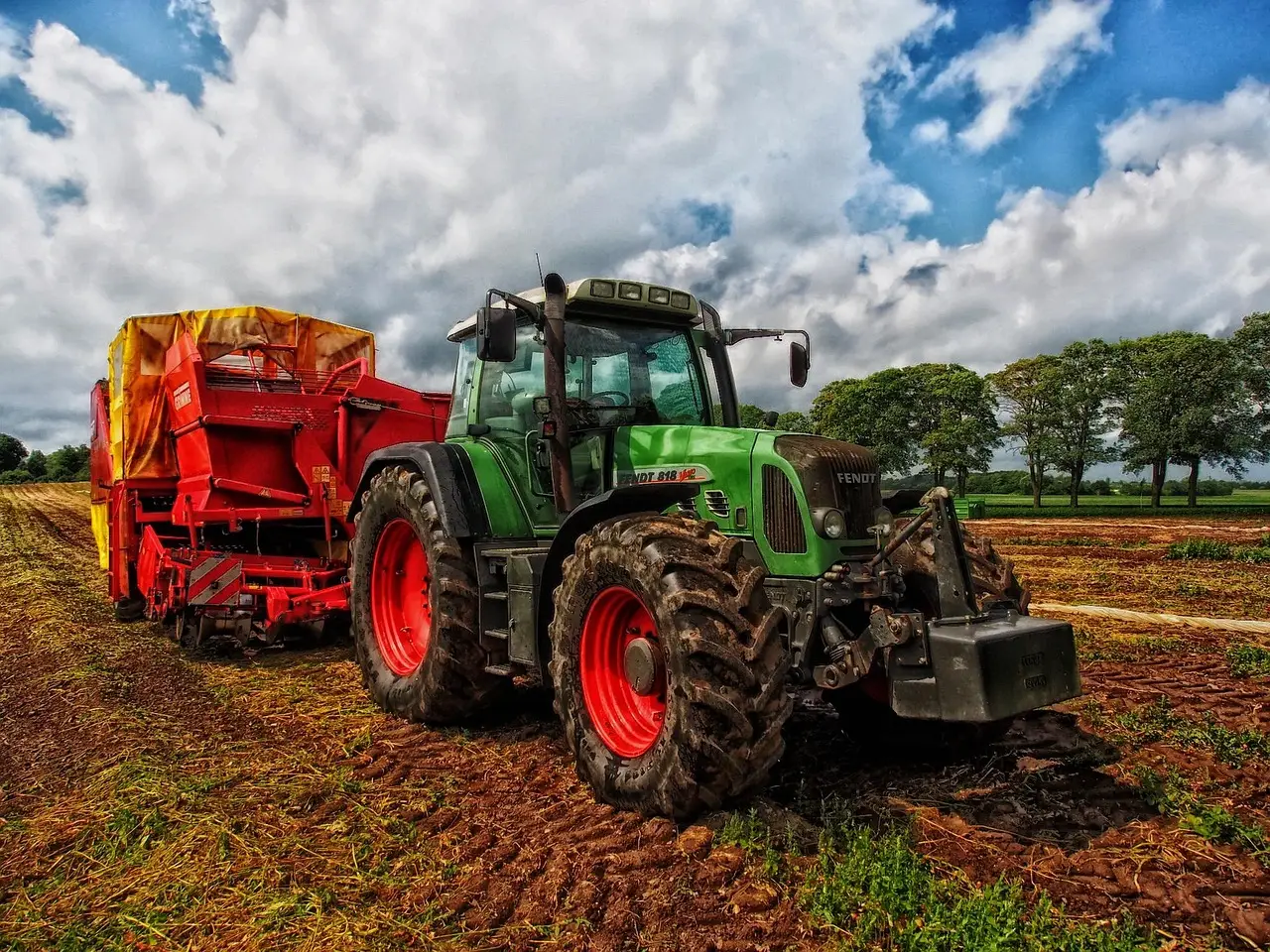
John Deere is buying Orchard Robotics, an AI crop-monitoring startup that operates as Orchard AI, in a deal announced on Friday, Nov. 20. The companies did not disclose the purchase price.
The acquisition folds a two-year-old San Francisco company into the world's largest farm equipment maker. Orchard raised a $22 million Series A in September 2025, led by Quiet Capital and Shine Capital, with General Catalyst and Contrary also investing. Deere is buying the firm barely two months after that round closed.
"This acquisition connects crop-level intelligence with John Deere technology and equipment," said Tim Marquis, Deere's director of farm systems innovation.
What does Orchard's technology actually do?
Orchard mounts AI-powered cameras on tractors and other farm vehicles. The cameras scan every tree, vine or plant in high-value crops such as fruit and grapes. A software platform called FruitScope turns the resulting images into concrete measurements: yield estimates, fruit counts, fruit size and color, and canopy measurements.
The system then generates recommendations and sends them to a mobile device or to Deere's in-cab G5 display. That display link matters for Deere, because it ties Orchard's data directly into machinery the company already sells, rather than leaving it in a standalone app.
"We started Orchard AI to give our growers the crop intelligence they need," said Orchard chief executive Charlie Wu.
Wu is a Thiel Fellow who left Cornell University and founded the company in 2022. Under his leadership, Orchard built a business around the idea that specialty crops — fruit, grapes and other high-value produce — deserve the same data density that row-crop farmers already get from precision agriculture tools.
The plain takeaway: Orchard turns a passing tractor into a crop census machine, and Deere now owns that machine.
How does the deal fit Deere's strategy?
Justin Rose, president of Deere's worldwide agriculture and turf division, framed the deal as a balance between preservation and scale. Deere wants to keep what works in Orchard's approach while adding its own manufacturing reach, dealer network and installed base of equipment.
The commercial logic is straightforward. Deere sells the tractors; Orchard's cameras ride on those tractors; the G5 display in the cab becomes the delivery point for yield estimates and fruit counts. Each part of the chain reinforces the others, and a grower who adopts the monitoring system has one more reason to stay inside Deere's equipment ecosystem.
For Orchard's investors, the exit arrives after a short holding period. The Series A priced the startup at a stage where its technology was proven on farms but not yet scaled. Deere's distribution offers that scale without the years of solo sales effort it would otherwise take.
The move also signals where Deere sees growth. Specialty crops such as fruit and vines have historically received less machine intelligence than corn and soybean fields, because the plants differ from row to row and demand per-plant measurement. A camera system that counts fruit individually addresses that gap directly.
In plain words: Deere paid an undisclosed sum to own the data layer for high-value crops, and to pipe that data through screens it already installs in every cab.
With the deal announced but terms withheld, the next test is integration — whether Orchard's scanning stack reaches Deere's specialty-crop customers faster as a division than it did as an independent startup.
mlq.ai (Source)
More from Tom Whitfield
Show full bio
Staff writer covering companies, deals and strategy in Semiconductors, chip manufacturing, hardware, AI compute at Chip Dispatch.
1,200 articles