Korea's September Exports Hit Record $120.9 Billion
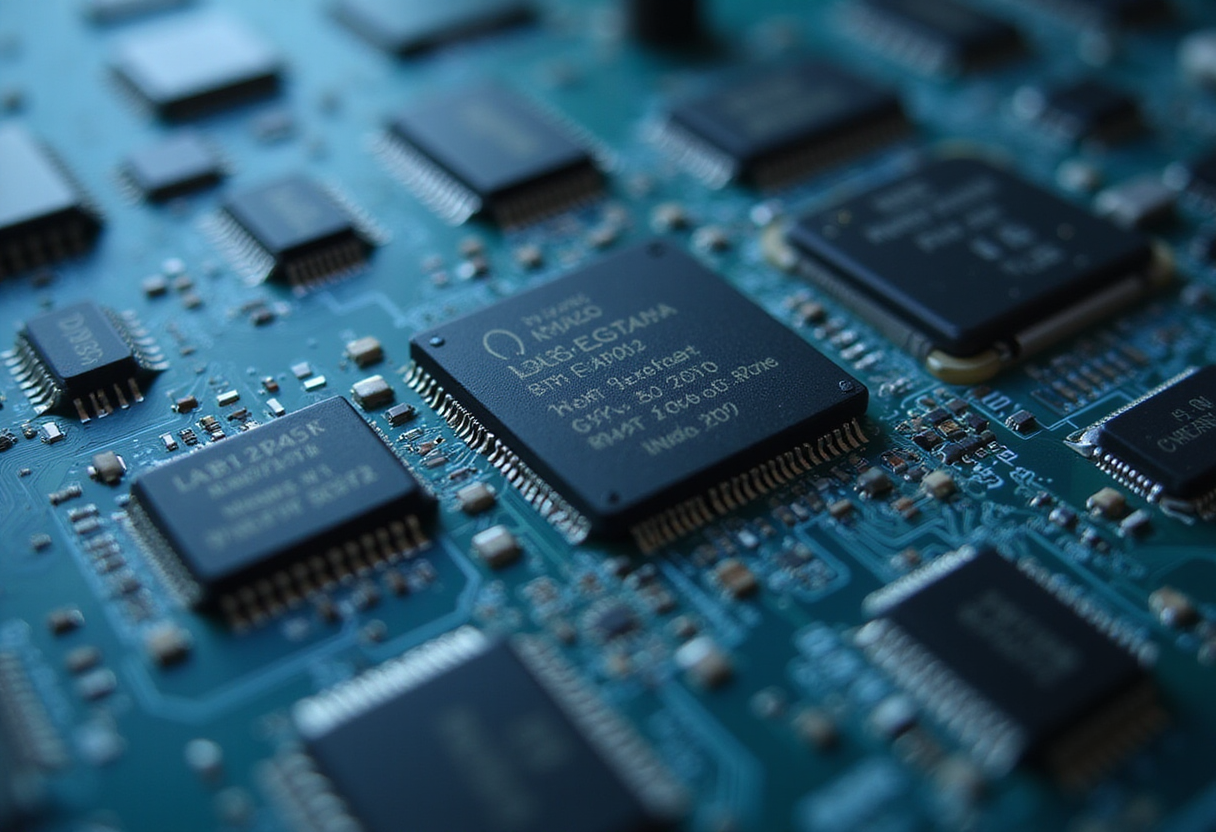
South Korea's September exports reached a record $120.9 billion, with semiconductor shipments topping $60 billion for the first time, customs data show.
- By
- Rebecca Stone
- Filed
- Channel
- Semiconductors
- Read
- 2 min read
South Korea posted record exports of $120.9 billion in September, with semiconductor shipments pushing past $60 billion for the first time, according to the country's customs data reported by finance.biggo.com.
The $120.9 billion monthly figure marks an all-time high for Korean exports. The semiconductor milestone is the sharper signal for the industry: chips crossing the $60 billion threshold in the reporting period confirms Korea's memory-heavy export complex — led by Samsung Electronics and SK hynix — remains the single largest engine of the country's trade performance.
What does the $60 billion chip figure signal?
Korean semiconductor exports have historically tracked the memory cycle with brutal amplitude. Crossing a $60 billion milestone in a single reporting period points to sustained demand strength rather than a one-month spike, since chip shipments reflect fab utilization set months in advance.
The drivers behind such records typically include:
- Datacenter buildouts and AI accelerator demand lifting high-bandwidth memory (HBM) and conventional DRAM pricing
- Inventory normalization after the 2023 memory downturn
- Sustained server and mobile replacement demand
For Samsung and SK hynix, export revenue at this scale translates directly into capex capacity — the two companies together anchor the majority of Korea's chip output across their fab clusters in Pyeongtaek, Hwaseong, Icheon and Cheongju.
Why does the record matter beyond Korea?
Semiconductors routinely account for roughly one-fifth of South Korea's total exports, making the monthly trade figure a real-time proxy for global memory pricing. A record print at $120.9 billion, with chips contributing a disproportionate share, indicates end-market demand is absorbing supply at healthy price points.
It also carries geopolitical weight. Korea's chip trade surplus with major economies, including the United States and China, sits at the center of Washington's export-control regime and Beijing's push for memory self-sufficiency through CXMT and YMTC. Stronger Korean export figures tend to sharpen scrutiny of those flows, particularly for advanced DRAM and HBM destined for AI infrastructure.
Can the pace hold?
The customs data covers September shipments, and memory revenue at record levels historically invites supply expansion in the following quarters. Whether the $60 billion chip run-rate becomes a floor or a peak will depend on HBM allocation decisions at Samsung and SK hynix and on datacenter capex through year-end.
For now, the September record confirms that global semiconductor demand — and Korea's position at the top of the memory supply chain — is strong enough to set new trade benchmarks.
Source: Google News: semiconductors
More from Rebecca Stone
Show full bio
Correspondent covering media and advertising at Chip Dispatch.
244 articles
Related articles
korea-s-chip-exports-top-60-billion-in-a-single-month-93971c9d
Korea's Chip Exports Top $60 Billion in a Single Month
south-korea-s-september-exports-top-120-billion-for-first-time-74c8357e
South Korea's September Exports Top $120 Billion for First Time
ai-chip-demand-drives-83-5-surge-in-south-korean-exports-e6503066
AI Chip Demand Drives 83.5% Surge in South Korean Exports
ai-chip-demand-drives-83-5-surge-in-south-korean-exports-a42d139d
AI Chip Demand Drives 83.5% Surge in South Korean Exports