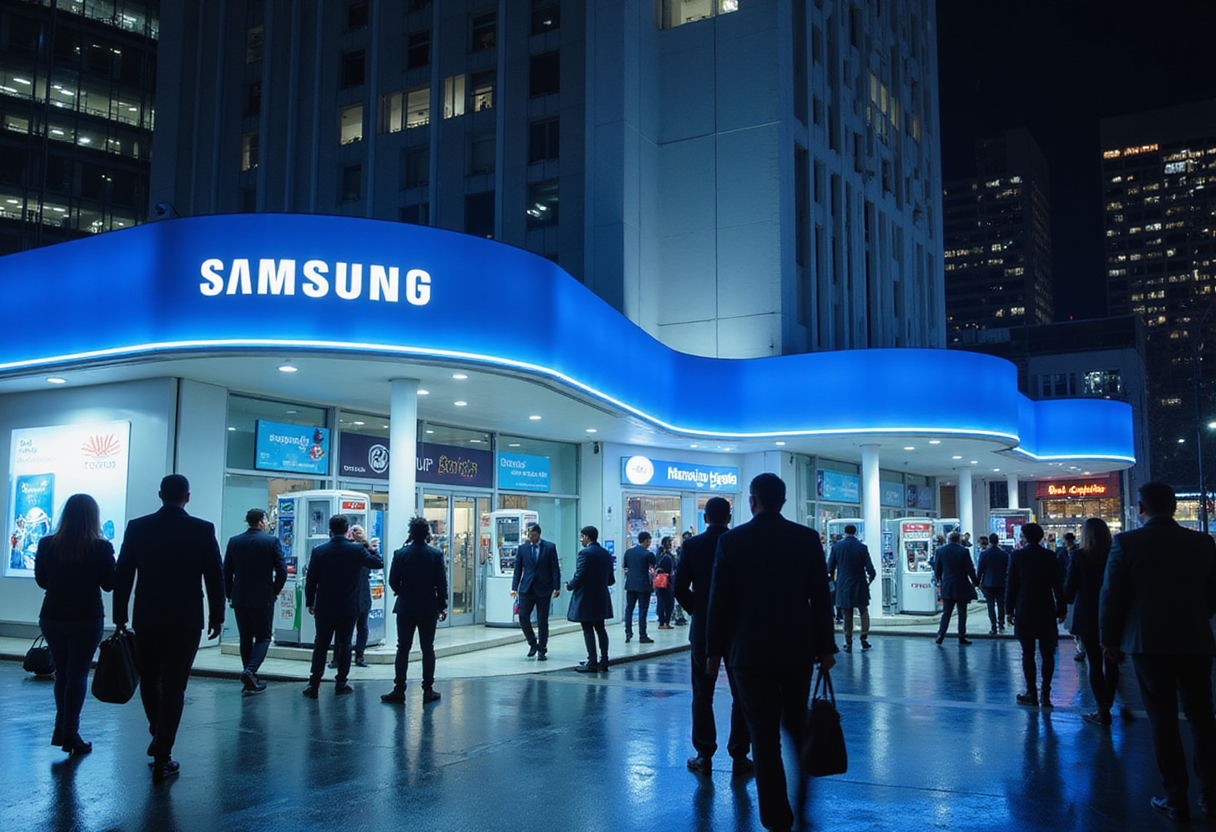
Samsung, SK Hynix Record Earnings Power Seoul's AI and Youth Spending
Record earnings at Samsung and SK Hynix are funding South Korean government spending on AI and youth programs, Nikkei Asia reports, tying fiscal policy to the memory chip cycle.
- By
- Nathan Brooks
- Filed
- Channel
- Chips & Policy
- Read
- 2 min read
South Korea's government is channeling record earnings at Samsung Electronics and SK Hynix into new spending on artificial intelligence and youth programs, Nikkei Asia reports, turning a semiconductor windfall into national policy fuel.
The two memory giants — the country's largest chipmakers and the world's dominant suppliers of DRAM and HBM — posted record results on the back of the AI boom, and Seoul now plans to direct part of that commercial strength into state budgets covering AI development and support for young people, according to the report.
What links chip profits to government spending?
Samsung and SK Hynix anchor South Korea's export economy. When their earnings hit records, corporate tax receipts and economic growth follow. Nikkei Asia reports that this year's record earnings at the two companies are underwriting a spending package that spans AI investment and youth-focused programs — a linkage between semiconductor cycles and fiscal policy that few other economies can replicate at this scale.
Which companies are driving the windfall?
Samsung Electronics, the world's largest memory chipmaker, and SK Hynix, the leading supplier of high-bandwidth memory used in AI accelerators, both recorded their best-ever earnings, Nikkei Asia reports. Their combined performance reflects surging demand for memory tied to AI data center buildouts.
The spending plan reflects a deliberate government choice: use a cyclical chip upswing to fund structural priorities — AI capability and a youth agenda — rather than one-off stimulus.
Why does this matter beyond Korea?
South Korea supplies a large share of the world's memory, and HBM in particular sits on the critical path of AI accelerator production. When record chip profits translate directly into national AI spending, the country reinforces the same demand cycle that lifted its chipmakers — potentially deepening Korea's position in the global AI supply chain.
Nikkei Asia's reporting indicates Seoul sees the earnings surge as a window to lock in longer-term advantages while the memory upcycle lasts.
What comes next?
The durability of the spending depends on the memory cycle itself: if Samsung's and SK Hynix's record earnings hold, Korea's AI and youth programs gain a stable funding base; if the chip cycle turns, both the fiscal room and the policy agenda face pressure.
Source: Google News: semiconductors
More from Nathan Brooks
Show full bio
Senior reporter covering industry trends and analytics at Chip Dispatch.
263 articles
Related articles
south-korea-commits-576-billion-to-ai-chip-production-12d0fc8c
South Korea Commits $576 Billion to AI Chip Production
ai-chip-demand-drives-83-5-surge-in-south-korean-exports-e6503066
AI Chip Demand Drives 83.5% Surge in South Korean Exports
korea-s-september-exports-hit-record-120-9-billion-c2ccfab3
Korea's September Exports Hit Record $120.9 Billion
korea-s-chip-boom-drives-2026-tax-revenue-to-record-high-ee66502a
Korea's Chip Boom Drives 2026 Tax Revenue to Record High