Linux 7.5 Kernel Patch Fixes 19-Year-Old AMD Radeon HD Video Bug
A patch headed for Linux 7.5 fixes corrupted video playback on 2007-era Radeon HD 2000 and 3000 GPUs. The culprit: UVD buffers drifting out of dedicated VRAM. An AI coding tool helped find it.
- By
- Rebecca Stone
- Filed
- Channel
- Hardware & Components
- Read
- 3 min read
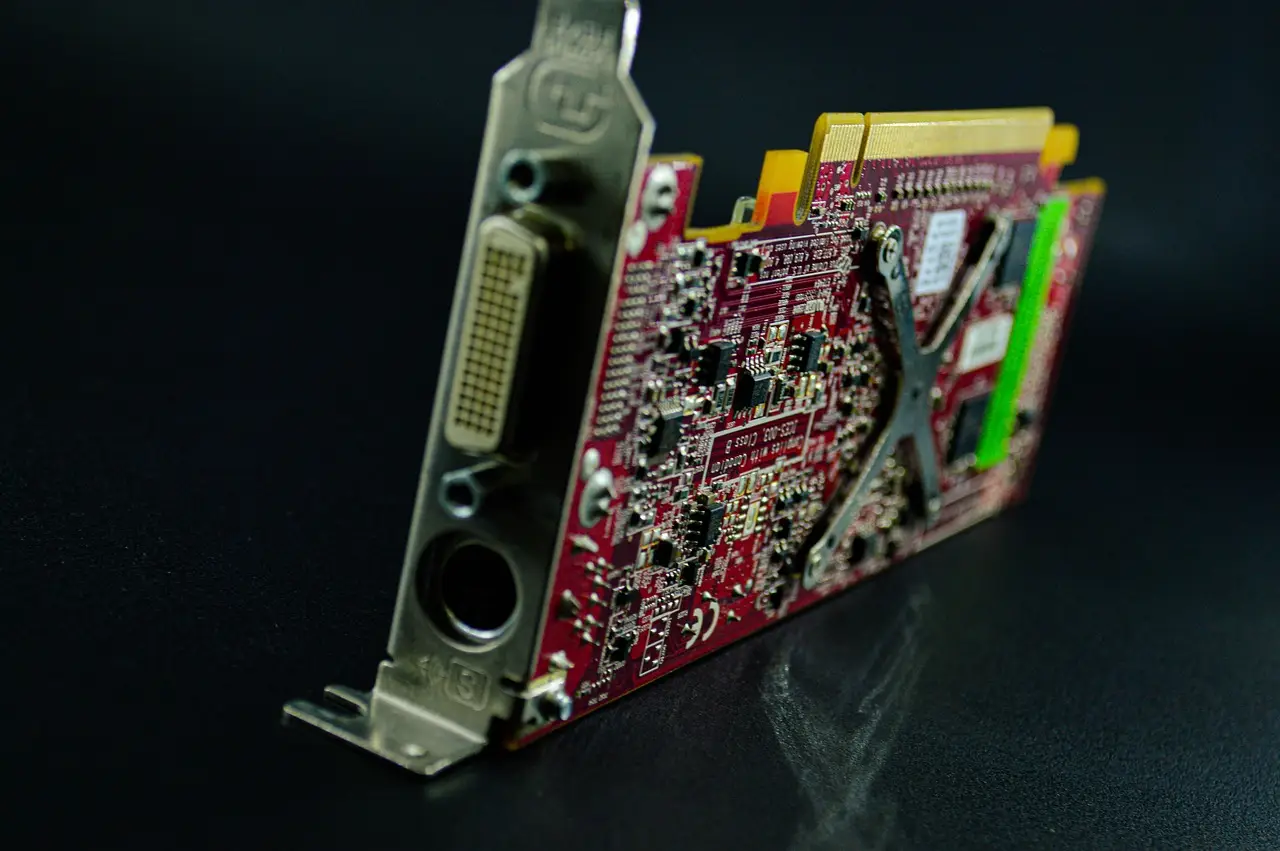
Nearly 19 years after the Radeon HD 2000 series reached shelves in 2007, a kernel patch accepted for the upcoming Linux 7.5 release fixes corrupted hardware-accelerated video playback on AMD's entire R600 architecture. As spotted by Phoronix, the patch targets the Unified Video Decoder (UVD) engine across five silicon families: RV610, RV620, RV630, RV635 and RV670 — the chips behind the Radeon HD 2000 and HD 3000 lines.
The bug itself was narrow but stubborn. Linux users on these cards saw visual corruption during hardware-decoded video playback whenever the GPU was simultaneously handling active 3D or desktop drawing workloads. Frames simply failed to decode properly when graphics draw calls competed for resources.
What exactly was broken?
The culprit was a memory placement oversight. The driver wasn't consistently keeping UVD input buffers pinned inside dedicated VRAM. The fix forces those buffers to stay in VRAM — a behavior the Radeon kernel driver apparently already enforced for several other chip families. Once the placement is guaranteed, video playback cleans right up.
The more striking detail is who fixed it. The breakthrough didn't come from a grizzled veteran of the open-source graphics stack. It came from a newcomer who used OpenAI's Codex to help untangle the legacy driver path. Two decades of corrupted frames, resolved with an AI-assisted read of old code.
Why does R600 matter at all?
It's easy to forget how pivotal this generation was for PC graphics. The Radeon HD 2000 series, launched in 2007, was the first desktop GPU lineup built under the AMD banner after its blockbuster acquisition of Canada's ATI Technologies. It marked AMD's transition away from separate pixel and vertex pipelines on the desktop — a unified shader architecture the company had implemented first for the Xbox 360.
The shift arrived alongside DirectX 10 and Windows Vista. A time of transitions, and not all of them smooth: the flagship Radeon HD 2900 XT famously struggled against Nvidia's dominant GeForce 8800 GTX in raw rasterization performance and power draw.
But the R600 family brought serious multimedia chops. First-generation UVD, introduced on the mainstream RV610 and RV630 chips and later refined in the RV670 that powered the well-regarded Radeon HD 3850 and 3870, let even budget PCs offload heavy H.264 and VC-1 Blu-ray decoding from the CPU. In 2007, smooth 1080p playback without maxing out a dual-core processor was a genuine selling point — above all for home theater PC builders.
Who still runs this hardware?
Almost nobody daily-drives a TeraScale 1 card in 2026, not when modern integrated graphics run circles around them at a fraction of the wattage. The contributor who submitted the patches wants them for one specific machine: an ancient Core 2 Duo-based iMac.
There's still something quietly notable in the longevity of open-source Linux drivers. Proprietary Windows support for the HD 2000 and 3000 series was sunsetted over a decade ago. The mainline Linux kernel carries the torch instead. Combined with recent AI-assisted cleanup work across the Mesa R600 user-space driver, vintage Radeon hardware is arguably in better software shape today than it was during its actual retail lifespan — and with the Linux 7.5 patch pending, the oldest unified-shader Radeons should finally decode video the way ATI promised back in 2007.
Source: Tom's Hardware
More from Rebecca Stone
Show full bio
Correspondent covering technology and product news in Semiconductors, chip manufacturing, hardware, AI compute at Chip Dispatch.
958 articles
Related articles
asrock-ships-new-radeon-rx-7900-firmware-after-bricked-gpu-uproar
ASRock Ships New Radeon RX 7900 Firmware After Bricked-GPU Uproar
amd-radeon-drivers-write-to-ssds-around-the-clock-fix-targets-adrenalin-26-11-1
AMD Radeon Drivers Write to SSDs Around the Clock; Fix Targets Adrenalin 26.11.1
amd-widens-fsr-4-1-support-to-rx-6000-xbox-series-consoles-5ccd7b73
AMD Widens FSR 4.1 Support to RX 6000, Xbox Series Consoles
amd-investigates-reported-continuous-radeon-ssd-writes
AMD Investigates Reported Continuous Radeon SSD Writes