LiquidJet Puts Diamond Into Coldplates and Claims 35% More Revenue Per Watt
LiquidJet reports diamond-infused coldplates cut AI chip temperatures 10°C and raise tokens-per-watt revenue 35%, though the figures remain vendor-claimed pending independent validation.
- By
- Nathan Brooks
- Filed
- Channel
- AI & Compute
- Read
- 2 min read
LiquidJet says its diamond-infused coldplates cut enterprise AI chip temperatures by 10°C and lift tokens-per-watt revenue by 35%. The numbers come from the company itself, which announced the design as a direct-liquid-cooling option for enterprise AI accelerators. No third-party validation accompanies the claims yet, so treat the figures as vendor data until an independent lab or hyperscaler confirms them.
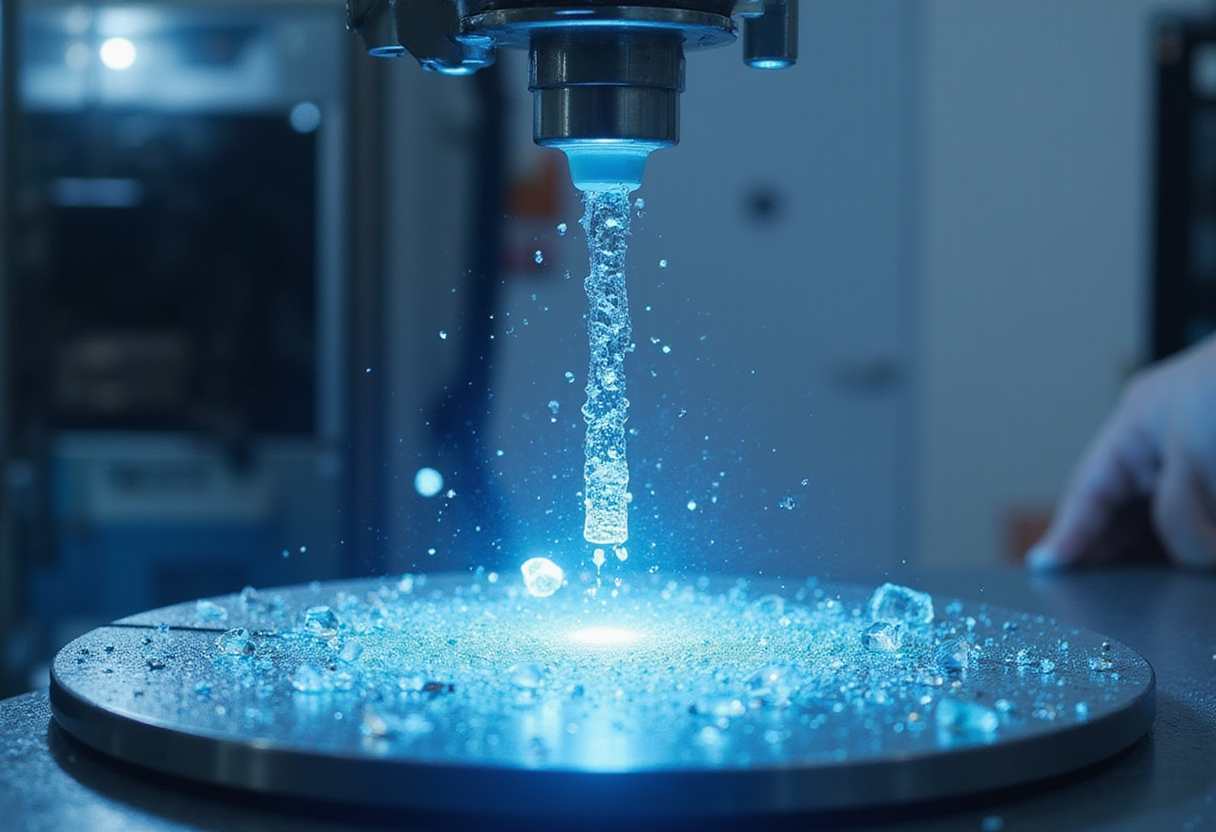
The engineering logic is straightforward. Diamond conducts heat better than almost any practical material, roughly several times better than copper. By embedding diamond into the coldplate that sits against a chip's heat spreader, LiquidJet shortens the thermal path between the die and the coolant. A 10°C reduction at the junction is the kind of margin that matters in datacenters, where operators either throttle clocks or spend more on cooling when silicon runs hot.
Why tokens per watt is the metric that pays
The 35% figure refers to revenue per watt, not raw performance. Tokens per watt has become the currency of AI inference economics: every watt a cooling system removes inefficiently is a watt not spent on compute. If the claim holds, a given power envelope yields more billable inference throughput. That is a commercial argument, not a benchmark trophy, and it is aimed squarely at finance teams as much as at facility engineers.
Direct liquid cooling is already the default for dense AI racks, as air cooling stopped scaling somewhere around the thermal envelopes of current enterprise accelerators. Coldplate vendors compete on pressure drop, leak reliability, and now on the material between the coolant channel and the silicon. Diamond in the coldplate is the latest move in that materials race.
What remains unverified
The announcement leaves several questions open. LiquidJet has not published the test conditions behind the 10°C and 35% figures, the workload used, or the specific accelerator platforms involved. Enterprise AI chips span a wide range of power profiles, and results at one thermal design point do not necessarily transfer to another. The company also has not disclosed pricing, availability dates, or volume production plans for the diamond-infused plates.
Competitors in the coldplate market ship established copper-based designs at scale, with mature supply chains. Diamond integration, even in synthetic form, adds cost and manufacturing complexity. Whether the thermal gain justifies that premium is the question every procurement team will ask, and the answer will arrive in deployed datacenters rather than in press materials.
For now, the claim sets a marker: cooling vendors are competing on materials science, and the winner will be decided by measured watts saved per rack. LiquidJet's next disclosure — ideally an independent test at a named power level — will show whether diamond belongs in the bill of materials or merely in the brochure.
Source: Google News: AI chips
More from Nathan Brooks
Show full bio
Senior reporter covering people, launches and day-to-day practice in Semiconductors, chip manufacturing, hardware, AI compute at Chip Dispatch.
408 articles
Related articles
ul-solutions-rolls-out-certification-for-direct-to-chip-liquid-cooling-in-ai-dat-c710cd15
UL Solutions Rolls Out Certification for Direct-to-Chip Liquid Cooling in AI Data Centers
data-center-cooling-the-ai-infrastructure-trade-nobody-is-watching-8a79833b
Data Center Cooling: The AI Infrastructure Trade Nobody Is Watching
not-chips-not-memory-data-center-cooling-is-the-overlooked-ai-trade-f8f4fade
Not Chips, Not Memory: Data Center Cooling Is the Overlooked AI Trade
ul-solutions-launches-certification-for-direct-to-chip-liquid-cooling-ac706508
UL Solutions Launches Certification for Direct-to-Chip Liquid Cooling