Lumentum and Applied Optoelectronics Drop 4% as Microsoft Fights Transceiver Ban
Lumentum and AAOI fell 4% as Microsoft met White House officials to oppose an FCC ban on new Chinese optical transceivers, clouding the U.S. supplier share-gain thesis.
- By
- Tom Whitfield
- Filed
- Channel
- Chips & Policy
- Read
- 4 min read
Lumentum (NASDAQ: LITE) fell 4% to $623.58 and Applied Optoelectronics (NASDAQ: AAOI) dropped 4% to $53.89 in Thursday afternoon trading, as Microsoft took its objections to a proposed FCC ban on Chinese optical transceivers directly to the White House. The meeting, held on the evening of November 10, is the latest twist in a policy fight that determines whether U.S. optical component makers gain share from Chinese rivals.
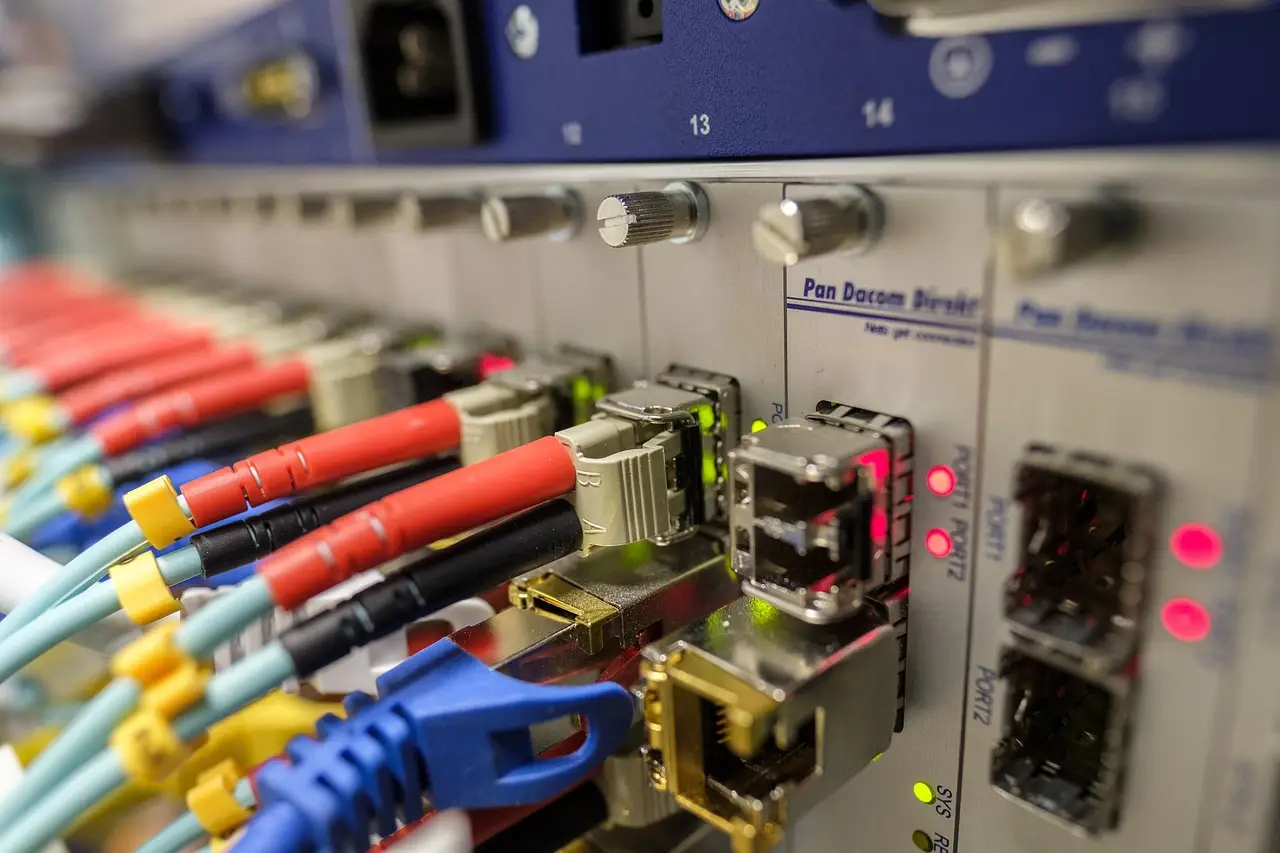
Microsoft and a handful of other companies reportedly met with White House officials to raise concerns about a proposed FCC ban on new models of Chinese-made optical transceivers. Those modules carry data over fiber-optic cables inside AI data centers, and the companies argued the ban could slow data center expansion. Microsoft declined to comment.
The commercial stakes are clear from market share. China holds an estimated two-thirds of the global optical transceiver market, and that concentration is precisely why Lumentum and Applied Optoelectronics stand to gain if Chinese supply contracts. Pushback from a major buyer works against that thesis — and Applied Optoelectronics has a direct tie to that buyer, since Microsoft accounted for 28.8% of the company's revenue in 2025. In plain terms, the customers the ban would protect are the same customers arguing against it.
What does the draft rule actually cover?
Several details limit the draft's reach:
- It would cover only new Chinese transceiver models.
- It would exempt already installed equipment.
- The FCC has set no vote date.
- A 3.2 terabit-per-second speed threshold is reportedly under consideration, and Morgan Stanley expects products at that speed to begin ramping only in 2028.
Current 800G and 1.6T builds that fill the order books of Lumentum and Applied Optoelectronics may be unaffected. The narrow scope means the near-term revenue impact of the rule, whatever its final shape, could be modest.
Why is the whole sector down?
The transceiver debate is not the only pressure on the stocks. NVIDIA's board announced on November 12 that Jensen Huang had resigned as president, chief executive and board member, a shock at the top of the AI chip industry that dragged the wider AI hardware trade lower. Lumentum also carries deal context: it is the target of Marvell Technology's proposed acquisition, which Reuters valued at $115 billion. Both optical names are falling alongside that broader retreat.
Why is Coherent holding steady?
Coherent (NYSE: COHR) traded at $234.44, essentially unchanged, keeping most of a 9% gain from November 11, when CoreWeave's results renewed the AI trade. Lumentum also rallied 11% that day before turning lower. The gap is telling. Lumentum and Applied Optoelectronics are pitched as direct U.S. beneficiaries of any ban, which ties their fortunes tightly to the transceiver debate. Coherent's broader, vertically integrated mix leaves it less exposed to any single optical-parts category, which may explain why it is holding its level.
The three companies build their businesses differently. Lumentum makes lasers, cloud transceiver modules and optical circuit switches, with pump lasers and switches leading its latest growth. Applied Optoelectronics sells transceivers to hyperscale operators and runs a cable television broadband business, with manufacturing in Sugar Land, Texas; Taipei, Taiwan; and Ningbo, China. Coherent runs a photonics platform that extends from materials and crystal growth through optics and lasers, sells into industrial markets, and counts NVIDIA as a strategic customer through a multi-year supply agreement for advanced lasers and optical networking products.
Company leadership has addressed the Chinese competition question directly. Lumentum CEO Michael Hurlston said on an earlier earnings call: "I caution that many of the Chinese laser suppliers are not delivering in the market today, and we have not seen significant output from them to date." Coherent CEO Jim Anderson framed his company's edge around breadth: "We believe this breadth and depth differentiates us."
What comes next for the FCC draft?
The next test for Lumentum is whether a published FCC rule keeps the proposed speed threshold and the exemption for installed equipment. A tighter rule could support pricing for U.S. suppliers, and capacity is already tight: Lumentum describes its optoelectronic capacity as "effectively sold out well into the future," while Applied Optoelectronics' management expects demand for its high-speed modules to exceed production capacity throughout 2027.
Should the FCC postpone or narrow the draft, the share-gain case for U.S. makers weakens, and NVIDIA's leadership change adds a separate layer of uncertainty for AI hardware names. The FCC's decision on Chinese transceivers will show how much of the U.S. supplier thesis actually holds.
Source: 247wallst.com
More from Tom Whitfield
Show full bio
Staff writer covering companies, deals and strategy in Semiconductors, chip manufacturing, hardware, AI compute at Chip Dispatch.
954 articles
Related articles
microsoft-lobbying-against-fcc-ban-on-chinese-optical-transceivers
Microsoft Lobbying Against FCC Ban on Chinese Optical Transceivers
microsoft-lobbies-against-ban-on-chinese-optical-transceivers
Microsoft Lobbies Against Ban on Chinese Optical Transceivers
microsoft-urges-fcc-against-chinese-optical-transceiver-ban
Microsoft urges FCC against Chinese optical transceiver ban
globalfoundries-calls-chinese-optical-module-demand-strong-on-ai-boom-128ff193
GlobalFoundries Calls Chinese Optical Module Demand 'Strong' on AI Boom