Microsoft Lobbying Against FCC Ban on Chinese Optical Transceivers
Microsoft met White House officials on November 10, 2026 to fight a proposed FCC ban on Chinese optical transceivers, with a 3.2 Tbps threshold under consideration.
- By
- Rebecca Stone
- Filed
- Channel
- Chips & Policy
- Read
- 3 min read
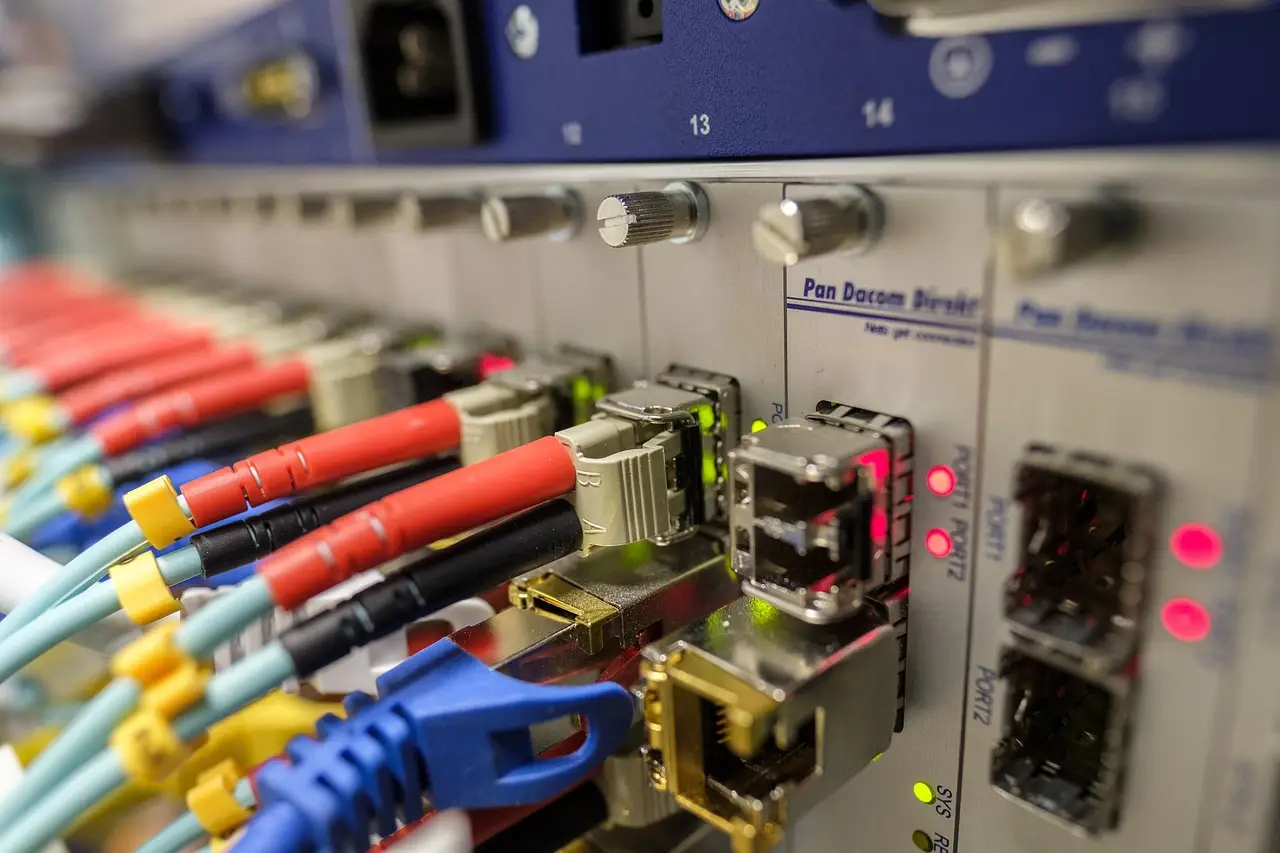
Microsoft and a handful of other companies sat down with White House officials on the evening of November 10, 2026, to push back against a proposed FCC ban on new models of Chinese-made optical transceivers — the fiber-optic modules that carry data between servers inside AI data centers. Microsoft declined to comment, and the FCC has neither addressed the proposal publicly nor set a vote date.
The meeting, first reported this week, involved officials from the White House Office of Science and Technology Policy and the National Security Council. The companies warned that the ban could slow data center expansion. The market barely reacted to the news itself: Microsoft fell 2.26% on November 11 to $521.13, extending a 6.24% weekly slide. That same day, optical suppliers rallied hard — Coherent up 9.25%, Lumentum up 10.67%, Fabrinet up 5.88% — though CoreWeave's results, not the FCC draft, triggered that move.
What does the draft actually ban?
First reported on August 4, 2026, the draft bars imports of new Chinese transceiver models while exempting many non-Chinese suppliers. Already-installed equipment falls outside it, and the rule could still be changed or shelved.
Two people familiar with the matter say regulators are weighing a 3.2 terabit-per-second speed threshold. Morgan Stanley expects 3.2T products to start ramping in 2028 and reach wide installation in 2029. Strategist Shay Boloor reads the draft as leaving the current 800G and 1.6T expansion untouched. If the threshold holds, Microsoft is lobbying over hardware it won't buy broadly for years. The stated security concern: Beijing could use the modules to steal data, deploy malware, or disrupt U.S. operations.
How exposed is Microsoft, really?
The exposure is about supplier concentration. China holds an estimated two-thirds of the global optical transceiver market. Zhongji Innolight — on the Pentagon's list of Chinese military-linked companies — controls about 27% of the global data center transceiver market and earns roughly 90% of its revenue outside China.
Against that supply picture sits Microsoft's buildout: 35 U.S. data centers under construction and 134 more planned, 169 in total, with $39.37 billion spent on property and equipment in its latest quarter alone. Fewer suppliers would mean higher prices and longer lead times across every one of those sites. The industry group ITI warned that deployment could come to a halt. On the other side, John Moolenaar, the top Republican on the House China committee, has urged the FCC to block China-linked transceivers outright.
Who gains if Chinese supply shrinks?
Coherent earns 82% of its revenue from data center and communications, so tighter supply would feed straight into its pricing. Lumentum guided fiscal second-quarter revenue to $1.575 billion–$1.625 billion and says its pump lasers are effectively sold out. Fabrinet, a contract manufacturer, posted $777 million in data center revenue — 53% of sales — but its facilities inside China muddy the read-through, and its shares are down 18.95% year to date.
Scale limits the upside for all three. U.S. makers lack the capacity to replace Chinese supply, and tight laser supply could alternatively support Lumentum and Coherent pricing. Among the pair, Lumentum looks better positioned: its 53.2% non-GAAP gross margin turns pricing power into profit.
What it means for Microsoft investors
The draft targets gear Microsoft won't install widely until 2029, and a supplier swap barely registers against a roughly $3.87 trillion market value. At about 29 times earnings, investors get Azure growing 48% and $677 billion in signed but unrecognized commercial revenue. The stock's 8.44% year-to-date gain reflects spending concerns — concerns this ban does little to change.
The FCC remains the variable. If a published rule set the threshold below 3.2T or reached installed gear, Microsoft's current expansion would come into scope, and the pricing picture across those 169 sites would shift with it.
Source: 247wallst.com
More from Rebecca Stone
Show full bio
Correspondent covering technology and product news in Semiconductors, chip manufacturing, hardware, AI compute at Chip Dispatch.
973 articles
Related articles
microsoft-lobbies-against-ban-on-chinese-optical-transceivers
Microsoft Lobbies Against Ban on Chinese Optical Transceivers
lumentum-and-applied-optoelectronics-drop-4-as-microsoft-fights-transceiver-ban
Lumentum and Applied Optoelectronics Drop 4% as Microsoft Fights Transceiver Ban
microsoft-urges-fcc-against-chinese-optical-transceiver-ban
Microsoft urges FCC against Chinese optical transceiver ban
china-bans-foreign-ai-chips-from-state-funded-data-centres-c84de710
China Bans Foreign AI Chips From State-Funded Data Centres