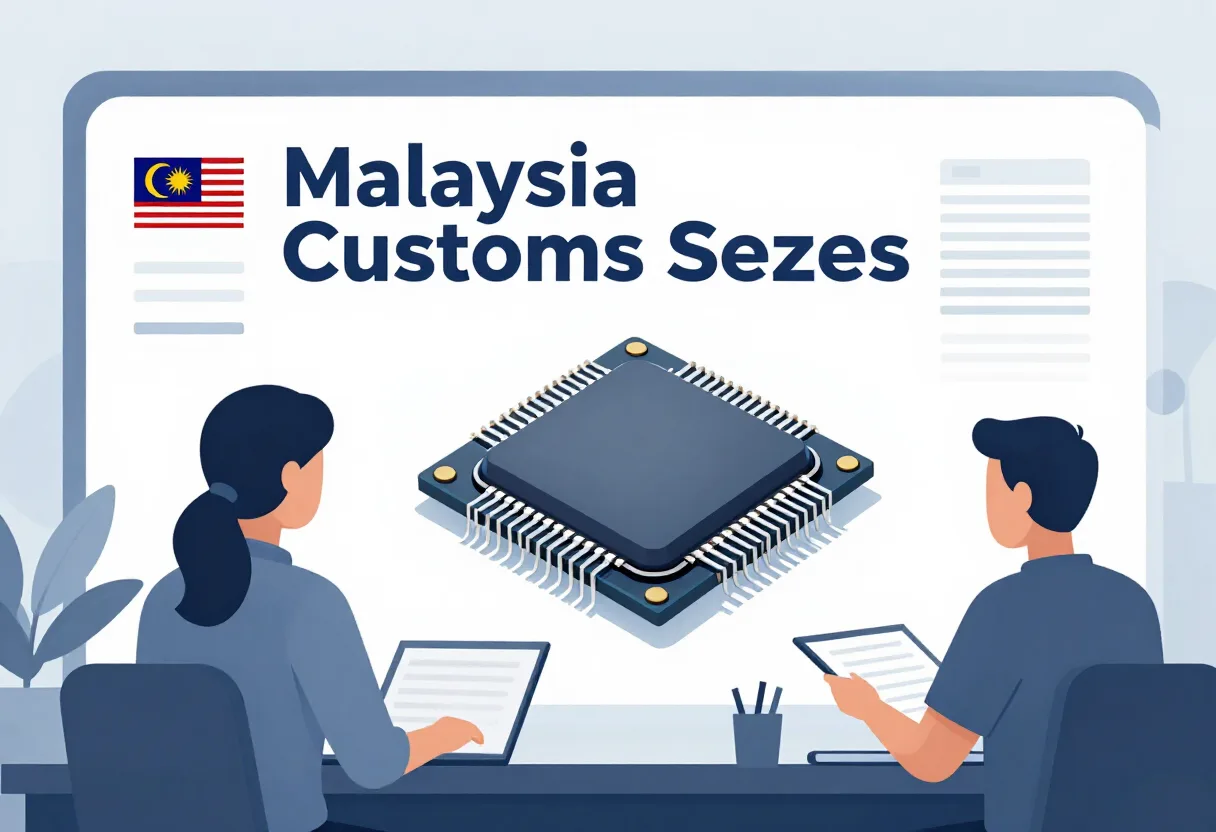
Malaysia Seizes $12 Million in AI Chips Hidden in 30 Servers
Malaysian customs seized $12 million of AI chips in 30 servers at Kuala Lumpur airport, part of a syndicate linked to over $25 million in seizures across five cases.
- By
- Tom Whitfield
- Filed
- Channel
- Chips & Policy
- Read
- 3 min read
Malaysian customs have seized more than $12 million (49.5 million Malaysian ringgit) worth of advanced AI chips concealed inside 30 servers, in the latest strike against a suspected semiconductor smuggling syndicate operating through the country. Reuters reported the case on October 28. Officials discovered the servers on October 15 inside Kuala Lumpur International Airport's free trade zone. In plain terms, the chips were hidden in plain sight — declared as ordinary electronic goods and parked in a warehouse built for legal transit trade.
The shipment originated in one Asian country and was bound for another Asian country that authorities have not named. The customs director at the airport, Aspalila Ag Tuah, confirmed the false declaration. She said the suspected scheme used Malaysia as a transit point to avoid restrictions on the goods' onward movement. The Malaysian company tied to the shipment has been summoned to assist the investigation.
How big is the network behind it?
Investigators believe the same group staged a nearly identical attempt last June. On June 5, customs officers found 72 server units holding advanced AI chips at the same airport, valued at roughly $13 million. That shipment was also falsely declared, as computer components, and was meant to be re-exported without the required permit.
The pattern now looks systematic rather than opportunistic. Aspalila said the network has been linked to seizures worth over $25 million across at least five cases so far. She declined to give further details on the syndicate or the current case, citing ongoing investigations. The takeaway: Malaysia has become a repeated corridor for moving restricted silicon, not a one-off route.
Why were the chips routed through Malaysia?
The answer sits in U.S. export rules. Washington has placed export controls on the movement of advanced Nvidia and other U.S.-origin AI chips to China, which analysts and officials treat as the most likely final destination for the seized hardware. Malaysia, a U.S. ally, was not covered by those controls. Smuggling networks therefore shipped banned chips into the country and re-exported them toward China from there.
Several key facts remain unknown, and the investigation has not filled them in:
- The exact chip type seized
- The country of manufacture
- The final destination
- The intended recipient, whether a company or a military organization
That gap matters commercially. Without a confirmed chip model, the scale of the loss to the restricted supply pool — and the sophistication of the end buyer — stays a matter of inference rather than record.
What is Malaysia doing about it?
The country's geography and mature logistics infrastructure make it a genuine hub for legitimate international trade. Those same qualities make it attractive for moving sensitive technology quietly. To close the gap, Malaysia subsequently imposed its own export controls on the movement of advanced U.S.-origin AI chips, acting at Washington's request.
Other Asian U.S. allies have taken parallel steps. Singapore and Taiwan have implemented similar controls, narrowing the list of neutral transshipment points available to smuggling networks. Demand for powerful Nvidia GPUs remains high in China, and that demand continues to fuel a booming market for smuggled hardware.
The mechanism is simple and worth stating plainly: export bans create a price gap, the price gap rewards anyone who can move the goods, and neutral trade hubs are the easiest path. Controls in Malaysia, Singapore and Taiwan raise the cost of that path but do not remove the incentive.
Whether the $25 million in linked seizures represents the bulk of the network's traffic or only its failures is the open question — and with five cases now on record, further seizures at Kuala Lumpur's free trade zone appear likely as investigations continue.
Source: Tom's Hardware
More from Tom Whitfield
Show full bio
Staff writer covering companies, deals and strategy in Semiconductors, chip manufacturing, hardware, AI compute at Chip Dispatch.
734 articles
Related articles
malaysia-seizes-12-1-million-in-ai-servers-at-kuala-lumpur
Malaysia Seizes $12.1 Million in AI Servers at Kuala Lumpur
malaysia-customs-seizes-13-million-in-ai-chips-at-kuala-lumpur-airport-7e5a72b9
Malaysia Customs Seizes $13 Million in AI Chips at Kuala Lumpur Airport
fbi-arrests-tech-executive-accused-of-smuggling-300m-in-ai-chips-to-china-3045c143
FBI Arrests Tech Executive Accused of Smuggling $300M in AI Chips to China
nvidia-ceo-jensen-huang-reportedly-target-of-chinese-spy-plot
Nvidia CEO Jensen Huang Reportedly Target of Chinese Spy Plot