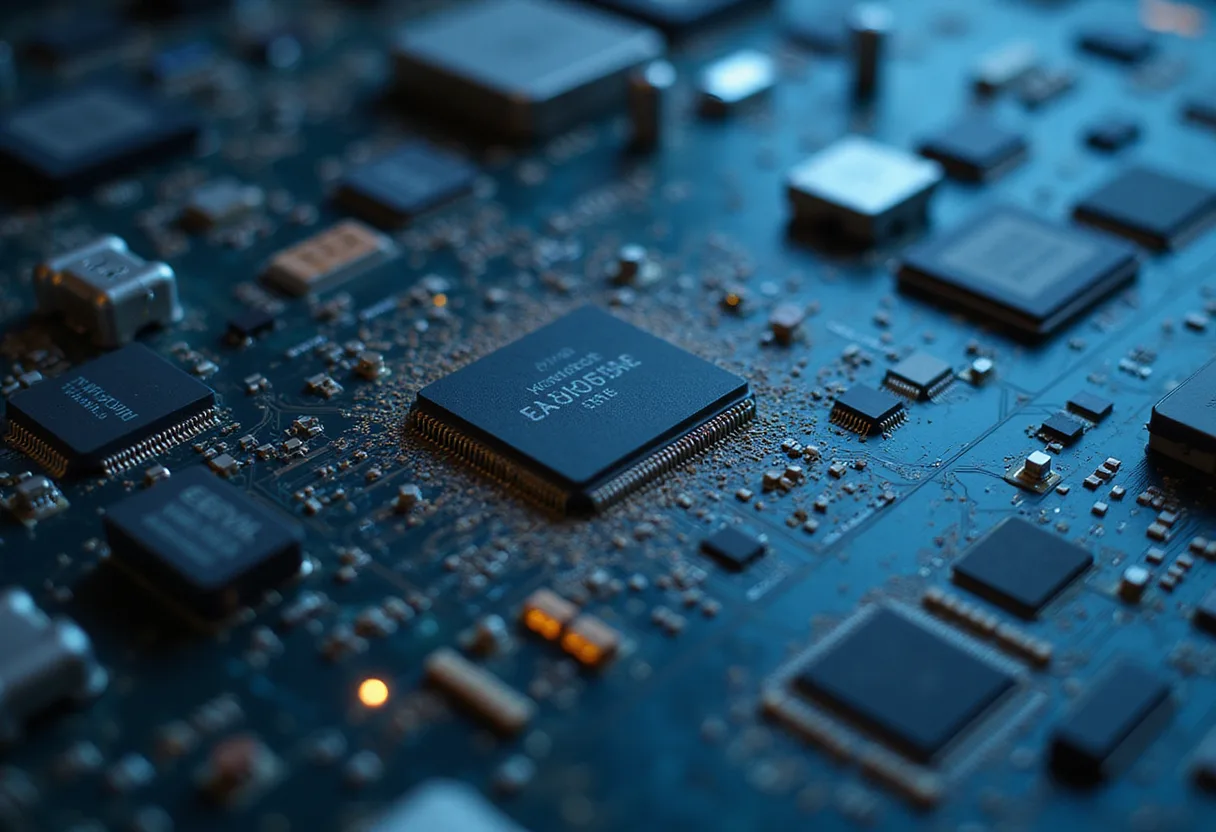
Meta's New AI Chips Signal a Faster, More Self-Reliant Hardware Path
TechRepublic reports Meta's latest in-house AI chips signal a faster development cadence and a deliberate push toward self-reliant silicon, away from vendor dependence.
- By
- Rebecca Stone
- Filed
- Channel
- AI & Compute
- Read
- 3 min read
Meta has new AI chips, and TechRepublic's reporting frames the release as something bigger than a product refresh: evidence of a faster, more self-reliant hardware strategy taking shape inside the company.
That framing matters for the semiconductor industry as much as for Meta itself. When a hyperscaler of Meta's scale tightens its silicon cadence and leans harder on in-house designs, the ripple effects reach chip suppliers, foundries, and the broader AI accelerator market. The question buyers, investors, and competitors now face is straightforward. How far is Meta willing to go down the custom-silicon road, and how quickly?
What did TechRepublic actually report?
The report, published under the headline "Meta's New AI Chips Reveal a Faster, More Self-Reliant Hardware Strategy," centers on Meta's latest in-house AI chips. The word "reveal" is doing real work in that headline. TechRepublic's read is that the new silicon is less a one-off accelerator launch and more a signal — a visible marker of a strategy that has been quietly accelerating.
Two threads run through the reporting.
- Speed. The word "faster" in TechRepublic's framing cuts two ways: faster chips, and a faster development rhythm. A quicker iteration cycle would let Meta match the pace of AI model development with hardware refreshes, rather than waiting on external vendor timelines.
- Self-reliance. "More self-reliant" points to reduced dependence on third-party chip suppliers. For Meta, whose AI training and inference workloads consume enormous compute budgets, designing its own accelerators is a hedge against supply constraints, pricing leverage, and allocation risk.
The report does not attach a specific deal value, wafer capacity figure, or process node to the new chips, and TechRepublic's piece should be read as strategic analysis rather than a spec-sheet disclosure. What it confirms is direction, not dimensions.
Why does self-designed silicon matter for Meta?
The commercial logic is not subtle. Hyperscalers that design their own AI chips gain control over three things: the architecture's fit with their own workloads, the refresh schedule, and the cost curve. Meta's AI ambitions — spanning recommendation systems, generative models, and the infrastructure that runs them — demand compute that general-purpose procurement only partly serves.
Custom silicon changes the bargaining table, too. Every accelerator Meta builds in-house is a purchase it does not have to make from external vendors, and a data point those vendors see when they set prices. That dynamic has already reshaped how the big AI chip suppliers approach their largest customers.
There is also a supply-chain dimension. The past several years taught hyperscalers that allocation risk is real. Owning the design, even if fabrication still runs through external foundries, shortens the chain between Meta's roadmap and the silicon that lands in its data centers.
What remains unconfirmed?
Plenty. TechRepublic's reporting establishes the strategic direction — faster development, greater self-reliance — but the hard numbers that semiconductor analysts will want are not in this piece. No confirmed performance figures. No disclosed production volumes. No named process node or manufacturing partner for the new silicon.
That gap is normal at this stage of a chip announcement cycle, and it draws a clean line between what Meta has revealed and what it has merely signaled. Roadmap statements and strategic reads are one thing; capacity commitments, shipment volumes, and revenue implications are another. Until Meta or its supply chain partners put numbers on the table, the "faster" cadence remains a claim, not a measured fact.
What comes next?
The competitive question is whether Meta's in-house accelerators can keep pace not just with its own roadmap but with the broader AI silicon market, where specialized vendors iterate aggressively. TechRepublic's analysis suggests Meta intends to try — and that the company now views chip development speed itself as a strategic asset. If the cadence holds, the next generation of Meta silicon arrives sooner than outsiders expect, and the leverage shifts a little further toward the buyers who design their own.
Source: Google News: AI chips
More from Rebecca Stone
Show full bio
Correspondent covering technology and product news in Semiconductors, chip manufacturing, hardware, AI compute at Chip Dispatch.
543 articles
Related articles
bank-of-america-cites-meta-s-ai-chips-and-meta-one-in-upbeat-view-da640643
Bank of America Cites Meta's AI Chips and Meta One in Upbeat View
big-tech-s-custom-ai-silicon-push-lifts-design-suppliers-f8f3035d
Big Tech's Custom AI Silicon Push Lifts Design Suppliers
chip-industry-s-new-alliance-targets-faster-ai-silicon-design-e7a31628
Chip Industry's New Alliance Targets Faster AI Silicon Design
meta-s-3-9-billion-r-d-credit-now-tracks-chips-not-researchers-355ef998
Meta's $3.9 Billion R&D Credit Now Tracks Chips, Not Researchers