Micron Aims EIM Memory Chip at 2028 Mass Production
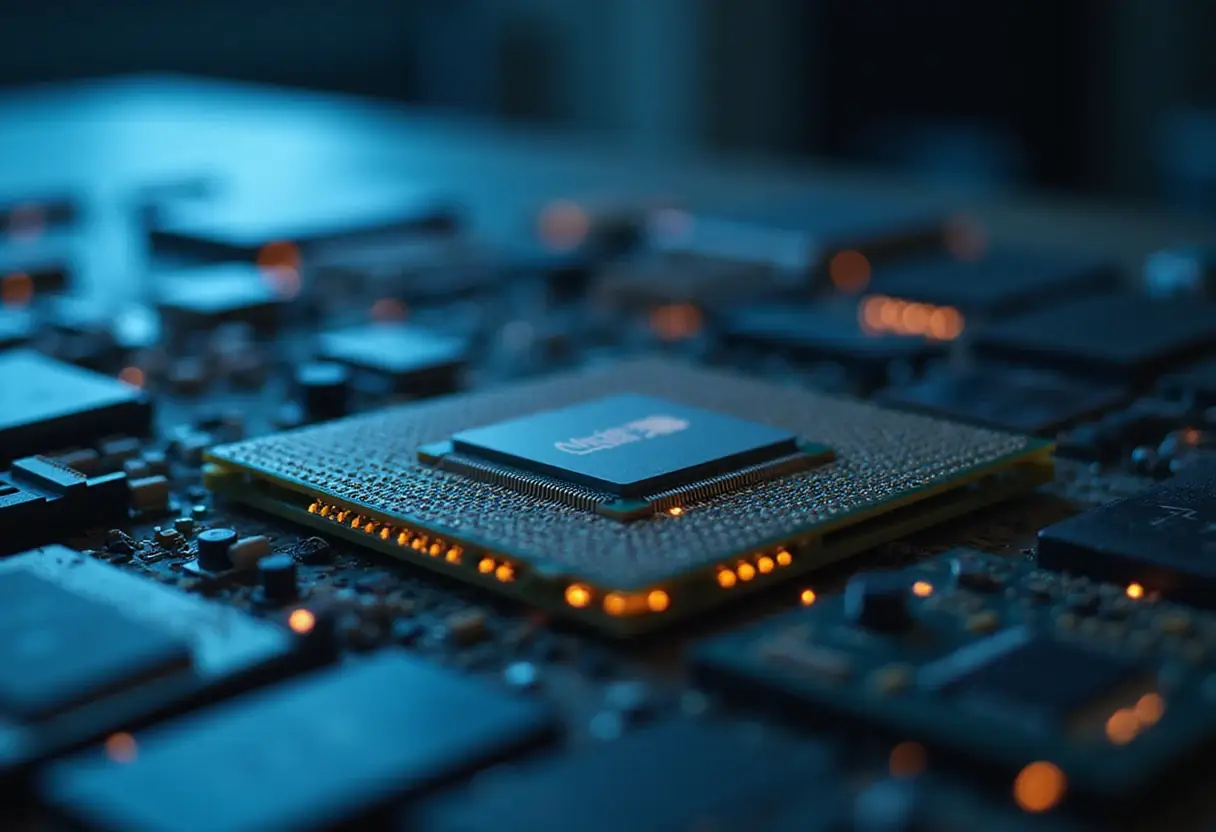
Micron targets 2028 mass production for its EIM memory chip, a dedicated part for physical AI in robots and autonomous machines, per BigGo Finance.
- By
- Tom Whitfield
- Filed
- Channel
- Memory & Storage
- Read
- 2 min read
Micron plans mass production of a new memory chip, reported under the name EIM, in 2028, and positions the product for physical AI — intelligence embedded in robots, vehicles and machines that act in the real world. The date and the product family come from reporting by BigGo Finance, which first carried the story. That timeline matters: 2028 sits roughly three product generations out, so the announcement reads as a roadmap commitment rather than a shipping plan.
What is Micron actually building?
The reported target is a memory device built for the data patterns of physical AI. Today's AI memory business centers on HBM stacks sold into data-center GPUs, where the load is dense matrix arithmetic. Physical AI is different. Robots and autonomous machines read sensor streams, fuse camera and lidar data, and respond in milliseconds, so the memory must feed small, constant, latency-sensitive reads rather than huge batch transfers.
The EIM designation has not appeared in Micron's official product catalog, and the company has not yet published full specifications such as interface bandwidth, package type or wafer node. What reporting establishes is the intent: a dedicated silicon response to a workload that DRAM and HBM were not designed to serve.
Why 2028 is a plausible date
A 2028 mass-production window fits how memory makers schedule new architectures. Design and validation of a novel memory class typically runs two to three years from first silicon to volume output, and 2028 also lines up with the industry's next major capacity and node transitions. Competing suppliers, chiefly SK hynix and Samsung, have floated their own custom-memory programs for AI endpoints, though none has confirmed a comparable mass-production date.
For Micron, the schedule suggests internal samples around 2026 and customer qualification through 2027. Those intermediate milestones remain estimates; only the 2028 volume target appears in the report.
Where the commercial logic sits
Physical AI is the part of the AI market that memory vendors cannot yet address with standard parts. Data-center HBM carries high margins but concentrated demand from a handful of accelerator makers. Robots, drones, industrial machines and autonomous vehicles would spread demand across thousands of device makers, and each unit needs memory that sips power, survives vibration and answers in real time.
A dedicated chip family would let Micron sell into that tier at premium pricing before commodity DRAM makers adapt. The risk is symmetric: if physical AI hardware volumes stay small beyond 2028, a specialized part carries development cost with thin returns.
What to watch next
Confirmation will come in stages. Watch for an official Micron product briefing with a named brand, interface standard and partner list; a foundry or packaging allocation signal; and sample shipments to robotics or automotive customers ahead of the 2028 window. Until then, the 2028 date stands as the one firm figure, and it frames a race among memory makers to own the silicon that lets machines think on their feet.
Source: Google News: AI chips
More from Tom Whitfield
Show full bio
Staff writer covering companies, deals and strategy in Semiconductors, chip manufacturing, hardware, AI compute at Chip Dispatch.
661 articles
Related articles
micron-samsung-see-memory-shortage-stretching-into-2028-09669de7
Micron, Samsung See Memory Shortage Stretching Into 2028
trump-secures-200b-micron-pledge-for-us-memory-fabs-f8cf6812
Trump Secures $200B Micron Pledge For US Memory Fabs
micron-s-ai-driven-earnings-surge-lifts-outlook-for-memory-rivals-1fdf1d90
Micron's AI-Driven Earnings Surge Lifts Outlook for Memory Rivals
microsoft-s-new-ai-chip-nearly-triples-rack-level-hbm-report-says-9c2d6e51
Microsoft's New AI Chip Nearly Triples Rack-Level HBM, Report Says