Microsoft's New AI Chip Nearly Triples Rack-Level HBM, Report Says
Microsoft's new AI chip nearly triples HBM per rack, Seoul Economic Daily reports, driving fresh demand for Korean memory suppliers Samsung and SK Hynix.
- By
- Grace Kim
- Filed
- Channel
- AI & Compute
- Read
- 2 min read
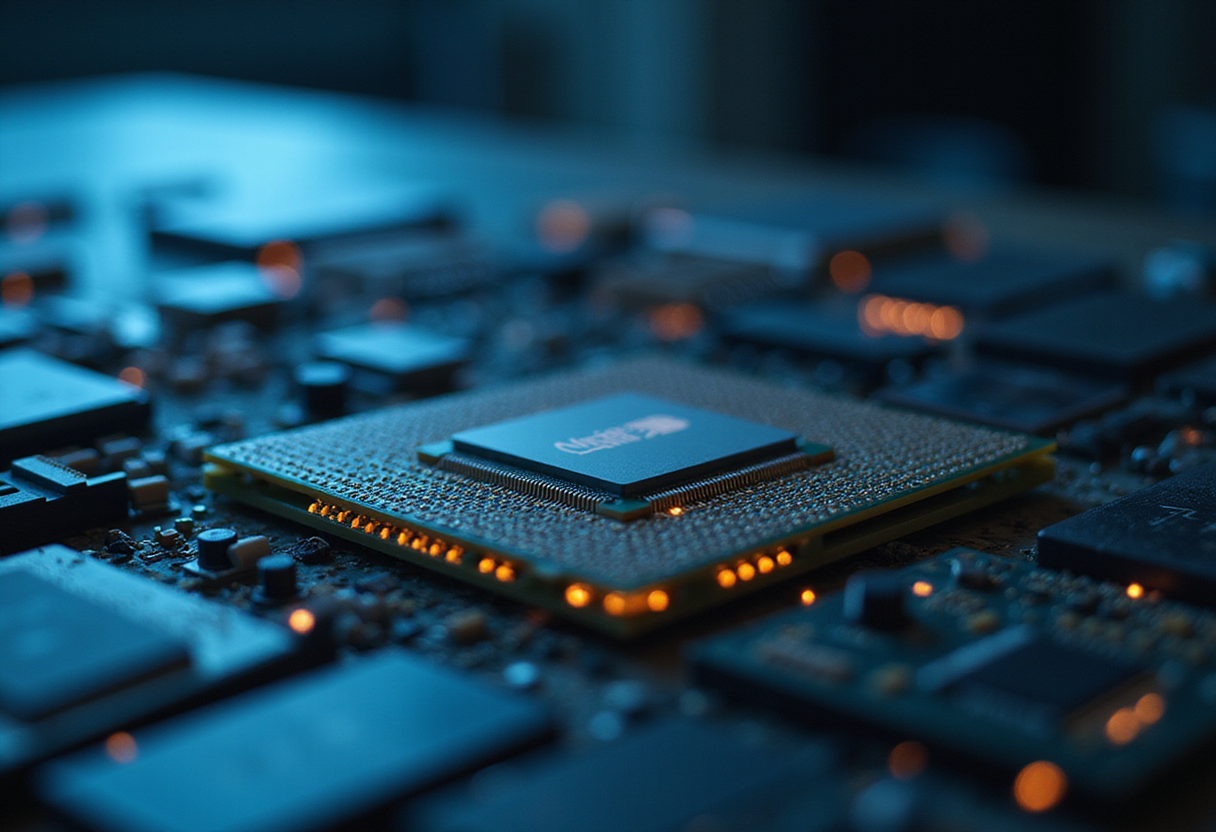
Microsoft's next-generation AI chip nearly triples the amount of high-bandwidth memory (HBM) required per rack, according to a report from the Seoul Economic Daily — a shift the paper says is already translating into additional demand for South Korea's memory makers.
The report, which surfaced via the Seoul Economic Daily's technology desk, centers on the HBM content of Microsoft's new AI silicon rather than on compute specifications. The near-tripling of rack-level HBM density means each deployment of the chip consumes far more stacked DRAM than the systems it replaces.
Why rack-level HBM matters
HBM — high-bandwidth memory built from vertically stacked DRAM dies — sits next to AI accelerators and feeds them data fast enough to keep large neural networks running. When a chip designer raises the HBM requirement per rack by roughly 3x, memory suppliers must commit correspondingly more advanced capacity to serve the same number of server deployments.
That arithmetic is what connects a chip launch in Redmond to fab scheduling in South Korea. Samsung Electronics and SK Hynix supply the bulk of the world's HBM, and the Seoul Economic Daily reports that Microsoft's new chip is boosting demand for their output.
Who benefits
The report frames the demand shift as a win for Korean memory producers. Both major Korean suppliers have spent recent quarters reorienting capacity toward HBM at the expense of conventional DRAM, chasing the AI accelerator buildout led by Nvidia, AMD, and now first-party silicon from hyperscalers such as Microsoft.
Microsoft is one of several cloud operators designing its own AI accelerators to reduce dependence on merchant silicon. Every new generation of these in-house chips carries its own HBM bill, and the Seoul Economic Daily's figure — near 3x at the rack level — indicates how steeply that bill is climbing.
What to watch
The report does not specify production volumes, supplier allocations, or pricing terms, so the commercial impact on individual Korean suppliers remains to be quantified. What it does establish is direction: Microsoft's newest AI chip raises per-rack HBM consumption sharply, and Korean memory makers are seeing the added demand follow.
Source: Google News: AI chips
More from Grace Kim
Show full bio
Market editor covering people, launches and day-to-day practice in Semiconductors, chip manufacturing, hardware, AI compute at Chip Dispatch.
325 articles
Related articles
micron-samsung-see-memory-shortage-stretching-into-2028-09669de7
Micron, Samsung See Memory Shortage Stretching Into 2028
samsung-eyes-record-80bn-quarterly-profit-on-ai-memory-demand-d7765f16
Samsung Eyes Record $80bn Quarterly Profit on AI Memory Demand
ai-chip-demand-drives-83-5-surge-in-south-korean-exports-a35b23f9
AI Chip Demand Drives 83.5% Surge in South Korean Exports
samsung-reports-ninefold-profit-jump-in-q3-on-ai-chip-demand-ac38675b
Samsung Reports Ninefold Profit Jump in Q3 on AI Chip Demand