AI & ComputeLOT 261122 · 3 min read
Mistral AI plants Asia-Pacific HQ in Singapore, targets 200 staff by 2027
Mistral AI will double Asia-Pacific staff to 200 by 2027 from a Singapore headquarters, selling sovereignty against free Chinese open-weight models already running at OCBC and Singapore's AI program.
Key takeaways
- Mistral AI named Singapore its Asia-Pacific HQ and plans to double regional staff to 200 by 2027, Fortune reported Nov. 20.
- More than 70% of the Singapore team are forward deployed engineers and scientists, per VP Geoff Soon.
- Mistral holds agreements with Singapore's defence ministry, HTX and Singtel's RE:AI unit; no investment figure was disclosed.
- Deutsche Telekom invested 100 million euros in Mistral days before the announcement.
- Local competition includes SEA-LION, built on Alibaba's Qwen, and OCBC running 30+ tools on open models including DeepSeek.
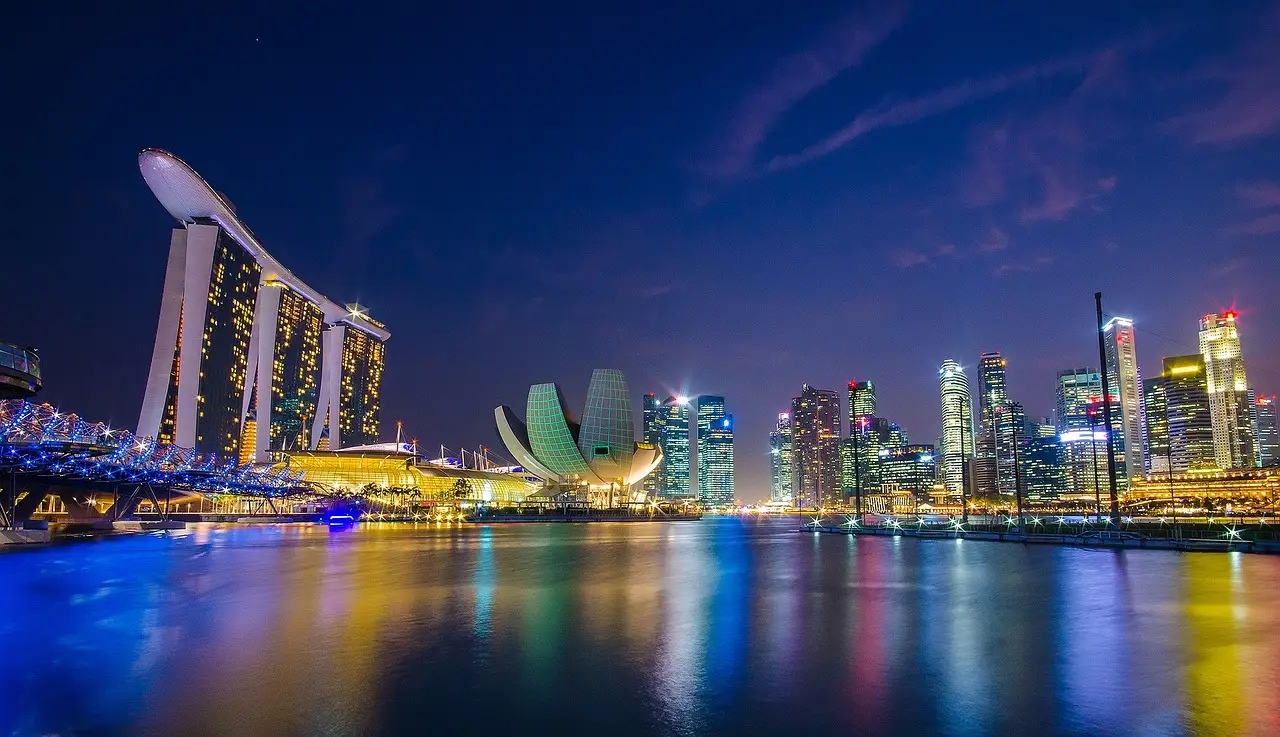
Mistral AI will double its Asia-Pacific headcount to 200 by 2027 from a new regional headquarters in Singapore, Fortune reported on Nov. 20. More than 70% of the local team are forward deployed engineers and scientists, according to Geoff Soon, the company's vice president of revenue for Asia-Pacific. The figure is a staffing plan, not a confirmed outcome; Fortune reported no investment amount for the office.
The Singapore operation will also function as an extended "Science Hub" for frontier models serving the region's public sector, high-tech manufacturing and robotics. That is a roadmap description rather than a shipped product line, and Mistral has not attached dates or revenue targets to it.
Why Singapore wants a European vendor
Mistral is selling into a market where Chinese open-weight models are already standard equipment. Fortune noted that Singapore's national AI program built its SEA-LION model on Alibaba's Qwen, and that OCBC runs more than 30 internal banking tools on open models, including DeepSeek. The competition, in other words, is free and already installed.
Chief revenue officer Marjorie Janiewicz framed the company's pitch in one line. "We represent a great alternative for global companies that are trying to achieve autonomy," she told Fortune, adding that sovereignty is "now a reality" for organizations that want business continuity from their AI suppliers. The argument is that a European supplier offers neither American nor Chinese dependencies. Whether buyers treat that as a feature or a nicety remains the open question.
Soon said Mistral's practical edge is hands-on help getting projects into production, which is presumably why most of the local hires carry engineering rather than sales titles.
What the existing contracts cover
Mistral's Singapore ties began with outreach from the Ministry of Defence in 2024, when the company had roughly 20 staff in the region. The relationship has since expanded along three tracks:
- An agreement with HTX, a statutory board under the Ministry of Home Affairs, covering video AI, embodied AI and AI for cybersecurity.
- A co-development deal with RE:AI, Singtel's sovereign AI cloud unit, to build AI infrastructure.
- Continuing work with Singapore's defence ministry, which initiated the contact.
Fortune did not report financial terms for any of these agreements.
The money and the market behind the move
The Asia push follows two European developments that frame Mistral's position. Deutsche Telekom invested 100 million euros in the company days before the Singapore announcement. Chief executive Arthur Mensch has also said Europe is the natural place for an eventual initial public offering, though not this year.
The sequence is coherent. A telecom backstop at home, a regional hub abroad, and an IPO horizon that stays politely distant. Singapore gives Mistral a base in a market where government buyers pay for sovereignty and banks already run open models at scale — the former being the easier sale.
The competitive test will come quickly. Chinese open-weight models are free, capable and embedded in the exact institutions Mistral is courting, and the company must prove that hands-on deployment support and European provenance justify a paid alternative. If the 200-person target holds through 2027, the bet is working; if it does not, the Science Hub will have been an expensive signal of intent.
mlq.ai (Source)
More from Nathan Brooks
Show full bio
Senior reporter covering people, launches and day-to-day practice in Semiconductors, chip manufacturing, hardware, AI compute at Chip Dispatch.
1,201 articles