Musk's $16.8 Billion Chip Ambition, Explained
ABC News reports Elon Musk is pursuing a $16.8 billion chip factory, a figure that would rank among the largest semiconductor investments by a private company.
- By
- Tom Whitfield
- Filed
- Channel
- Chip Manufacturing
- Read
- 2 min read
Elon Musk is pursuing a $16.8 billion chip factory, according to an ABC News report — a figure that, if confirmed, would rank among the largest single-site semiconductor investments ever announced by a private company rather than an established chipmaker.
The reported sum places the project in the same spending tier as leading-edge fabs from Intel, TSMC and Samsung, whose domestic facilities typically carry price tags in the $20–30 billion range per site. ABC News did not specify a location, capacity target or process node for the plant in its headline report, leaving open the central question of what Musk would actually build there.
Why would Musk build his own chips?
Musk has repeatedly complained about constraints in AI compute supply. His companies — Tesla and xAI — depend heavily on NVIDIA GPUs, and Musk has said publicly that access to accelerators is a bottleneck for training large models. Vertical integration into chip manufacturing would follow the logic he applied to batteries and vehicle production: own the constrained resource.
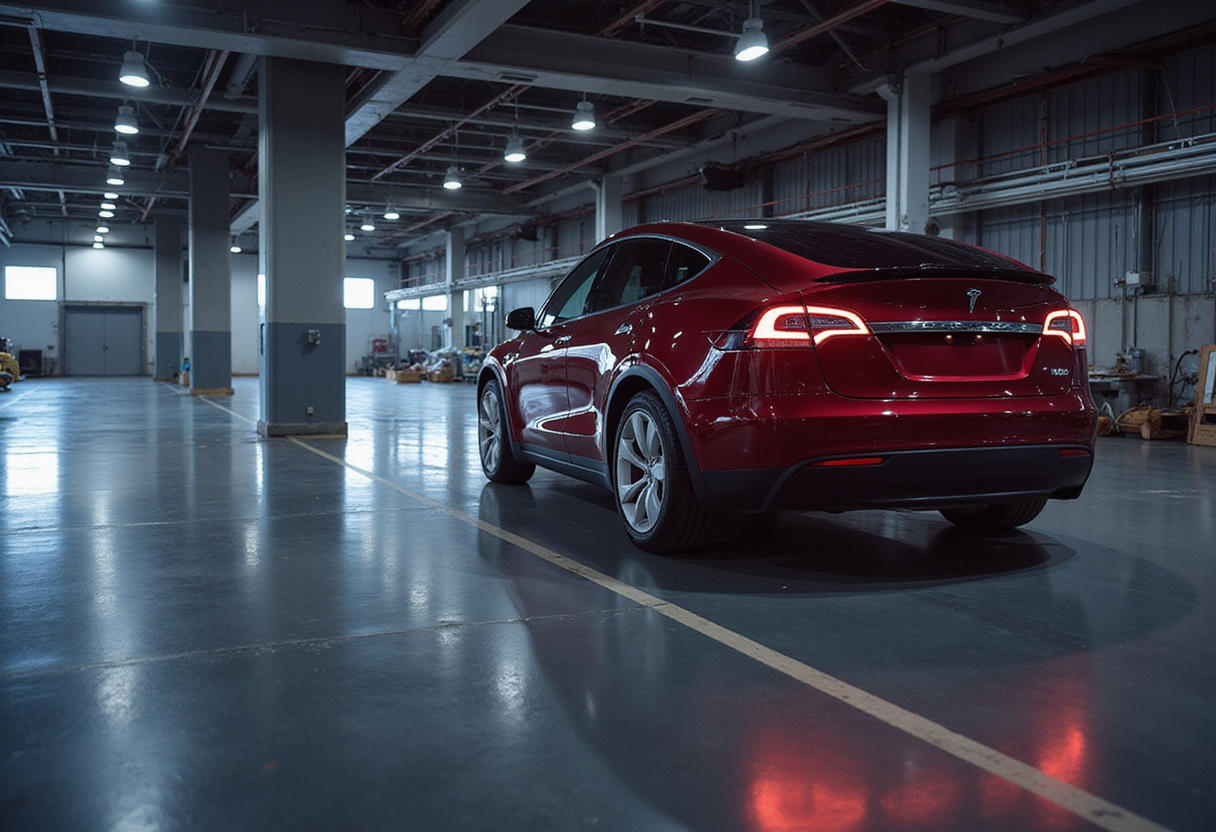
Tesla already designs its own silicon. The company's Hardware 4 self-driving computer and the Dojo training chip, produced with TSMC, show Musk's willingness to pull chip design in-house. A $16.8 billion factory would extend that strategy from design into fabrication — a far more capital-intensive step.
What could $16.8 billion actually buy?
Without confirmed capacity figures from Musk or his companies, any wafer-output estimate remains speculation. But the scale of the number suggests ambition beyond packaging or test facilities:
- A single leading-edge (sub-5nm) fab line typically costs $15–20 billion including cleanroom, lithography and support infrastructure
- $16.8 billion could alternatively fund multiple mature-node lines geared toward power, sensing or custom AI inference silicon
- The figure could also cover a phased campus rather than one initial building
No process node, wafer size or product family has been confirmed for the project.
The competitive context
If the report holds, Musk would be entering a market where incumbents spent decades building process expertise. TSMC, Samsung and Intel each operate fabs that require continuous multi-billion-dollar upgrades to stay at the leading edge. Even Apple, which designs its own silicon, manufactures exclusively through TSMC rather than building its own fabs.
The alternative reading is narrower: Musk may intend the facility for specialized chips — AI inference accelerators, automotive controllers or robotics silicon — where mature nodes suffice and the technical bar is lower than bleeding-edge logic.
What happens next?
The report leaves key commercial questions unanswered: where the plant would sit, which government incentives it might draw, and whether Musk's companies would commit to purchasing its output. Until those details surface, the $16.8 billion figure stands as a statement of intent — and a signal that AI compute scarcity is now large enough to push a customer of chipmakers toward becoming a manufacturer itself.
Source: Google News: chip factory investment
More from Tom Whitfield
Show full bio
Staff writer covering consumer brands and retail at Chip Dispatch.
269 articles
Related articles
musk-his-team-will-build-and-run-the-terafab-not-tsmc-7029234e
Musk: His Team Will Build and Run the Terafab, Not TSMC
tesla-and-spacex-reportedly-plan-their-own-chip-factory-a4ffc91f
Tesla and SpaceX Reportedly Plan Their Own Chip Factory
spacex-may-borrow-40-billion-to-buy-nvidia-ai-chips-2bea3ace
SpaceX May Borrow $40 Billion to Buy Nvidia AI Chips
intel-holds-line-on-musk-s-terafab-as-tsmc-enters-the-frame-db600c99
Intel Holds Line on Musk's 'Terafab' as TSMC Enters the Frame