Neil deGrasse Tyson: Space-Based AI Chips and Data Centers Face 'Many Challenges'
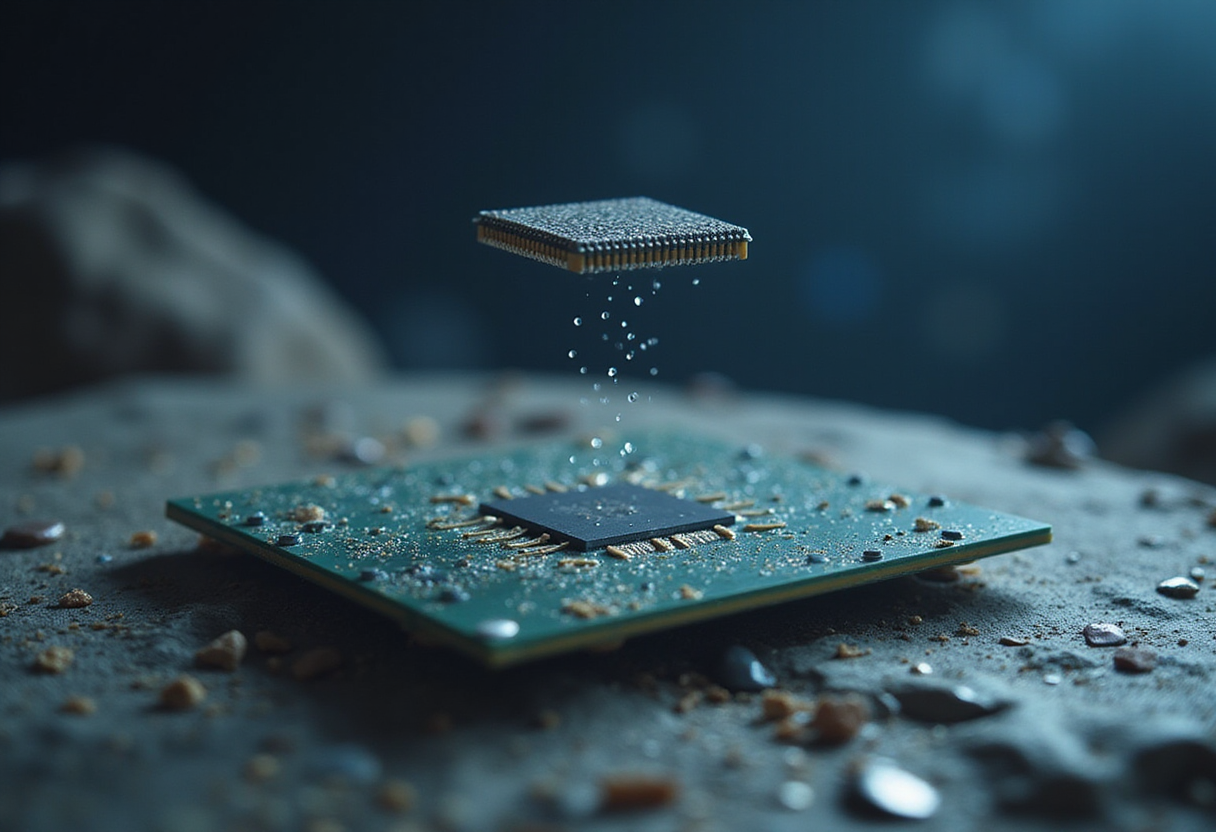
Neil deGrasse Tyson warns that placing AI chips and data centers in space faces "many challenges," tempering investor enthusiasm for orbital compute as an answer to AI power constraints.
- By
- Grace Kim
- Filed
- Channel
- AI & Compute
- Read
- 3 min read
Astrophysicist Neil deGrasse Tyson says proposals to place AI chips and data centers in space face "many challenges," pushing back against a growing strand of Silicon Valley enthusiasm for orbital compute.
Tyson made the remarks in an interview with NewsNation's "On Balance With Leland Vittert," aired the same week The Hill reported on the exchange. His comments arrive as several technology investors and startups have floated the idea of moving power-hungry AI workloads off Earth, where solar power is abundant and cooling and land costs disappear from the ledger.
The famed science communicator did not dismiss the concept outright. Instead, he framed it as an engineering problem the space industry has not yet solved at the scale AI infrastructure demands.
Why is anyone putting compute in orbit?
The commercial logic is straightforward. AI data centers on Earth consume enormous amounts of electricity and water, face permitting bottlenecks, and compete for grid capacity. In orbit, a facility receives continuous sunlight, sheds heat through radiative cooling, and bypasses local energy markets entirely.
That has led entrepreneurs and at least a handful of venture-backed ventures to sketch concepts for satellite-based AI processing — launching racks of accelerators rather than just relaying signals to ground stations. The pitch: if power, not chip supply, becomes the binding constraint on AI scaling, orbit looks like an escape hatch.
Tyson's caution targets exactly that assumption. Building and operating hardware in the space environment, he indicated, is far harder than the pitch decks suggest.
What challenges did Tyson identify?
Tyson said putting AI chips and data centers in space faces "many challenges." Among the practical hurdles the interview touched on:
- The physical stresses of launch, vibration, and the vacuum and radiation environment of orbit, which consumer-grade and even industrial silicon is not built to endure.
- The difficulty of servicing, upgrading, or repairing hardware once it is in orbit — a sharp contrast with terrestrial data centers, where faulty accelerators are swapped in hours.
- The mismatch between the rapid refresh cycle of AI chips and the long design-to-deployment timelines of spacecraft.
The comments echo a broader skepticism among aerospace engineers who note that radiation-hardened processors typically lag leading-edge commercial chips by several process generations — a problem when AI training economics depend on the newest silicon.
How does this fit the wider AI infrastructure debate?
The exchange lands amid intense discussion over how the AI industry will power its buildout. Data center operators on the ground are already signing nuclear power deals and reviving dormant plants to feed GPU clusters. Against that backdrop, space-based compute is one of several speculative alternatives, alongside fusion startups and undersea facilities.
Tyson, who has spent decades communicating the realities of spaceflight to the public, occupies a credible position from which to temper such speculation. His verdict: the idea is not impossible, but the engineering and operational obstacles are substantial and current proposals tend to gloss over them.
For semiconductor and data center executives, the takeaway is measured. Orbital AI compute remains a concept, not a procurement option, and Tyson's assessment suggests it will stay that way until launch costs fall further and radiation-tolerant versions of leading-edge AI accelerators — a product family that today does not exist — become available.
Source: Google News: AI chips
More from Grace Kim
Show full bio
Market editor covering industry trends and analytics at Chip Dispatch.
262 articles
Related articles
google-puts-four-ai-chips-in-orbit-ahead-of-space-data-centre-plans-08f9fc5b
Google Puts Four AI Chips in Orbit Ahead of Space Data Centre Plans
google-flies-ai-chips-in-orbit-to-test-space-data-centres-81cfed30
Google Flies AI Chips in Orbit to Test Space Data Centres
spacex-launches-google-ai-chips-to-test-orbital-data-centers-a49214e3
SpaceX Launches Google AI Chips to Test Orbital Data Centers
google-sends-ai-chips-to-orbit-to-test-space-data-centers-e99c6e03
Google Sends AI Chips to Orbit to Test Space Data Centers