Philips' $379.99 AI Toothbrush Undercuts Dyson's $499 CameraJet
Philips ships its AI motion-tracking Sonicare Next-Gen DiamondClean 9900 Prestige at $379.99 in the US and Europe, undercutting Dyson's $499 CameraJet, which some early adopters report is breaking.
- By
- Nathan Brooks
- Filed
- Channel
- Consumer Tech
- Read
- 2 min read
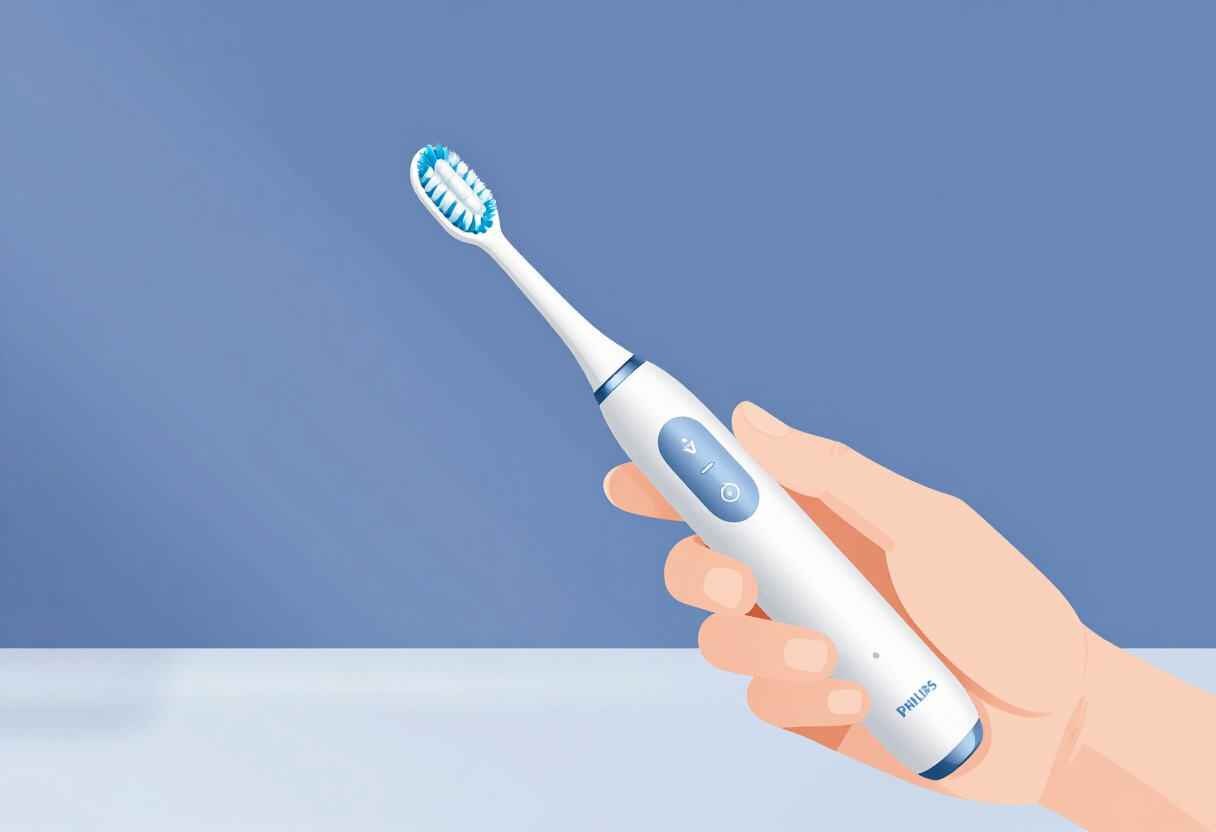
Philips is shipping its Sonicare Next-Generation DiamondClean 9900 Prestige smart toothbrush in the US and Europe at $379.99 — $50 below the sticker price of its predecessor and $120 cheaper than Dyson's troubled $499 CameraJet.
The company first announced the device in July with a limited launch planned before year's end. That limited rollout has now arrived, and a broader global release is expected in 2027. The previous DiamondClean 9900 Prestige remains on sale at a discount from its original $429.99 price, meaning Philips is debuting the new model with added capabilities at a lower launch price than the old one carried.
The pricing gap with Dyson matters for more than marketing. Dyson's $499 CameraJet, which integrates a camera and a flossing function, has run into problems: some early adopters report their units are breaking. Philips' new model does not floss, but it arrives at $379.99 with a cleaner reliability record and a feature set centered on AI-assisted brushing.
The core of that feature set is motion tracking. The toothbrush uses AI to track how the user brushes and to coach them toward better technique. Philips positions this as a way to turn raw brushing data into actionable feedback rather than a simple timer.
The Next-Generation DiamondClean 9900 also joins a growing category of everyday devices shipping with built-in displays. The handle-mounted screen lets users check brushing feedback directly on the device instead of unlocking a phone and opening the companion app — a small but deliberate hardware choice that mirrors what Anker and others have done with chargers and other accessories.
The competitive picture in smart oral care is tightening. Philips, Dyson, and incumbent rivals are all pushing sensors, app connectivity, and now cameras into a category that was once purely mechanical. Philips' move to launch the new flagship $50 below the old one, while Dyson grapples with early-unit failures on a device priced $120 higher, puts pricing pressure squarely on the premium end of the market.
For now, availability is limited to the US and Europe. The 2027 global expansion will determine whether the $379.99 price point holds as the standard for AI toothbrushes or gets dragged down further as competition intensifies.
Original: amazon.com
More from Nathan Brooks
Show full bio
Senior reporter covering industry trends and analytics at Chip Dispatch.
55 articles
Related articles
honor-s-magic-9-pro-max-pairs-arri-camera-credentials-with-a-massive-battery-4ae46576
Honor's Magic 9 Pro Max Pairs Arri Camera Credentials With a Massive Battery
24-carat-gold-mini-pc-priced-at-1-7-million-promises-better-cooling-0a02d319
24-Carat Gold Mini PC Priced at $1.7 Million Promises Better Cooling