Android XR glasses open preorders at $395, without a display
Warby Parker and Gentle Monster Android XR glasses start at $395 and $449, launch Dec. 10 without displays, and bring Gemini, camera, privacy controls and broad phone support.
- By
- Sophie Lindqvist
- Filed
- Channel
- Consumer Tech
- Read
- 3 min read
By Sophie Lindqvist
The first Android XR smart glasses opened for preorder on Nov. 12 at $395 for Warby Parker and $449 for Gentle Monster, with sales scheduled for Dec. 10 in the United States and South Korea.
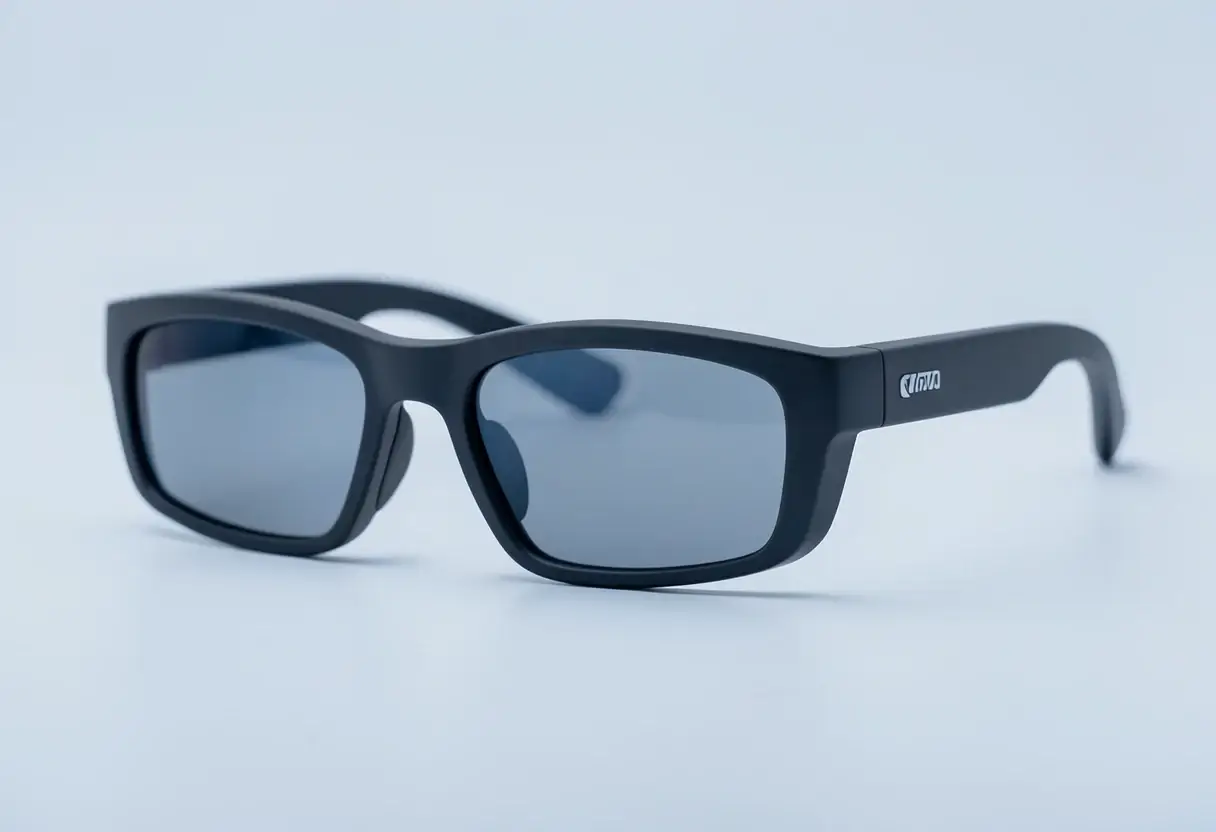
The products carry no display, so they cannot present digital imagery in the lenses. That narrows the first release to voice, camera and wearable functions.
What reaches stores on Dec. 10?
The range sells under the Intelligent Eyewear name through Warby Parker and Gentle Monster.
Warby Parker’s three styles, Alden, Reid and Wren, start at $395 in optical or sunglasses versions. Gentle Monster’s six designs start at $449, with prescription lenses available for most frames.
Sales begin online and in stores on Dec. 10. At launch, the glasses work only with Google accounts from the United States or South Korea.
Samsung supplied the hardware and Google most of the software, while the eyewear brands handle design, fit and retail. Wired compared this division of labor with Meta’s use of Ray-Ban for its market-leading glasses.
Warby Parker plans guided demonstrations in more than 360 stores. Both brands are running pop-ups in New York during November. Kering Eyewear has also signed up to make Android XR glasses later, but no launch date or product specifications were given.
What can the glasses actually do?
Both brands use the same core hardware. Wired counted the glasses at about 41 grams, 10 grams lighter than Meta’s Gen 3 glasses.
- A 12-megapixel ultra-wide camera is included.
- Open-ear speakers deliver Gemini’s spoken responses.
- Stated battery life is up to nine hours.
- The charging case can refill the frames up to seven times.
Gemini can answer through the speakers, read messages, provide Google Maps directions and translate speech across more than 70 languages. It can also look through the camera when the wearer asks.
These are the first devices to respond to “Hey Gemini.” The practical proposition is voice assistance and camera-based questions, not visual augmentation in the lenses.
Which phones can drive them?
The launch supports three broad phone groups:
- Google Pixel 7 and newer phones.
- Recent Galaxy S and Z models running One UI 9.0 or later.
- iPhone 13 Pro and newer models.
Compatibility extends across both Android and iPhone, although service access at launch depends on a U.S. or South Korean Google account. The announcement does not define which “recent” Galaxy S and Z models qualify. It also omits processor, memory, storage and connectivity specifications.
What does the privacy design claim?
Google is leading with privacy, a sore point for Meta’s camera glasses. The launch information says images Gemini sees through the glasses are not saved to Gemini history. They also are not used to train models or target advertisements.
Faces of bystanders are redacted automatically before Gemini processes the images. Recording stops if the indicator light is covered or disabled.
“We learned through Glass that you can make people uncomfortable if you’re not clearly communicating,” Google’s Juston Payne told Wired.
The announcement provides no independent test data for face redaction, recording interruption or separation from Gemini history. These remain company claims until outside testing shows otherwise.
What is still missing?
Google’s Juston Payne told Wired that versions with displays in the lenses remain in testing and have no release date. The announcement gives no price, battery specification or release schedule for those versions.
Several commercial questions remain unanswered. The announcement provides no shipment target, production volume or revenue forecast. It also does not identify the glasses’ processor or explain how hardware margins and software revenue will be divided.
The immediate test is narrower: whether a displayless $395-to-$449 assistant can gain retail traction while Meta’s Ray-Ban glasses remain the benchmark in Wired’s assessment. Warby Parker’s more-than-360-store demonstration program and the New York pop-ups offer an early gauge of consumer interest.
As December approaches, the $395 entry price will test demand for display-free Android XR hardware, while the absence of shipment targets and a display release date leaves its competitive position against Meta unsettled.
Source: mlq.ai
More from Sophie Lindqvist
Show full bio
News editor covering money, funding and market shifts around Semiconductors, chip manufacturing, hardware, AI compute at Chip Dispatch.
930 articles
Related articles
xreal-aura-launches-wired-android-xr-glasses-for-1-099
Xreal Aura launches wired Android XR glasses for $1,099
xreal-aura-launches-at-1-099-after-a-180-price-cut
Xreal Aura launches at $1,099 after a $180 price cut
alibaba-enters-smart-glasses-race-with-qwen-ai-wearable-aimed-at-meta-91ef6fbd
Alibaba Enters Smart Glasses Race With Qwen AI Wearable Aimed at Meta
fitbit-edge-review-google-s-179-99-tracker-returns-to-simple-roots
Fitbit Edge Review: Google's $179.99 Tracker Returns to Simple Roots