PsiQuantum's 8x8 Optical Switch Loses 1.2 dB, Targets AI Clusters
PsiQuantum's 8x8 optical switch loses just 1.2 dB of light without amplification, beating rivals' figures, but its eight ports trail Google's 136 and Lumentum's 300.
- By
- Nathan Brooks
- Filed
- Channel
- Consumer Tech
- Read
- 4 min read
PsiQuantum has demonstrated an 8x8 optical circuit switch that typically loses just 1.2 dB of light — about a quarter of the signal — in lab tests, without amplification. That figure beats the under-2 dB ratings of competing switches from Google, Salience Labs and Lumentum, though the prototype's eight ports sit far behind rivals' 32 to 300. Larger devices, the company says, are in development.
The quantum computing firm announced the switch earlier this week, repurposing the low-loss silicon photonics it built for quantum machines. Typical data center optics can tolerate 3 dB of loss, meaning half the light. PsiQuantum's demo, measured fiber to fiber, comes in well under that. Co-founder Pete Shadbolt praised Google's MEMS alternative but said he would prefer similar-quality switching on a monolithic chip with no moving parts.
How does the switch compare?
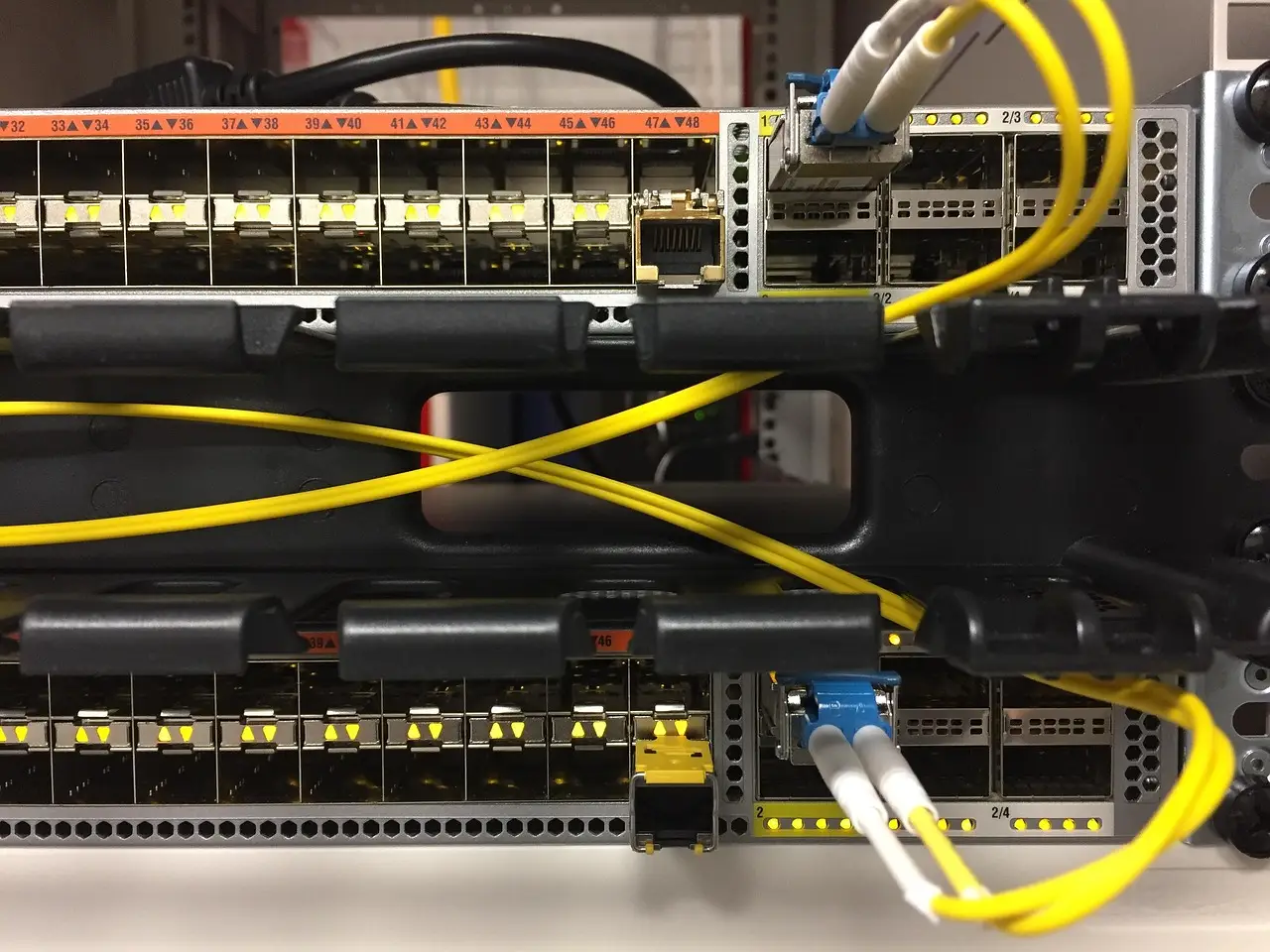
An optical circuit switch passes light straight through, fiber to fiber, without converting it to or from electrical signals. Conventional switches make that conversion at every hop, consuming power and adding latency. PsiQuantum's chip uses etched silicon circuits with no moving parts, unlike the tiny MEMS mirrors in Google's and Lumentum's products.
The competitive picture by the numbers:
- PsiQuantum 8x8 demo: 1.2 dB typical loss (about 24%), under 3 ms reconfiguration, silicon photonics, no amplification
- Google Palomar: 136x136 ports, typically under 2 dB, millisecond switching, MEMS mirrors
- Lumentum R300: 300x300 ports, close to 1.5 dB at start of life, MEMS mirrors
- Salience Labs OC-32M: 32x32 ports, under 2 dB after built-in amplification, under 300 µs
- iPronics ONE-32: 32 ports, loss not published, under 300 µs, with optical amplifiers
The 8x8 is "strictly non-blocking," so a new connection never disturbs existing ones, and "every input can reach every output." Lab tests also showed 40 dB of crosstalk — roughly 0.01% of light leaking to other ports — and all figures exceeded the company's initial targets. The loss measurement includes getting light onto and off the chip but not connector losses, PsiQuantum told Tom's Hardware Premium.
Why the low numbers matter
The platform's component-level losses explain the result. PsiQuantum's 2025 Nature paper reports silicon nitride waveguides losing as little as 0.5 dB per meter, splitters at 0.5 millidecibels and crossings at 1.2 millidecibels — the last two a few hundredths of a percent of light each. Chip-to-fiber coupling has reached about 60 millidecibels, roughly 1.4% lost, in its best published results, though without a full fiber array attached. Those are best-case figures; losses add up as ports increase.
Acceptable loss depends on the optics at each link's end. Coherent says an OCS can add "up to 3 dB additional insertion loss" that its transceivers can handle. Lumentum told Gazettabyte that 3 dB works with off-the-shelf FR4, DR4 and DR8 modules, the standard options linking GPU servers and switches at 500 meters to 2 kilometers. PsiQuantum built the 8x8 for the O-band, the range those modules use. The prototype also comes in below the 3 dB target in an Nvidia request for proposals.
Skipping electrical conversions matters more as AI clusters grow, because moving data between GPUs is becoming a bottleneck. Optics beat copper on bandwidth and reach, though a shortage of lasers constrains the alternative.
What comes next?
PsiQuantum has a 64x64 version taped out, a 72x72 underway, and is "actively developing larger devices." The company declined details on future products but says loss will stay very low. Speed has room to improve: Google, with deployments "in the tens of thousands," uses millisecond MEMS switches to resize TPU pods and route around failed chips, while Salience and iPronics claim sub-300-microsecond switching. PsiQuantum already uses barium titanate in a 64-port quantum-system switch, a material it chose over lithium niobate for its stronger electro-optic effect — roughly a million times faster than the demo's thermal silicon nitride platform.
The commercial logic extends beyond AI. Building thousands of switches reduces risk for the packaging, assembly and supply chain of PsiQuantum's quantum parts. Nvidia holds a stake through NVentures and collaborates on GPU-QPU integration, though it also joined rival iPronics' $125 million round in September. PsiQuantum's CHIPS award was finalized in September for high-performance optical switches.
Research firm Cignal AI expects most OCS deployments to stay inside Google through the end of the decade, with the outside market at "proof-of-concept and early trial." It raised its market estimates roughly threefold for 2026 and by more than 40% for 2029. PsiQuantum says samples and testing kits have gone to GPU vendors and hyperscalers, with commercial products to be "announced in the coming months." Its figures remain unverified, but if 64-port loss holds without amplifiers, larger monolithic switches are on the way.
Source: Tom's Hardware
More from Nathan Brooks
Show full bio
Senior reporter covering people, launches and day-to-day practice in Semiconductors, chip manufacturing, hardware, AI compute at Chip Dispatch.
745 articles
Related articles
salience-labs-ships-32-port-silicon-photonics-optical-switch-f4d4e21c
Salience Labs Ships 32-Port Silicon Photonics Optical Switch
caltech-prints-fiber-grade-optics-on-8-and-12-inch-silicon-wafers-787f0d35
Caltech Prints Fiber-Grade Optics on 8- and 12-Inch Silicon Wafers
samsung-and-sk-enter-co-packaged-optics-race-as-ai-focus-shifts-f185d47e
Samsung and SK Enter Co-Packaged Optics Race as AI Focus Shifts
globalfoundries-calls-chinese-optical-module-demand-strong-on-ai-boom-128ff193
GlobalFoundries Calls Chinese Optical Module Demand 'Strong' on AI Boom