QRT Targets Space Parts and Glass Substrates as Testing Demand Widens
QRT is expanding reliability testing into space components and glass substrates; KB Securities sees H2 2026 revenue up 27.7% to 46.1 billion won and operating profit up 163.2% to 8 billion won.
- By
- Nathan Brooks
- Filed
- Channel
- Semiconductors
- Read
- 3 min read
Korean reliability firm QRT expects second-half 2026 revenue of 46.1 billion won, up 27.7% year on year, with operating profit up 163.2% to 8 billion won — at least according to KB Securities, which published that forecast on Nov. 4, the same day QRT announced its expansion into space components and glass substrates.
The two numbers are not the company's own guidance, and QRT did not dispute them. A 163% profit jump on 28% revenue growth implies a business that has found pricing power in its niche. That niche is failure analysis: finding out why a chip died, preferably before it ships.
Why is QRT moving into space components?
The company is targeting the up-screening market. Satellite constellation makers in low Earth orbit want to cut costs by buying commercial off-the-shelf parts rather than purpose-built space-grade components, which can cost as much as a small car per unit. Up-screening tests ordinary chips in advance to see whether they survive the vacuum, radiation and thermal cycling of orbit.
The logic is commercial, not patriotic. If a COTS part passes, the buyer saves a fortune. If it fails on the bench, the buyer saves a satellite. Either outcome produces a testing invoice.
What changed in glass substrates?
Demand for failure and process analysis of glass substrates has grown as the technology moves past prototyping into mass-production validation, QRT said. This matters because glass substrates remain an emerging bet for advanced packaging, and every change in material or structure requires fresh reliability verification.
That recurring-verification requirement is the quiet point of the whole announcement. Testing is not a one-off sale; it is a subscription to other people's engineering risk. Each material revision, each structural tweak, triggers another order.
How is the core semiconductor business performing?
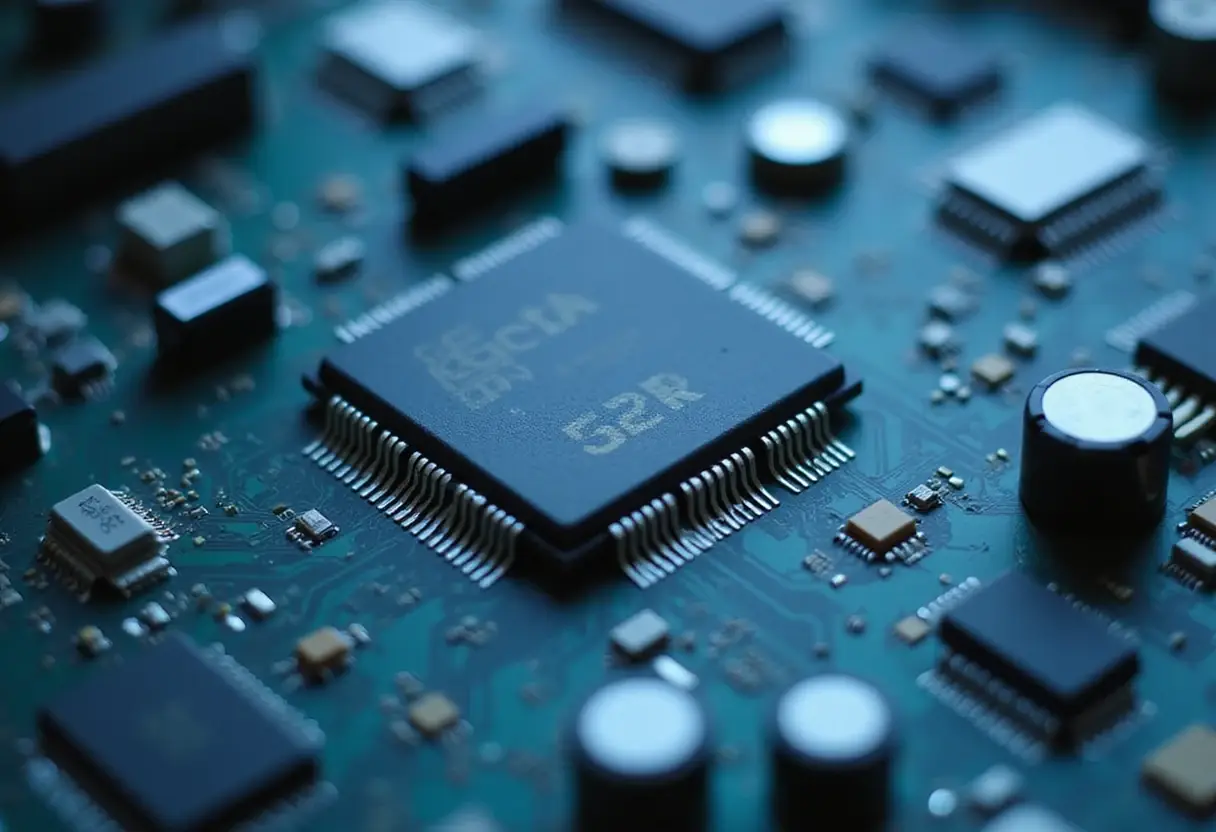
In its existing memory-adjacent work, QRT reports rising demand for reliability testing of HBM4, the sixth generation of high-bandwidth memory, along with Compute Express Link (CXL) devices and small outline compression attached memory modules (SOCAMM). All three are the plumbing of AI servers, and all three are racing through design revisions at speed.
The company also installed a second transmission electron microscope in the first half of 2026, expanding its comprehensive analysis capacity. A TEM is not a casual purchase; it is the instrument you buy when clients need atomic-scale cross-sections of their defects, and when the queue for the first one has grown inconvenient.
What about the equipment side?
QRT's equipment business secured a radio-frequency equipment order from a European defense company in the first quarter and has continued to win new orders in the second half. The customer was not named. A European defense buyer sourcing RF gear from a Korean test house suggests the up-screening logic — proven parts at civilian prices — travels well beyond satellites.
What holds the story together?
The common thread across space parts, glass substrates, HBM4 and defense RF is verification demand. Chip complexity is rising faster than chipmakers' confidence, and every new package, node or orbital deployment needs someone to certify that it will not fail. QRT is positioning itself as that someone across four markets at once.
The KB Securities forecast treats the second half of 2026 as the payoff. If HBM4 ramps on schedule, glass substrates reach volume production, and satellite constellations keep launching, the recurring testing orders QRT anticipates should keep arriving — and the analyst's 163% profit figure will look conservative rather than optimistic.
Source: Google News: semiconductors
More from Nathan Brooks
Show full bio
Senior reporter covering people, launches and day-to-day practice in Semiconductors, chip manufacturing, hardware, AI compute at Chip Dispatch.
718 articles
Related articles
spacex-wages-16-8-billion-campaign-for-chip-independence-4e722ae1
SpaceX Wages $16.8 Billion Campaign for Chip Independence
global-smartphone-shipments-fall-to-a-14-year-low-as-chip-costs-bite-4185f498
Global Smartphone Shipments Fall to a 14-Year Low as Chip Costs Bite
microchip-technology-buys-space-hardware-firm-behind-blue-origin-flight-systems-ea9067db
Microchip Technology Buys Space-Hardware Firm Behind Blue Origin Flight Systems
analyst-musk-fab-plan-poses-no-real-threat-to-tsmc-d647b159
Analyst: Musk Fab Plan Poses No Real Threat to TSMC