Racks at 100 kW and Rising: Liquid Cooling Meets Its Own Power Problem
Racks producing 100 kW of heat have forced hyperscalers into liquid cooling. Now pump efficiency and leak detection are becoming the industry's next battleground.
- By
- Tom Whitfield
- Filed
- Channel
- AI & Compute
- Read
- 3 min read
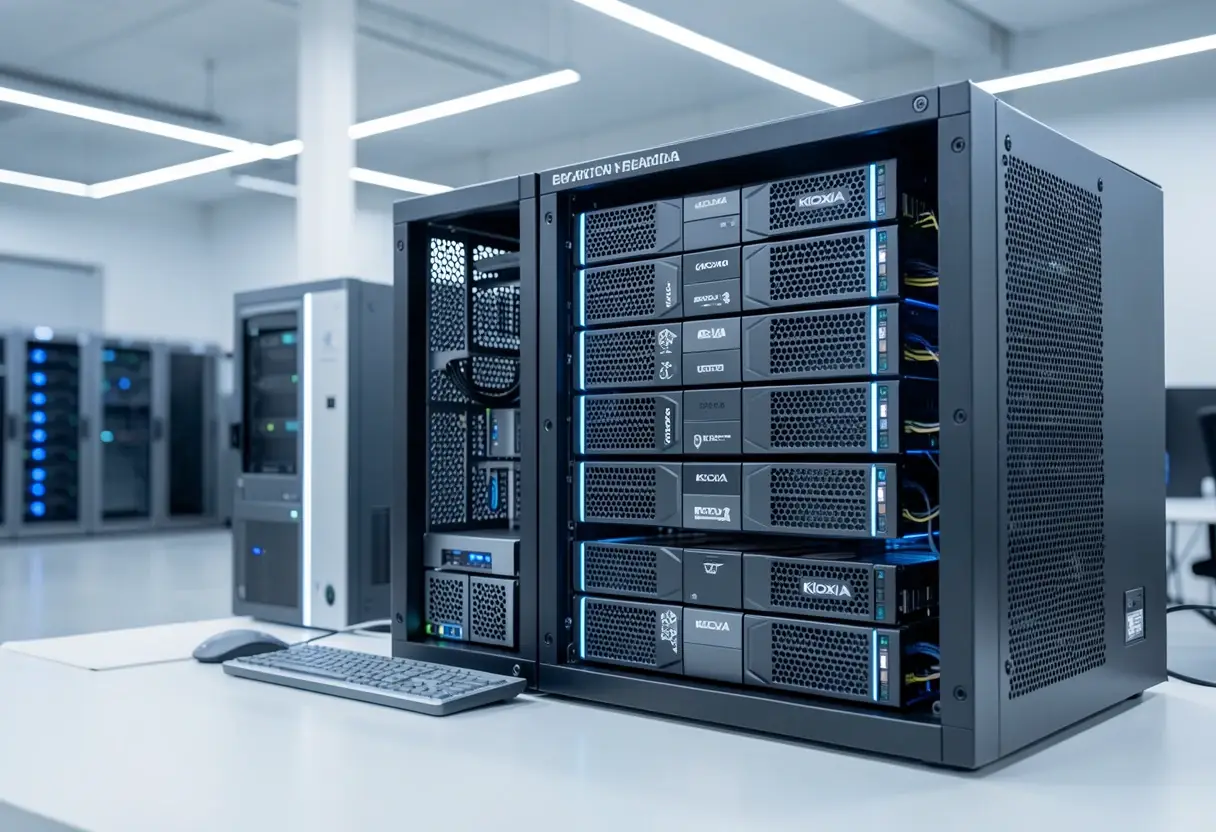
A single AI accelerator can draw more than a kilowatt, and one fully loaded compute rack can produce more than 100 kW of heat — figures that have pushed air cooling past its practical limits in data centers. As AI power requirements trend toward a megawatt per rack, hyperscalers and other large operators are installing liquid-cooling infrastructure across their facilities, according to Electronic Design.
The scale of the resulting plumbing is easy to underestimate. One NVIDIA GB200 NVL72 rack carries more than 100 fluid connections, circulating coolant within inches of some of the most advanced silicon on the market. Multiplied across thousands of racks, that becomes a sprawling network of pumps, pipes, manifolds, and supporting cooling hardware.
How the coolant reaches the chip
Two methods dominate today. In direct-to-chip cooling, often called cold-plate cooling, coolant circulates through metal plates mounted on top of CPUs and GPUs, removing heat more efficiently than fans forcing air across the packages. Immersion cooling takes a more radical approach: processors and other hardware sit fully submerged in large tanks of fluid.
Further out on the roadmap, startups such as Corintis are investing in microfluidic cooling. This technique pushes coolant through microscopic channels built directly into the chip package or the silicon itself, and potentially into the power electronics feeding it. In plain terms, it moves cooling closer to the hottest parts of the system.
Why cooling efficiency is now the target
As compute racks grow more power-hungry, so do the liquid-cooling systems that keep them running. Improving the efficiency of liquid cooling itself has therefore become a top priority for the industry.
New motor and pump designs — and the controllers driving them — aim to keep coolant flowing smoothly while cutting power draw and improving reliability. One concrete development is the arrival of sensorless brushless DC (BLDC) motor drivers, built to circulate coolant through data centers more efficiently.
What happens when coolant leaks?
Liquid cooling tames AI's thermal problem, but it introduces a new failure mode. Water or other coolants flowing through servers and rack-level plumbing threaten densely packed circuit-board assemblies and everything mounted on them.
The triggers can be remarkably small. A microscopic leak, a hairline crack, or even a drip of condensation can short ultra-dense components or destroy board traces. Whatever the specific failure, the consequence is costly system downtime.
Two classes of countermeasures are emerging. Advanced sensors can now identify even trace amounts of coolant leaking into a system. Material innovations, including conformal gel coatings, can shield sensitive electronics from fluid intrusion, moisture, and corrosion.
Where the market goes next
The commercial logic is straightforward. Every megawatt of AI compute now carries with it a parallel investment in pumps, fluid handling, sensing, and protection — a second supply chain growing alongside the silicon itself.
The companies that win here will be those that cut the parasitic power of cooling and eliminate leak-driven downtime at the lowest cost, because both now scale directly with the size of the AI install base.
Original: news.microsoft.com
More from Tom Whitfield
Show full bio
Staff writer covering companies, deals and strategy in Semiconductors, chip manufacturing, hardware, AI compute at Chip Dispatch.
685 articles
Related articles
data-center-cooling-the-ai-infrastructure-trade-nobody-is-watching-8a79833b
Data Center Cooling: The AI Infrastructure Trade Nobody Is Watching
not-chips-not-memory-data-center-cooling-is-the-overlooked-ai-trade-f8f4fade
Not Chips, Not Memory: Data Center Cooling Is the Overlooked AI Trade
ul-solutions-rolls-out-certification-for-direct-to-chip-liquid-cooling-in-ai-dat-c710cd15
UL Solutions Rolls Out Certification for Direct-to-Chip Liquid Cooling in AI Data Centers
kioxia-ships-liquid-cooled-cm9-ssds-for-hot-rack-ai-datacenters-cd772968
Kioxia Ships Liquid-Cooled CM9 SSDs for Hot-Rack AI Datacenters